Emerald Cut vs Radiant Cut: Everything You Need to Know
Most people pick the shape first and ask questions later. With these two cuts, that is a problem. An emerald cut and a radiant cut can sit in nearly identical settings, carry the same carat weight, and cost a similar price yet look completely different on the hand and perform nothing alike under light. Before you decide, there are six genuine differences worth understanding. They will either confirm your instinct or save you from an expensive mistake.
Emerald Cut vs Radiant Cut: Key Differences
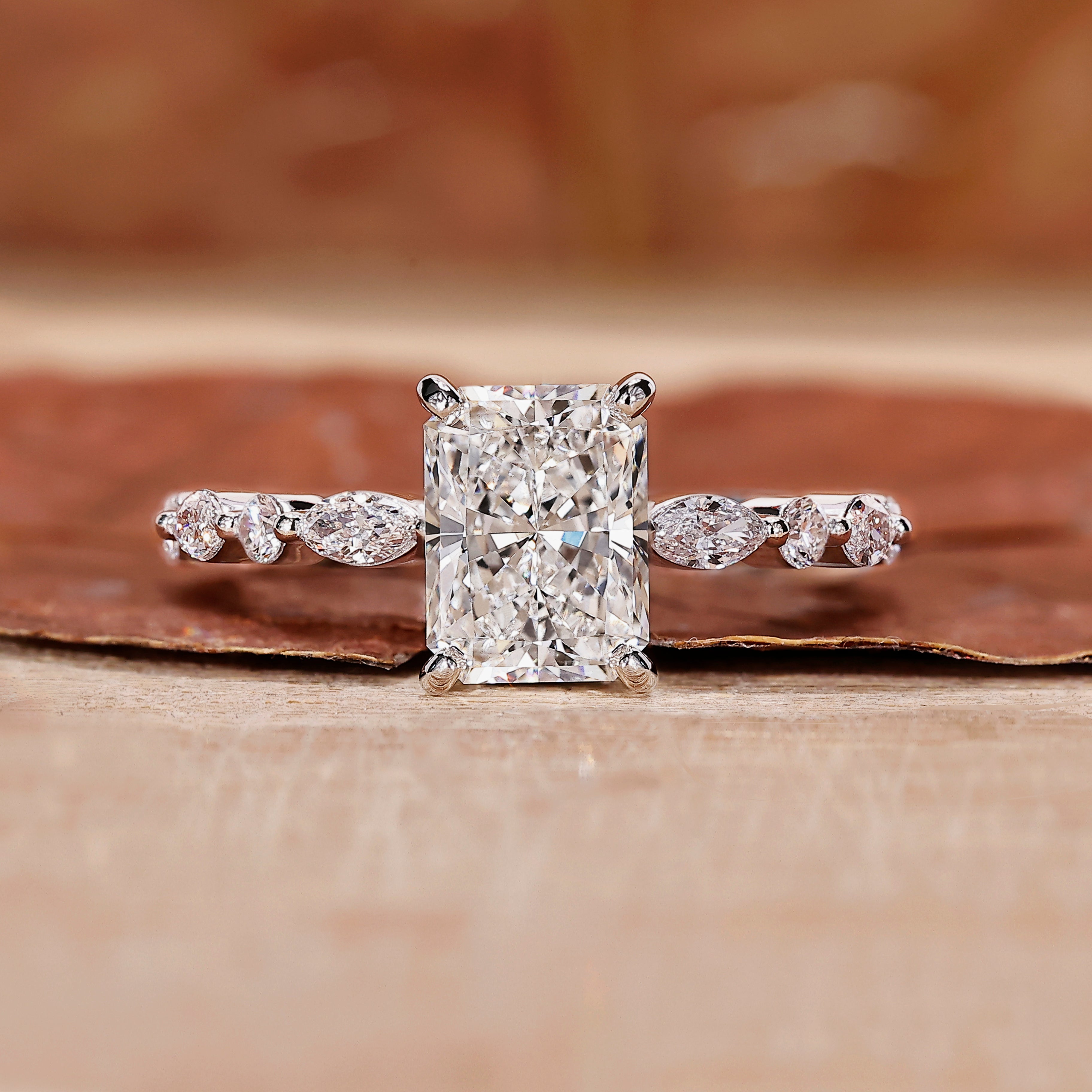
The key difference is faceting style. Emerald cuts use step cut facets arranged in parallel rows, creating calm, broad flashes of light often compared to a hall of mirrors. Radiant cuts use 70 brilliant facets, designed to maximise sparkle and fire in every direction. Both shapes are rectangular with cropped corners and suit elongated settings well, but the way they interact with light is completely different. If sparkle is the priority, radiant wins. If clarity and structure matter more, emerald is the stronger choice.
What Is an Emerald Cut Diamond?

An emerald cut diamond is a rectangular step cut stone with long, parallel facets and cropped corners. It was originally developed for emerald gemstones, hence the name, and later became popular for diamonds because of its clean, architectural appearance.
Key Characteristics
- 49-58 step cut facets arranged in parallel rows
- Large, open table that creates a "hall of mirrors" light effect
- Rectangular outline with symmetrical cropped corners
- Lower visual fire compared to brilliant cuts' calm, structured glow
- Requires higher clarity grades, as the open facets make inclusions more visible
Why Buyers Choose Emerald Cuts
The emerald cut appeals to buyers who prefer sophistication over flash. Its large faceup surface makes the stone appear bigger per carat than most other shapes. The linear facets and clean edges also pair exceptionally well with minimalist and vintage inspired settings. Explore the emerald cut moissanite engagement rings collection at Diamondrensu UK for setting inspiration.
What Is a Radiant Cut Diamond?

A radiant cut diamond is a rectangular brilliant cut stone developed by Henry Grossbard in 1977. Grossbard combined the clean outline of an emerald cut with the faceting style of a round brilliant, creating a shape that delivers intense sparkle within a rectangular silhouette.
Key Characteristics
- 70 triangular and kite shaped brilliant facets
- Produces a "crushed ice" scintillation effect under light
- Rectangular or slightly square outline with cropped corners
- High fire and brilliance comparable to a round brilliant
- More forgiving on clarity: brilliant facets scatter light and mask inclusions
Why Buyers Choose Radiant Cuts
Radiant cuts suit buyers who want the elongated shape of an emerald cut but require more visual impact and brightness. The brilliant faceting also means the stone performs well in lower-light settings; it catches the eye at a dinner table or indoors as effectively as it does in sunlight. Browse radiant cut moissanite engagement rings to see the range of settings available.
Emerald Cut vs Radiant Cut: The Comparison
| Feature | Emerald Cut | Radiant Cut |
|---|---|---|
| Shape & Faceting Style | Rectangular shape with cropped corners and long step-cut facets that create a clean, hall-of-mirrors effect. | Rectangular shape with cropped corners and approximately 70 brilliant facets that create a more textured appearance. |
| Sparkle & Light Performance | Produces broad flashes of light and understated brilliance with a refined, elegant look. | Produces intense sparkle and fire with rapid light reflections from multiple directions. |
| Size Appearance | Often appears larger face-up because of its large table and elongated facets. | Usually costs slightly more per carat, though lower clarity grades can still look attractive due to brilliant faceting. |
| Durability & Everyday Wear | Cropped corners improve durability and reduce the risk of chipping compared to sharp-cornered cuts. | Cropped corners also provide excellent durability for everyday wear with no significant advantage over emerald cuts. |
| Price & Value | Often costs less per carat, but higher clarity and color grades may increase the final price. | Typically higher price due to precision cutting and high demand |
| Best For | Buyers who preferclean lines and a sophisticated vintage-inspired appearance. | Buyers who want maximum sparkle, brilliance, and a more eye-catching look. |
| Style Personality | Classic, refined, and understated. | Bold, glamorous, and modern. |
| Color Visibility | Color is easier to detect due to the open facet structure. | Brilliant facets help mask slight color, making lower color grades appear whiter. |
| Overall Look | Clear, transparent, and architectural. | Bold, glamorous, and modern. |
Which Diamond Shape Looks Bigger?
The emerald cut typically looks bigger on the finger. Its large, open table maximises faceup surface area, so a 1 ct emerald cut usually appears larger than a 1 ct radiant cut of the same weight. If perceived size is a priority, this is a genuine advantage worth considering, particularly for buyers who want maximum presence without moving up in carat weight.
Which Cut Hides Inclusions Better?
The radiant cut hides inclusions significantly better. Its 70 brilliant facets scatter light across the stone in all directions, breaking up any inclusions and making them nearly invisible to the naked eye. Emerald cuts do the opposite; the large, open facets and quiet light effect put the stone’s interior on display. If clarity is a concern or your budget limits you to lower grades, a radiant cut is the more practical choice.
Who Should Choose an Emerald Cut?
Consider an emerald cut if you:
- Prefer understated, refined elegance over high-contrast sparkle
- Value a larger faceup appearance per carat weight
- Are comfortable investing in VS2 or higher clarity grades
- Enjoy minimalist or geometric ring settings
- Like the hall of mirrors light effect over brilliant scintillation
- Want a shape that photographs with clean, structured lines
Explore the full emerald cut lab grown diamond engagement rings collection for certified stone options in this cut.
Who Should Choose a Radiant Cut?
Consider a radiant cut if you:
- Want maximum sparkle and fire in a rectangular shape
- Have a tighter clarity or colour budget and need a more forgiving cut
- Love the idea of a brilliant cut stone with an elongated silhouette
- Prefer a ring that performs in all lighting conditions, including indoors
- Are drawn to the “crushed ice” visual effect of brilliant faceting
- Want versatility across setting styles, from solitaires to elaborate halos
Emerald Cut vs Radiant Cut for Lab Grown Diamonds
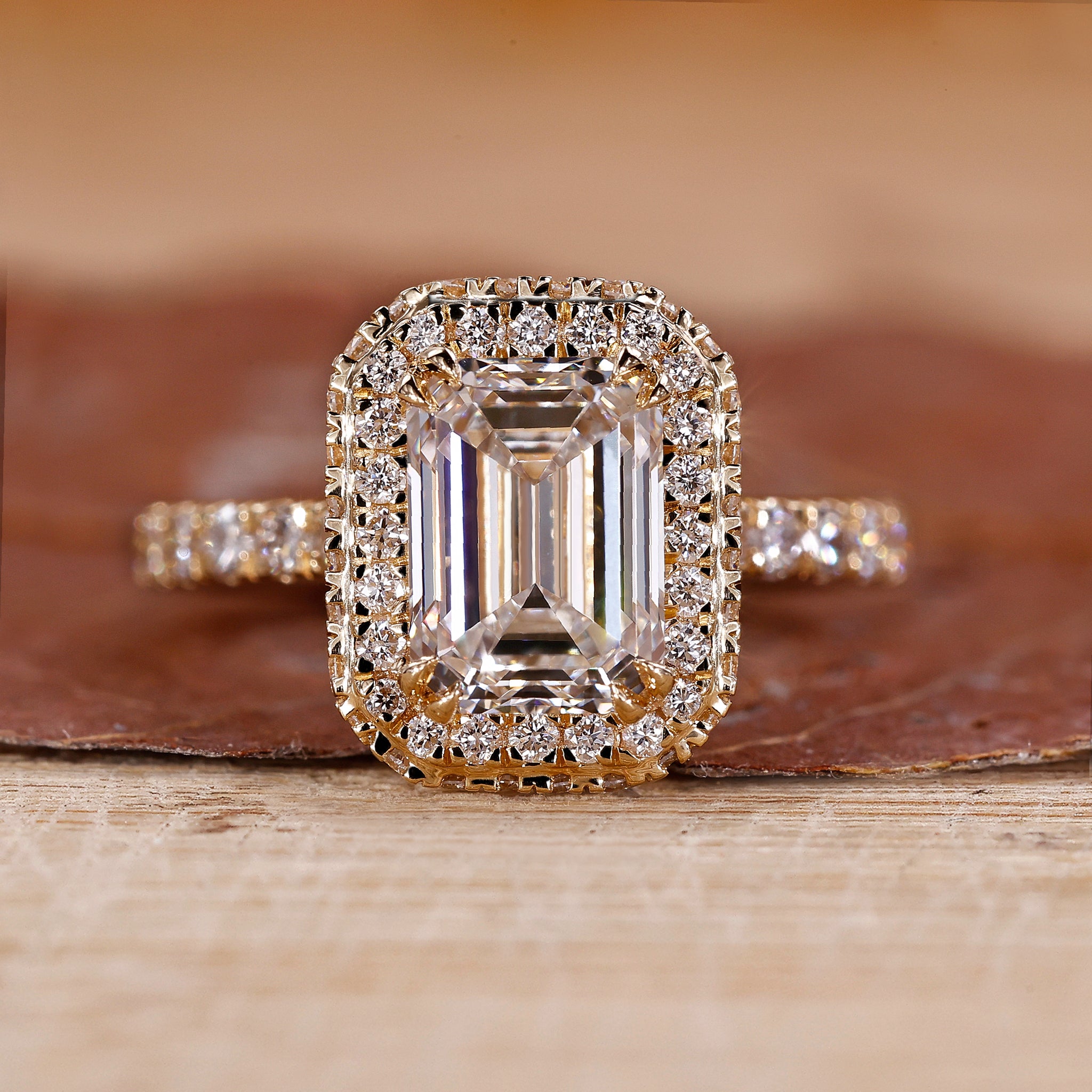
Both cuts are widely available in lab grown diamonds, and both perform exactly as their natural counterparts would. The key buying consideration differs by cut. For a lab grown emerald cut, prioritise cut quality and symmetry above all else. Poorly proportioned step facets look noticeably flat and lifeless, and this is more visible in lab grown stones than some buyers expect. For a lab grown radiant cut, the brilliant faceting is more forgiving of minor cutting variations. If you’re comparing stones and unsure of the difference in person, the moissanite vs lab grown diamond comparison guide covers what to look for in both materials.
Emerald Cut vs Radiant Cut for Moissanite
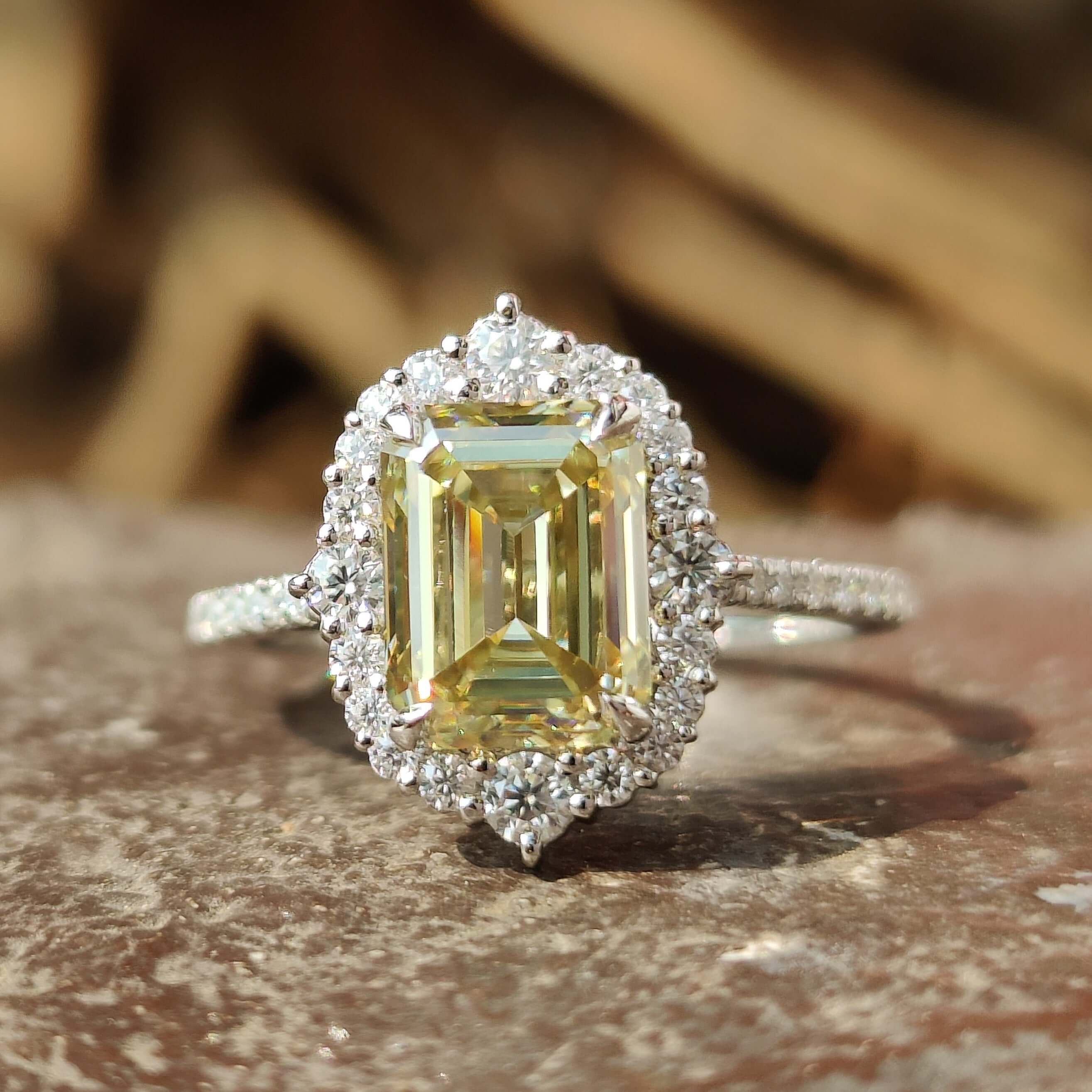
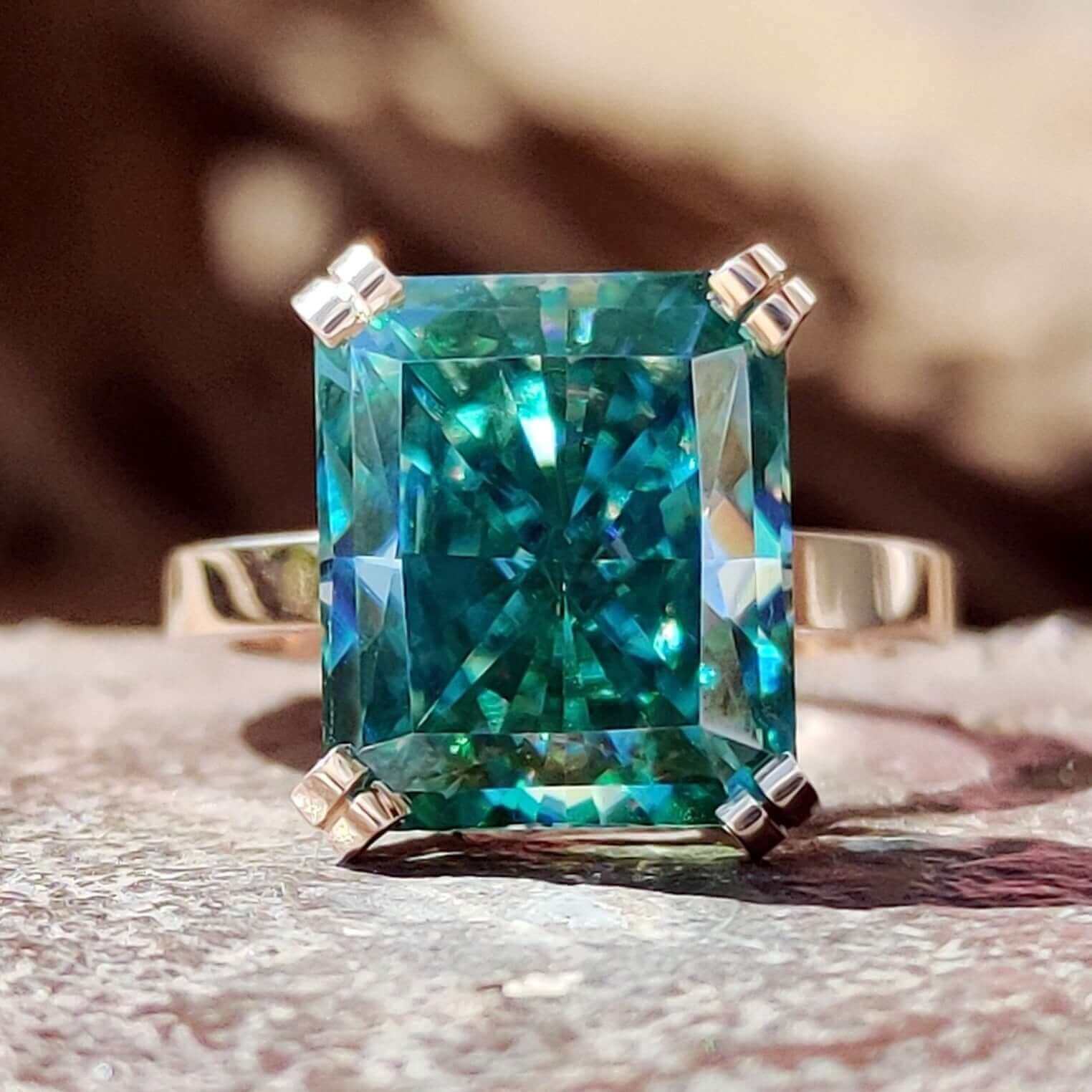
Both cuts work beautifully in moissanite, but the results are noticeably different. Moissanite has a higher refractive index than diamond, which means it produces more fire and rainbow light dispersion in any cut. In a radiant cut moissanite, this effect is significantly amplified; the 70 brilliant facets combined with moissanite’s natural fire create an exceptionally vivid, high-energy stone. In an emerald cut moissanite, the hall of mirrors effect is deeper and more dramatic than in a diamond equivalent, with broader, more colourful flashes across the stone’s planes. Both are stunning choices: radiant moissanite for buyers who want maximum impact and emerald moissanite for buyers who prefer depth and structure.
Final Verdict: Emerald Cut or Radiant Cut?
Choose an emerald cut if you want clean elegance, a larger visual presence, and a stone that rewards close inspection rather than distance. Be prepared to invest in higher clarity and colour grades to get the best from the cut. Choose a radiant cut if sparkle and versatility are priorities or if you need a more budget-flexible approach to clarity. Both cuts suit elongated ring styles well and wear comfortably every day. The right answer comes down to one question: do you want your stone to glow quietly or to dazzle at every angle?
FAQs
Is emerald cut or radiant cut better for hiding inclusions?
Radiant cut is significantly better at hiding inclusions. Its 70 brilliant facets scatter light across the stone and mask imperfections effectively. Emerald cut’s large open table puts inclusions on display, requiring VS2 or higher clarity to look clean.
Does an emerald cut or radiant cut look bigger on the finger?
Emerald cuts typically look bigger faceup. The large open table maximises visible surface area, so a 1 ct emerald cut usually appears larger on the hand than a 1 ct radiant cut of identical weight.
Are radiant cut diamonds more expensive than emerald cut diamonds?
Not necessarily. Radiant cuts can carry a modest premium per carat, but emerald cuts often cost more overall because they require higher clarity and colour grades to look their best. Total cost depends heavily on the stone quality you need for each cut.
Is a radiant cut diamond suitable for everyday wear?
Yes. Radiant cuts have cropped corners that reduce chip risk, and the brilliant faceting is durable for daily wear. Both radiant and emerald cuts are practical engagement ring choices with standard jewellery care.
Which cut works better for moissanite emerald or radiant?
Both work exceptionally well. Radiant cut moissanite produces intense fire and sparkle due to moissanite’s high refractive index combined with 70 brilliant facets. Emerald cut moissanite delivers a deeper, more dramatic hall of mirrors effect than diamond equivalents. The choice depends on whether you prefer sparkle or structured elegance.
What is the main difference between an emerald cut and a radiant cut diamond?
The main difference is faceting style. Emerald cuts use step cut facets that create calm, broad flashes of light. Radiant cuts use 70 brilliant facets that produce intense sparkle and fire. Both are rectangular with cropped corners, but they look and perform very differently.
How do I choose between emerald cut and radiant cut for a lab grown diamond?
Focus on priorities. If you want a larger appearance and cleaner aesthetic and are happy investing in higher clarity grades, choose emerald cut. If you want maximum sparkle with more flexibility on clarity and colour budget, choose radiant cut. Both cuts are available in certified lab grown diamonds at Diamondrensu UK.
Leave a comment
Please note, comments must be approved before they are published.