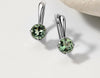
CVD Diamond Myths and Facts You Should Know
CVD diamonds are becoming a common choice for buyers who want a laboratory-grown diamond for an engagement ring or other jewellery. Yet, many people still have questions about whether CVD diamonds are real, how they compare with natural diamonds, and why their prices can be different.
CVD stands for Chemical Vapour Deposition, which is a method used to grow diamonds in a controlled laboratory setting. Understanding the facts behind the process can help you avoid common myths and choose a diamond based on its quality, grading, appearance, and price.
What Is a CVD Diamond?
CVD diamonds are laboratory-grown diamonds made using the Chemical Vapour Deposition process. A small diamond seed is placed inside a controlled chamber, where carbon-rich gases are introduced. Under carefully controlled conditions, carbon atoms settle onto the diamond seed and gradually form layers of diamond crystal.
Once the rough diamond reaches the required size, it is cut and polished for use in jewellery. The finished stone can then be assessed for its carat weight, colour, clarity, and cut. The CVD process describes how the diamond was grown, while the 4Cs help buyers understand the quality of the finished stone.
Myth 1: CVD Diamonds Are Fake Diamonds
Fact: CVD diamonds are real diamonds. A common myth is that laboratory-grown diamonds are fake because they are not formed underground. CVD diamonds are created in a laboratory rather than through natural geological processes, but they are still diamond material. This makes them different from diamond simulants.
Natural diamonds and CVD diamonds have different origins, but the growth method does not turn a CVD diamond into a fake. When shopping for one, buyers should check the grading report and product details to confirm that they are purchasing a laboratory-grown diamond rather than a simulant such as cubic zirconia.
Myth 2: CVD Diamonds Look Different From Natural Diamonds
Fact: A well-cut CVD diamond can have an appearance very similar to a natural diamond. The look of a finished diamond depends on several factors, including its cut, colour, clarity, proportions, and polish. The growth method alone does not determine how attractive the stone looks to the eye.
For most buyers, it can be difficult to identify the origin of a diamond simply by looking at it. Professional gemmological equipment can distinguish laboratory-grown diamonds from natural diamonds. This is why a grading report is more reliable than judging the stone only from photographs or visual inspection.
Myth 3: CVD Diamonds Are Not Durable
Fact: CVD diamonds are suitable for jewellery intended for regular wear. Diamond is known for its high hardness, and CVD diamonds have the hardness associated with diamond material. This makes them suitable for engagement rings, wedding rings, earrings, and other jewellery that may be worn regularly.
However, hardness does not mean a diamond is impossible to damage. Strong impacts can cause chips, especially around sharp corners or areas with certain inclusions. The ring setting also matters, so buyers should choose a suitable setting that offers good support and protection for the diamond.
Myth 4: CVD Diamonds Are Always Perfect
Fact: CVD diamonds can have inclusions and different clarity grades. Laboratory growth does not automatically mean that every diamond is flawless. CVD diamonds can contain internal or surface characteristics that affect their clarity grade, just as natural diamonds can have inclusions.
The quality of a CVD diamond depends on the individual stone and its grading. Some buyers may prefer higher clarity, while others may choose a lower clarity grade to get a larger stone within their budget. Checking the clarity grade and examining the available diamond information can help you make a better comparison.
Myth 5: CVD Diamonds Are Always Colourless
Fact: CVD diamonds can have different colour grades. Not every CVD diamond has the same colour. Some stones can appear very close to colourless, while others may show a visible tint depending on their growth conditions and any treatment used after growth.
Colour should be considered alongside cut and clarity when comparing CVD diamonds. If you want a white-looking centre stone, check the colour grade rather than assuming that all CVD diamonds will have the same appearance. A grading report can provide useful information about the stone's colour classification.
Myth 6: CVD Diamonds Cannot Be Certified
Fact: CVD diamonds can receive independent grading reports. Laboratory-grown diamonds can be submitted to recognised gemmological laboratories for assessment. A grading report can provide information about the diamond's characteristics and identify it as laboratory-grown.
Depending on the laboratory and report, the document may include details such as carat weight, colour, clarity, cut, measurements, polish, symmetry, and other characteristics. Checking the report before buying gives you a clearer way to compare diamonds and confirm the specifications listed by the seller.
Myth 7: CVD Diamonds Are Cheaper Because They Are Poor Quality
Fact: A lower price does not automatically mean lower diamond quality. CVD diamonds can be less expensive than comparable natural diamonds because they are produced through a controlled laboratory process rather than extracted through traditional mining. This gives buyers another way to allocate their jewellery budget.
However, CVD diamonds still come in different quality levels and price ranges. A stone with excellent cut, higher colour, and better clarity can cost more than one with lower grades. When comparing prices, look at the complete specification rather than assuming that a lower price means poor quality.
Myth 8: CVD Diamonds Are the Same as Diamond Simulants
Fact: CVD diamonds and diamond simulants are two different types of stones. A diamond simulant is a material that looks similar to diamond but does not have the same chemical composition and properties. Cubic zirconia and moissanite are common examples of diamond simulants, although moissanite is also widely used as a separate gemstone choice.
A CVD diamond is a laboratory-grown diamond, so it should not be grouped with simulants simply because it was made in a laboratory. When shopping online, check the exact stone type, product description, and grading information so you know whether you are buying a CVD diamond, natural diamond, moissanite, or another gemstone.
CVD vs Natural vs HPHT Diamonds: What’s the Difference?
| Comparison | CVD Diamonds | Natural Diamonds | HPHT Lab Grown Diamonds |
|---|---|---|---|
| Origin | Grown in a controlled laboratory using Chemical Vapour Deposition | Formed naturally deep within the Earth | Grown in a laboratory using High Pressure High Temperature |
| Growth Process | Carbon-rich gases build diamond layers on a diamond seed | Natural geological process involving high pressure and heat | Uses high pressure and high temperature to grow diamond crystals |
| Appearance | Can have a similar appearance to natural and HPHT diamonds when well cut | Natural diamond appearance with a wide range of colours and clarity | Can have a similar appearance to CVD and natural diamonds |
| Chemical Composition | Carbon in a diamond crystal structure | Carbon in a diamond crystal structure | Carbon in a diamond crystal structure |
| Durability | Suitable for everyday jewellery | Suitable for everyday jewellery | Suitable for everyday jewellery |
| Quality Range | Available in different carat, colour, clarity, and cut grades | Available in different carat, colour, clarity, and cut grades | Available in different carat, colour, clarity, and cut grades |
| Price | Generally lower than comparable natural diamonds | Generally higher than comparable laboratory-grown diamonds | Generally lower than comparable natural diamonds |
| Certification | Can receive a laboratory grading report | Can receive a natural diamond grading report | Can receive a laboratory grading report |
| Best For | Buyers looking for a laboratory-grown diamond with flexible budget options | Buyers who prefer a naturally formed diamond | Buyers looking for another laboratory-grown diamond option |
| Main Difference | Laboratory-grown using a chemical vapour process | Naturally formed inside the Earth | Laboratory-grown using high pressure and high temperature |
How to Choose a CVD Diamond
Start by checking the 4Cs: carat, colour, clarity, and cut. Carat tells you the diamond's weight, colour describes the level of body colour, clarity considers internal and external characteristics, and cut affects the stone's proportions and how it handles light.
After checking the 4Cs, review the grading report and compare the stone with other diamonds in your budget. Consider the shape and setting you want as well, because a well-chosen design can change how large or bright the centre stone appears. Looking at the complete specification is more useful than choosing based on carat weight alone.
Check the Diamond Grading Report
A grading report can help confirm important details about the CVD diamond you are considering. It can identify the stone as laboratory-grown and provide information about characteristics such as carat weight, colour, clarity, cut, measurements, polish, and symmetry, depending on the laboratory.
Before buying, make sure the report details match the diamond being offered. A grading report gives you a documented reference for comparing stones from different sellers. It can also help you understand why two diamonds with similar carat weights may have different prices.
Consider the Diamond Cut
Cut is an important factor because it affects the way a diamond interacts with light. Two CVD diamonds with the same carat weight can look quite different if their proportions, symmetry, or polish differ. A well-cut stone can appear bright and balanced when viewed from different angles.
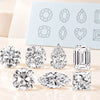
The best cut can also depend on the shape you choose. Round, oval, cushion, emerald, radiant, and pear shapes each have different proportions and visual characteristics. Compare the actual diamond rather than selecting it only because it has a particular carat weight or colour grade.
Consider the Ring Setting
The setting plays an important role in both appearance and everyday wear. Solitaire settings place most of the attention on the centre diamond, while halo, three-stone, bezel, and other settings can create different looks and levels of protection around the stone.
Think about how you plan to wear the ring before choosing a setting. If you expect to wear an engagement ring every day, a secure design can help protect the diamond from knocks. The setting should also work with the diamond's shape and proportions so that the finished ring looks balanced.
Are CVD Diamonds Good for Engagement Rings?
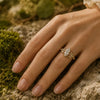
CVD diamonds can be a suitable choice for engagement rings because they offer buyers a laboratory-grown diamond option with the hardness and durability expected from diamond material. They are available in different shapes, sizes, colours, and clarity grades, giving buyers plenty of options when planning a ring.
The best choice depends on what matters most to you. Some buyers may want a larger centre stone, while others may prefer higher colour or clarity. Comparing the diamond's grading report, quality, price, and setting can help you find an engagement ring that fits both your style and budget.
Why Do Buyers Choose CVD Diamonds?
One reason buyers consider CVD diamonds is the opportunity to choose a larger or higher-grade stone within a set budget. Because laboratory-grown diamonds have a different production and supply chain from mined diamonds, their pricing can make different diamond specifications more accessible.
CVD diamonds also give buyers another option when they want a diamond but do not specifically require a naturally formed stone. The choice ultimately comes down to personal priorities, including origin, budget, size, quality, and jewellery design. Comparing individual stones remains important because CVD diamonds are not all identical.
What Should You Know About CVD Diamond Treatments?
Some CVD diamonds may undergo treatment after the initial growth process. Treatment can be used to improve or alter certain characteristics, including colour. This does not mean that every CVD diamond has received the same treatment, so buyers should check the individual stone's documentation.
If treatment is important to you, ask for clear information before purchasing and review the grading report where available. Knowing whether a diamond has undergone treatment gives you a better understanding of the stone you are buying and allows you to compare it fairly with other CVD diamonds.
How Much Should You Spend on a CVD Diamond?
There is no single amount that every buyer should spend on a CVD diamond. Your budget should reflect the importance of the ring to you, the design you want, and the balance you prefer between carat size, colour, clarity, and cut.
Instead of setting your budget around carat weight alone, compare complete diamond specifications within your price range. You may find that choosing a slightly different colour or clarity grade gives you more size without changing the overall appearance you want. The aim is to find the best balance for your needs.
Conclusion
CVD diamonds are often surrounded by myths, but understanding how they are made can help separate facts from assumptions. A CVD diamond is a laboratory-grown diamond created through Chemical Vapour Deposition, so it is different from diamond simulants such as cubic zirconia. Buyers should look at the diamond's quality rather than judge it only by its growth method.
Before buying, check the 4Cs, grading report, cut, colour, clarity, and carat weight. Compare the diamond's price and setting with other options to find the right balance for your budget. Whether you choose a CVD, HPHT, or natural diamond, knowing the differences in origin and quality can help you make a confident choice.
Frequently Asked Questions
Leave a comment
Please note, comments must be approved before they are published.