Hidden Halo vs Halo Engagement Rings: What's the Difference?
Choosing an engagement ring involves more than selecting a diamond shape or carat weight. The setting determines how the centre stone is presented, how the ring looks from different angles, and how comfortably it sits alongside a wedding band. Hidden halo and traditional halo engagement rings are two options that use smaller diamonds to add detail around the main stone, but their placement creates different results.
At first glance, both settings may appear similar in product photographs, particularly when the ring is shown from the side. However, the difference becomes clearer when viewed from above. A traditional halo creates a visible diamond border around the centre stone, whereas a hidden halo keeps the smaller diamonds underneath. Understanding these design differences can help you select a setting that suits your preferred appearance and everyday requirements.
Hidden Halo Engagement Ring?
A hidden halo engagement ring has a row of small diamonds set underneath the centre stone, usually around the gallery or basket. These accent diamonds are positioned near the base of the main stone, making them visible mainly from the side or when the ring is tilted. From a direct top view, the design retains the appearance of a solitaire because the surrounding diamonds do not form a visible border.
One important detail is that a hidden halo is part of the ring's construction rather than a separate decorative attachment. Its placement depends on the gallery, prongs, and height of the centre stone. Some designs use a simple diamond-set gallery, while others combine the setting with cathedral shoulders or a pavé band. This gives buyers several ways to add side detail without changing the centre diamond's outline.

Traditional Halo Engagement Ring?
A traditional halo engagement ring features smaller diamonds arranged around the centre stone on the same visible level. The surrounding stones follow the outline of the main diamond, forming a frame that can be seen clearly from above. This arrangement adds extra diamond coverage and can make the overall ring face appear larger than the centre stone alone.
Halo settings are available in different configurations. A single halo uses one row of accent diamonds, while a double halo adds a second row around the first. The surrounding stones can follow round, oval, cushion, pea,r and other diamond shapes. This makes the setting suitable for buyers who want the centre stone and its diamond border to work together as one design.
Hidden Halo vs Halo Engagement Rings: Key Differences
The placement of accent diamonds affects more than the appearance of an engagement ring. It also influences the visible outline, side profile, cleaning access and the way the setting pairs with other jewellery. Comparing these details is more useful than choosing a ring based only on its product photograph.
| Design Consideration | Hidden Halo | Traditional Halo |
|---|---|---|
| Diamond Placement | Beneath the centre stone | Around the centre stone |
| Top View | Centre diamond remains the focus | Visible diamond border |
| Side View | Accent diamonds show around the gallery | Halo is visible around the stone |
| Face-Up Appearance | Does not add a visible outer border | Creates a wider outline |
| Centre Stone Shape | Original outline remains visible | Surrounding frame changes the outline |
| Design Options | Solitaire-style, cathedral and pavé combinations | Single and double halo |
| Cleaning Access | Requires attention beneath the centre stone | Requires cleaning between accent stones |
| Wedding Band Pairing | Depends on gallery and setting clearance | May require a curved band if the halo extends towards the band |
Pros and Cons of Hidden Halo Engagement Rings
A hidden halo adds diamond detail beneath the centre stone while keeping its original outline visible from above. It suits those who prefer a subtle design, works with different diamond shapes and complements solitaire-style and pavé bands. However, the smaller diamonds can be difficult to clean, may require a higher setting and add to the overall cost. Their position also makes them less noticeable from the top, and the gallery needs regular inspection to ensure the accent stones remain secure.
Pros:
- Maintains the original outline of the centre diamond from above.
- Adds subtle diamond detail beneath the centre stone.
- Works with various diamond shapes and band styles.
- Complements solitaire-style and pavé designs.
Cons:
- Accent diamonds are less visible from the top.
- Cleaning underneath the centre stone can be challenging.
- Some designs may require a higher setting.
- Additional setting work can increase the overall cost.
- The gallery needs regular inspection to check stone security.
Pros and Cons of Traditional Halo Engagement Rings
A traditional halo creates a visible diamond border around the centre stone, giving the overall ring face a larger appearance without increasing the centre diamond's carat weight. It offers single and double halo options and works with different diamond shapes and band styles. However, the surrounding diamonds change the centre stone's original outline, require regular cleaning and may become loose over time. Depending on the halo's dimensions, pairing the ring with a straight wedding band can also be difficult.
Pros:
- Creates a wider-looking appearance around the centre stone.
- Makes the overall ring face appear larger.
- Provides a visible border of smaller diamonds.
- Available in single and double halo designs.
- Complements different centre stone shapes.
Cons:
- Changes the visible outline of the centre diamond.
- Requires careful cleaning between surrounding diamonds.
- Small accent stones may become loose.
- Some designs may not sit flush with a straight wedding band.
- Additional diamonds can increase the overall ring cost.
How Does Each Setting Affect the Centre Diamond's Appearance?
The most noticeable visual difference is the way each setting changes the centre diamond's outline. A traditional halo extends the visible dimensions of the ring by placing smaller diamonds around the main stone. This can make a centre diamond appear larger from the top, although the actual carat weight remains unchanged. The effect depends on the width of the halo and the proportions of the centre stone.
A hidden halo works differently because its accent diamonds sit below the main stone. It does not create the same wider face-up appearance as a traditional halo. Instead, it adds detail around the gallery that becomes noticeable from an angled or side view. If preserving the original outline of an oval, pear or marquise diamond is important, this arrangement allows the centre shape to remain unobstructed.
Which Setting Works Better with Different Diamond Shapes?
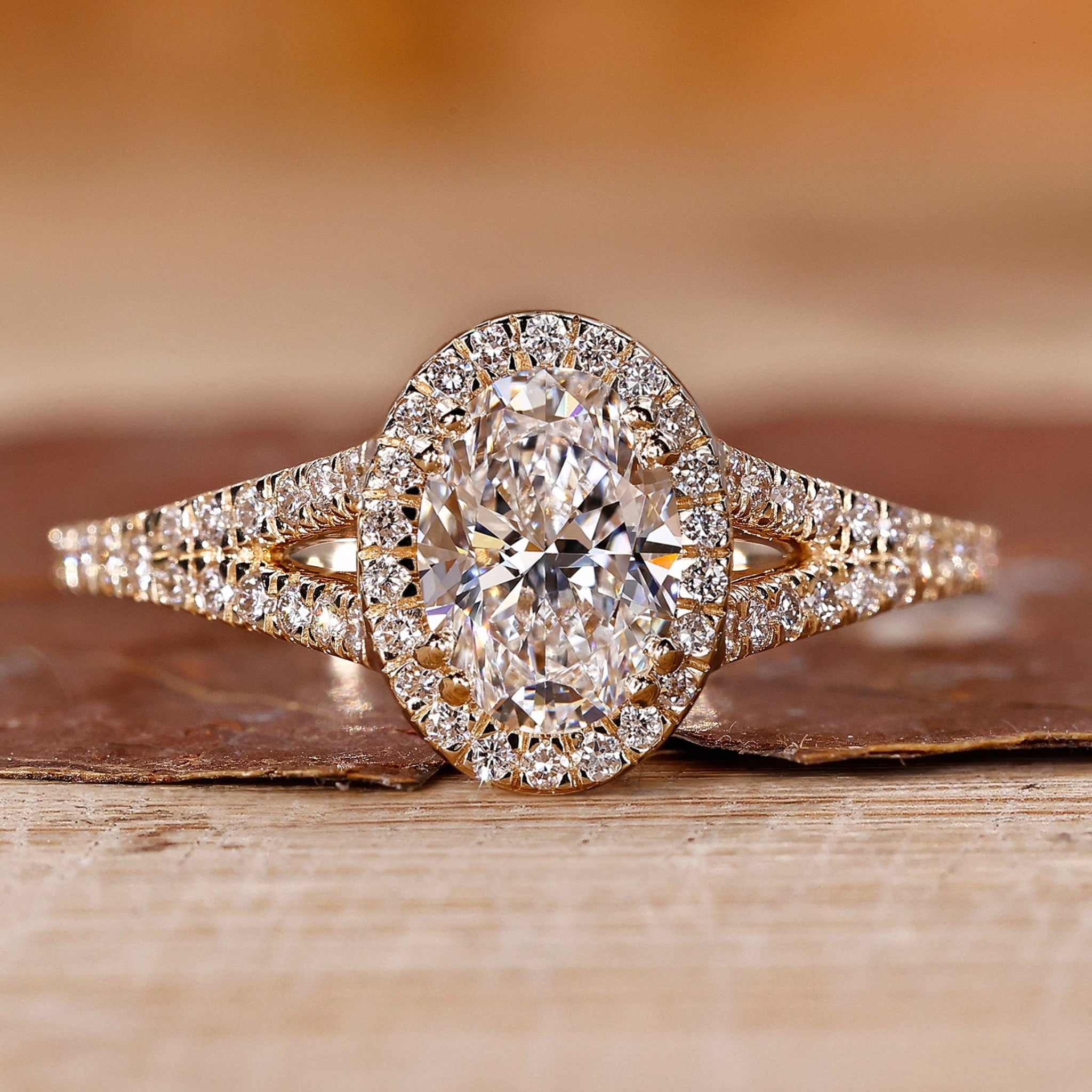
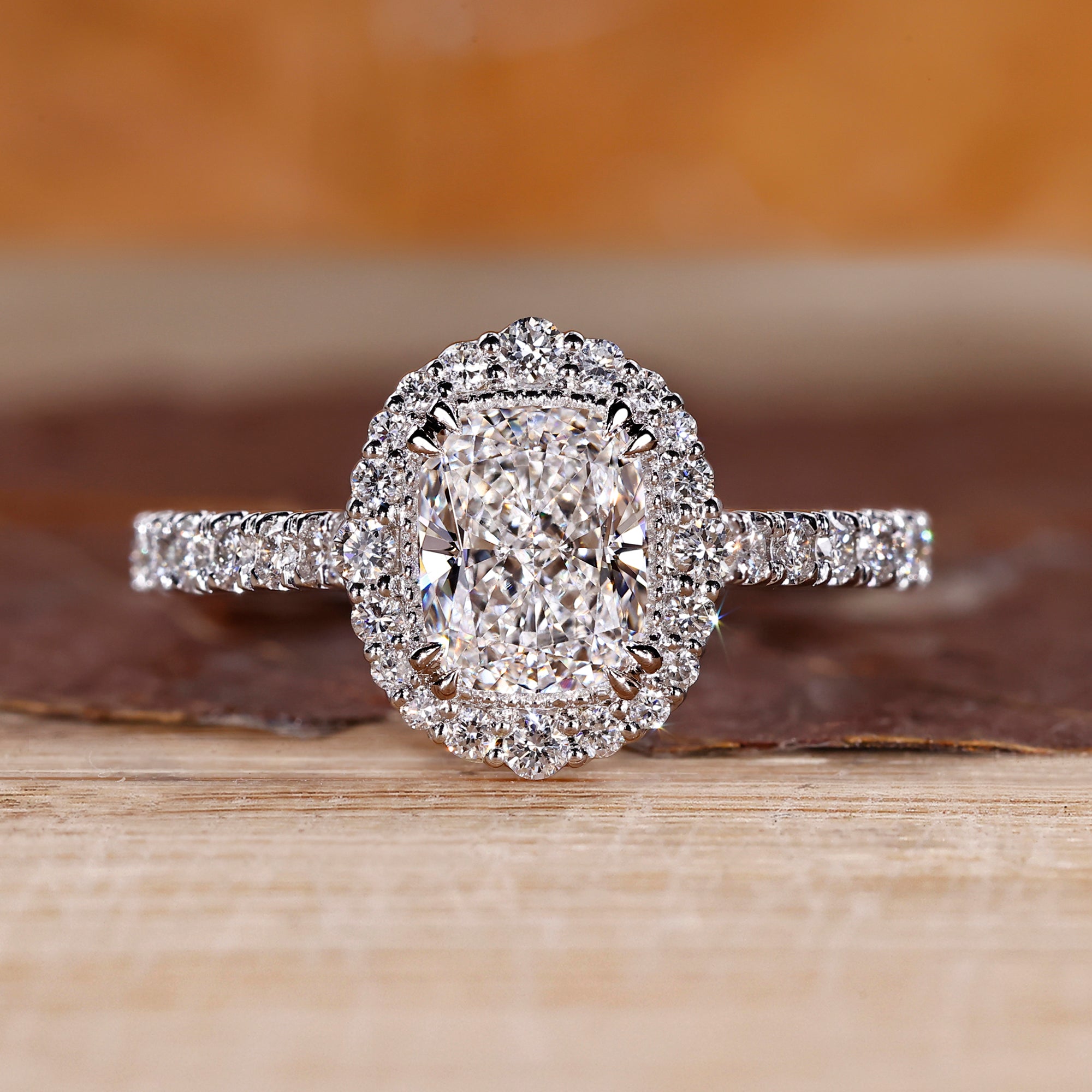
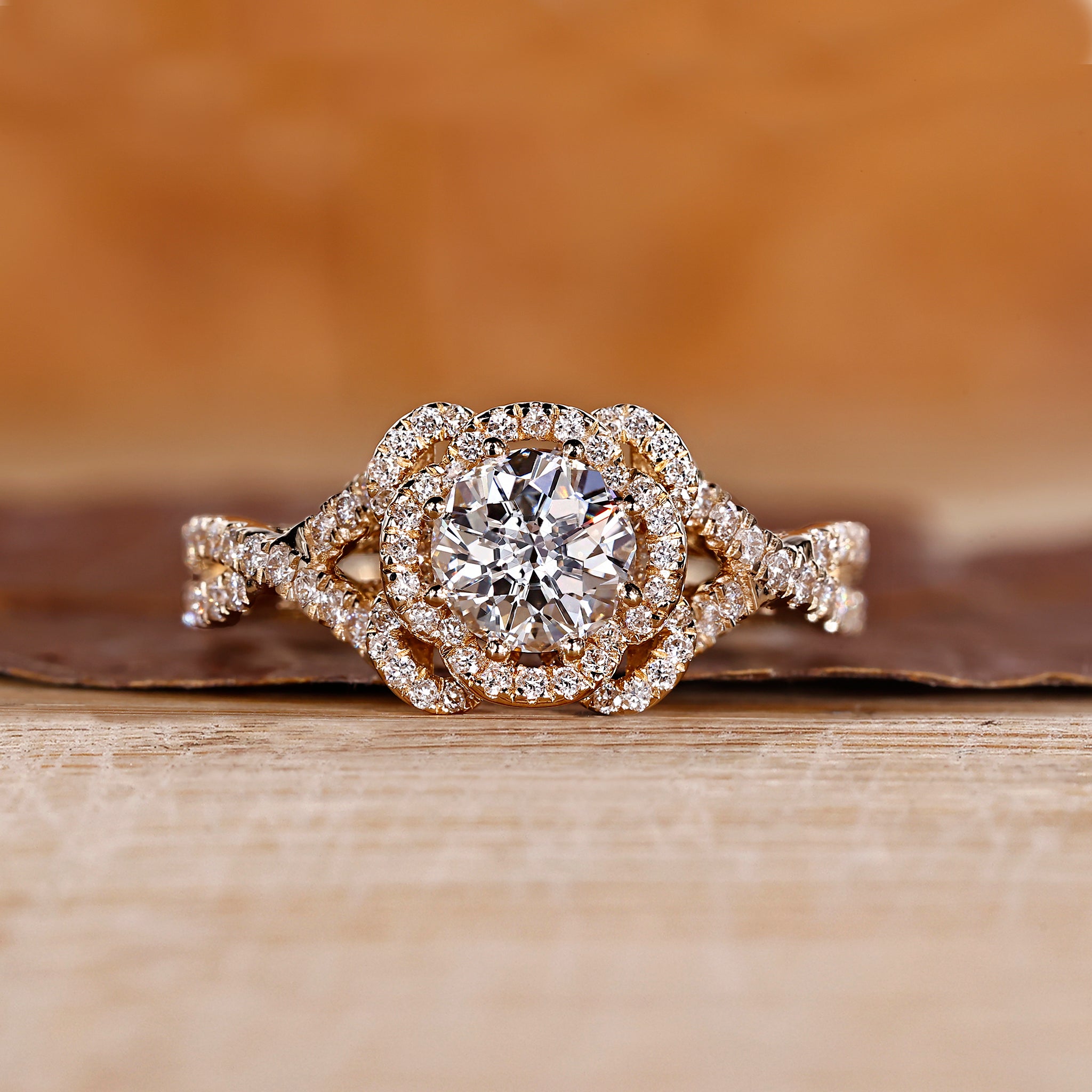
Both settings can accommodate several diamond shapes, but the surrounding design should complement the centre stone rather than compete with it. Traditional halos work particularly well when the accent diamonds follow the main stone's outline. Hidden halos offer another approach by adding detail underneath without creating a visible frame.
Consider these combinations when comparing designs:
- Round Cut: Both settings suit its symmetrical outline. A traditional halo adds a defined border, while a hidden halo keeps the round diamond prominent.
- Oval Cut: A hidden halo preserves the elongated outline, while an oval halo creates a wider face-up appearance.
- Cushion Cut: Rounded corners work well with a matching traditional halo or a hidden diamond gallery.
- Pear Cut: A hidden halo keeps the pointed end visible, while a traditional halo follows the teardrop outline.
- Emerald Cut: A hidden halo maintains the clean rectangular outline, whereas a traditional halo adds a decorative frame.
-
Marquise Cut: A hidden halo leaves both pointed ends unobstructed from above, while a traditional halo follows the elongated shape.
Wedding Band Compatibility: Will the Rings Sit Flush?
Wedding band compatibility is an important consideration when choosing an engagement ring setting. A traditional halo can extend beyond the centre stone and create a gap between the engagement ring and a straight wedding band. The amount of space depends on the halo's dimensions and how the ring is constructed. A curved or specially designed wedding band may be needed to sit closely against it.
A hidden halo can offer more flexibility because its accent diamonds are positioned underneath the centre stone rather than around its outer outline. However, this does not guarantee that every hidden halo will sit flush with a straight band. The gallery, prong placement and setting height can all affect the fit. It is worth trying the engagement ring and wedding band together before making a final decision.
Cleaning and Maintaining Hidden Halo and Halo Rings

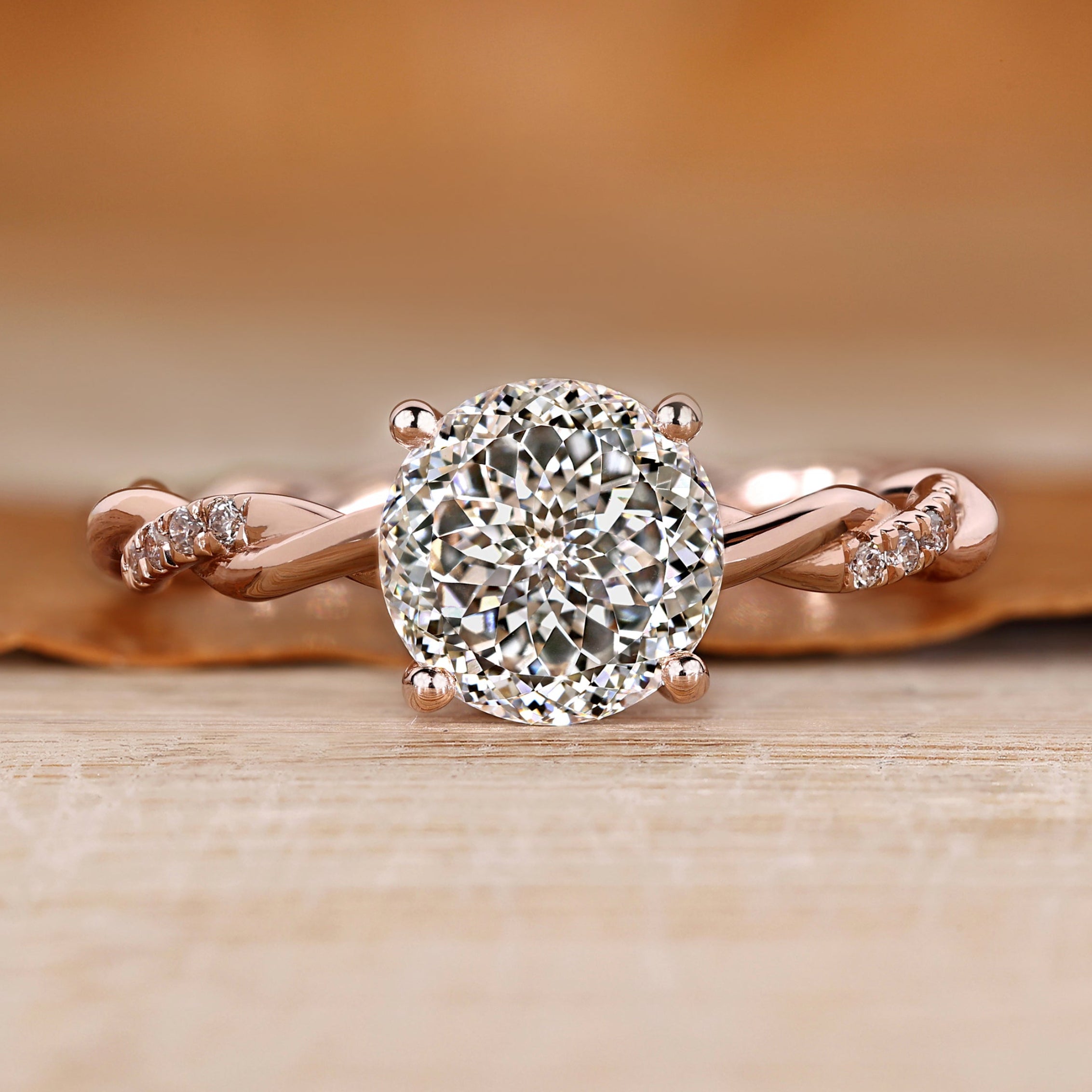
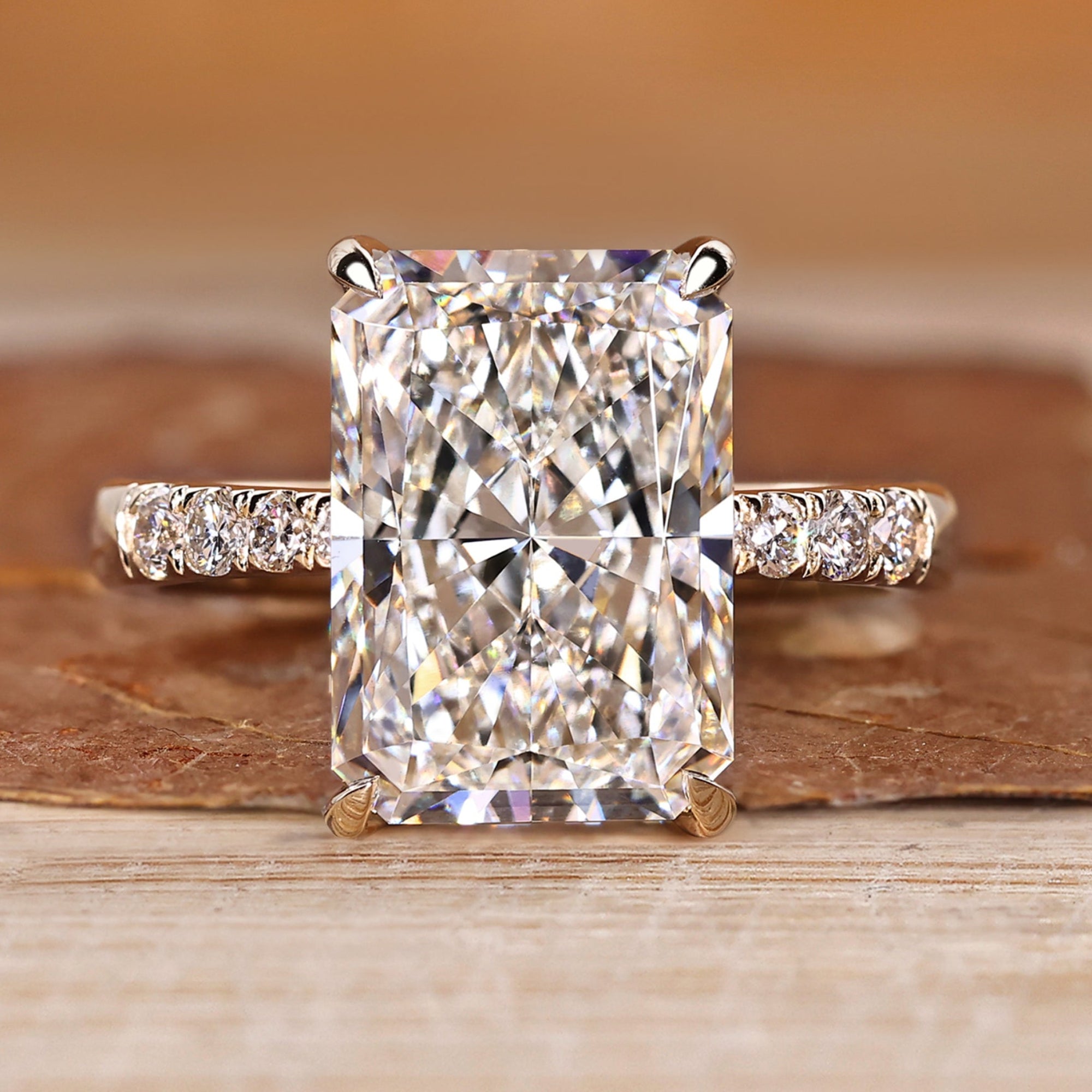
Both settings contain small diamonds that need attention during regular cleaning. In a hidden halo, the accent stones sit underneath the centre diamond, where soap residue, skin oils and everyday dirt can collect around the gallery. Accessing these areas may require a soft brush and careful cleaning around the setting.
Traditional halo rings also need regular care because dirt can accumulate between the surrounding diamonds and their small settings. Check the accent stones and prongs periodically to make sure nothing has become loose. Professional inspections are useful for both designs, particularly for rings worn every day.
How to Choose Between a Hidden Halo and Traditional Halo Engagement Ring
Your preferred appearance should be the starting point, but there are other details worth considering before selecting a setting. Think about how much of the centre stone you want to see from above, whether you prefer additional detail around the gallery and how the engagement ring will sit with your wedding band.
A traditional halo is worth considering if you want a visible diamond border and a larger-looking ring face. A hidden halo is a suitable alternative if you prefer the centre diamond's original outline with additional detail underneath. Compare both designs using top, side and angled views rather than relying on a single photograph.
Conclusion
Hidden halo and traditional halo engagement rings use smaller diamonds in different positions to complement the centre stone. A traditional halo creates a visible frame that can increase the overall face-up appearance, while a hidden halo adds diamond detail beneath the main stone without changing its visible outline from above.
Neither setting is automatically the better choice. Consider your preferred diamond shape, wedding band compatibility, setting height and maintenance requirements before deciding. Viewing both designs from different angles can make it easier to find an engagement ring that suits your expectations.
Frequently Asked Questions

Leave a comment
Please note, comments must be approved before they are published.