Moissanite vs Lab Grown Diamonds
Choosing a centre stone for an engagement ring involves more than picking a shape and size. Moissanite and lab grown diamonds are both popular choices, but they have different properties, appearances, prices, and origins. Knowing how they compare can help you choose a stone that suits your budget and personal style.
Moissanite is a gemstone made from silicon carbide, while a lab grown diamond is a real diamond created in a laboratory. Both can be used for everyday jewellery and come in many cuts and settings. The right choice depends on whether you value price, diamond identity, sparkle, size, or other qualities most.
Shop Lab-Grown Diamond & Moissanite Rings – Incredible Sale On Now!
What Is Moissanite?
Moissanite is a gemstone made from silicon carbide. Natural moissanite is extremely rare, so the stones used in modern jewellery are created in laboratories. The process produces stones suitable for rings, earrings, necklaces, wedding bands, and other jewellery.
Moissanite is available in popular shapes such as round, oval, pear, cushion, emerald, radiant, marquise, and Asscher. Its optical properties give it strong brilliance and noticeable flashes of coloured light. This distinctive sparkle is one of the reasons it has become a popular choice for engagement rings.
What Are Lab Grown Diamonds?
Lab grown diamonds are created in controlled laboratory environments using technology that recreates the conditions needed for diamond growth. They are not diamond simulants. They have the same basic carbon composition and crystal structure as natural diamonds, although their origin is different.
Lab grown diamonds are available in many carat weights, cuts, colours, and clarity grades. Buyers can choose classic round diamonds or shapes such as oval, pear, cushion, emerald, radiant, marquise, and Asscher. Grading reports can also provide details about a diamond's quality.
Moissanite vs Lab Grown Diamonds: Key Differences
The biggest difference between these stones is their composition. Moissanite is silicon carbide, whereas lab grown diamonds are made from carbon. This difference gives them different optical properties and means they are two distinct types of stones.
They also differ in price and hardness. Moissanite generally costs less and ranks around 9.25 on the Mohs hardness scale, while lab grown diamonds rank 10. Both are suitable for regular jewellery wear, but buyers may prefer one based on their budget and the type of sparkle they want.
Moissanite vs Lab Grown Diamonds Comparison
| Comparison | Moissanite | Lab Grown Diamond |
|---|---|---|
| Composition | Silicon carbide | Carbon |
| Type | Lab created gemstone | Lab grown real diamond |
| Hardness | Around 9.25 on the Mohs scale | 10 on the Mohs scale |
| Sparkle | Strong brilliance with noticeable coloured flashes | Strong white brilliance |
| Price | Generally more affordable | Usually costs more than moissanite |
| Appearance | Diamond-like with its own optical character | Same basic composition and crystal structure as a natural diamond |
| Best For | Buyers who want size, sparkle and a lower price | Buyers who want a genuine diamond at a lower cost than many mined diamonds |
| Engagement Rings | Suitable for everyday engagement rings and various settings | Suitable for everyday engagement rings and various settings |
Sparkle and Appearance
Sparkle is one of the main reasons people compare moissanite with lab grown diamonds. Moissanite is known for strong fire, which means it can produce noticeable flashes of colour when it moves under light. This effect can be especially visible in larger stones and certain cuts.
Lab grown diamonds can provide the white brilliance commonly associated with diamonds. Their light performance depends on the cut, proportions, colour, and clarity of the individual stone. If you prefer coloured flashes, moissanite may appeal to you, while a lab grown diamond may suit you if you want a more traditional diamond appearance.
Durability for Everyday Wear
An engagement ring is often worn every day, so hardness is an important factor. Lab grown diamonds rank 10 on the Mohs hardness scale, giving them excellent resistance to scratches. This is the same hardness rating associated with natural diamonds.
Moissanite ranks around 9.25 on the Mohs scale, which is also high enough for regular jewellery wear. It can handle everyday use well when placed in a suitable setting. Both stones should still be protected from strong impacts and harsh chemicals to help maintain the condition of the ring.
Price Comparison
Moissanite is generally more affordable than a lab grown diamond of a similar visual size. This can make it easier to choose a larger centre stone without using as much of your jewellery budget. It may also leave more money available for the setting, side stones, or other jewellery.
Lab grown diamonds usually cost more than moissanite, but they can cost less than comparable mined diamonds. Their price depends on factors such as carat weight, cut, colour, clarity, and grading. The ring metal and setting design will also affect the total cost.
Size and Carat Comparison
When comparing moissanite and lab grown diamonds, it is useful to look at measurements as well as carat weight. Moissanite has a different density from diamond, so stones with the same carat weight can have different measurements. Length and width can therefore give you a better idea of the stone's visible size.
This can make moissanite attractive to buyers who want a larger-looking centre stone. Shapes such as oval, pear, and marquise can also create a larger surface appearance because of their elongated designs. Lab grown diamonds offer many size choices too, although larger stones can require a higher budget.
Colour and Clarity
Lab grown diamonds are graded for colour and clarity, giving buyers information about the stone's characteristics. Colour describes the degree of body colour, while clarity refers to internal inclusions and external marks. These factors can affect both appearance and price.
Moissanite is available in different colour ranges, including options with a near-colourless appearance and stones with warmer tones. Colour can become more noticeable as the stone size increases. Looking at the stone itself and considering how it works with the chosen metal can help when making a decision.
Which Is Better for an Engagement Ring?
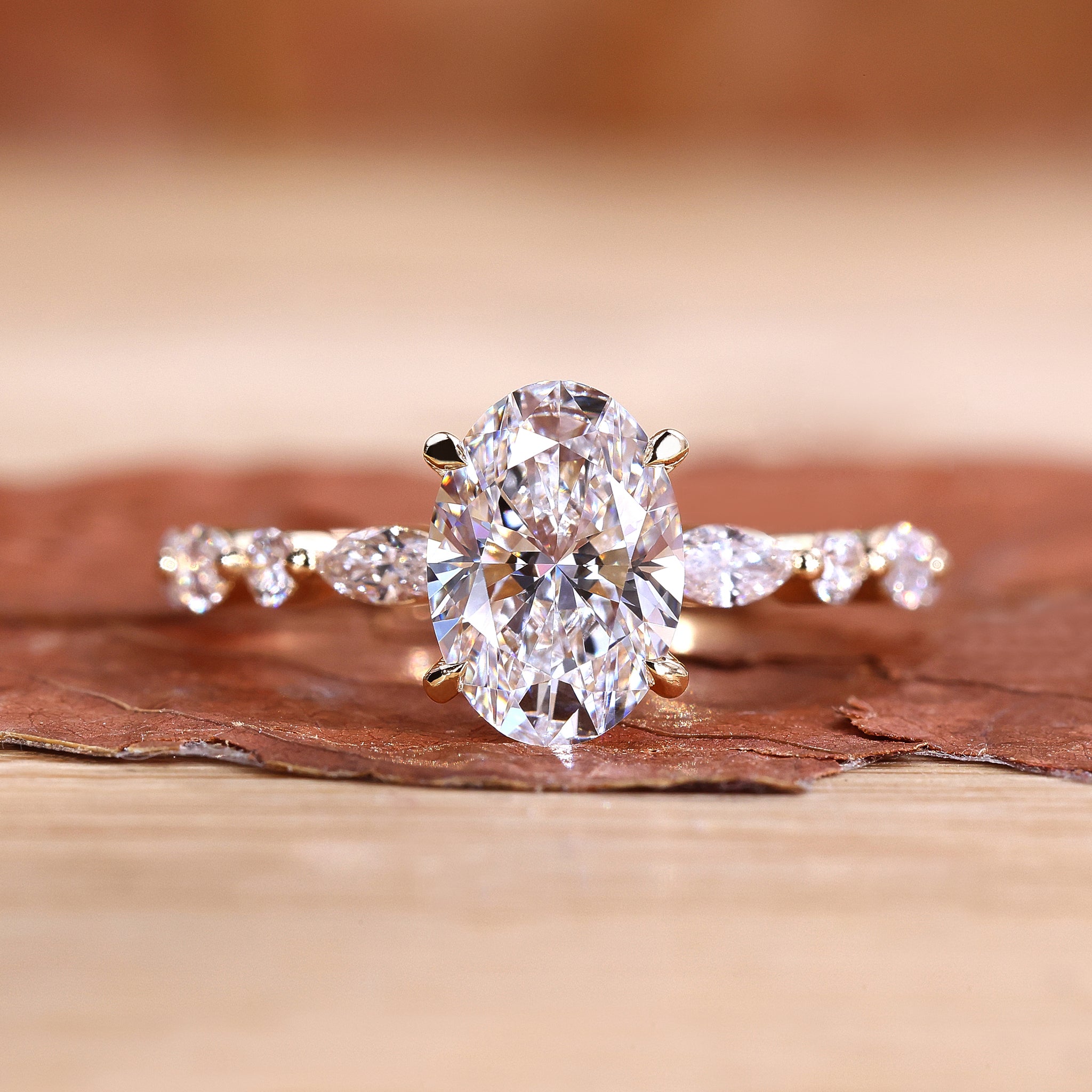
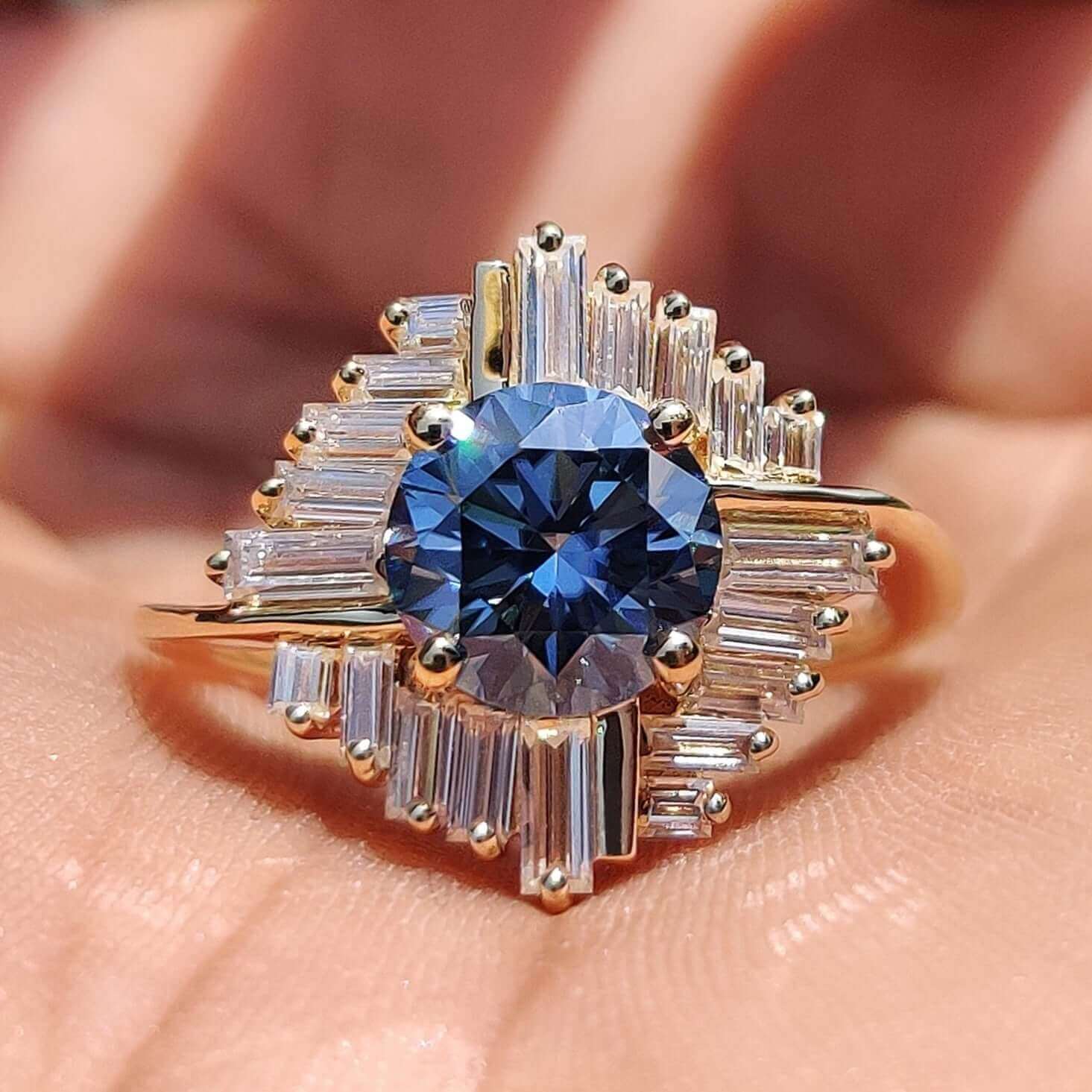

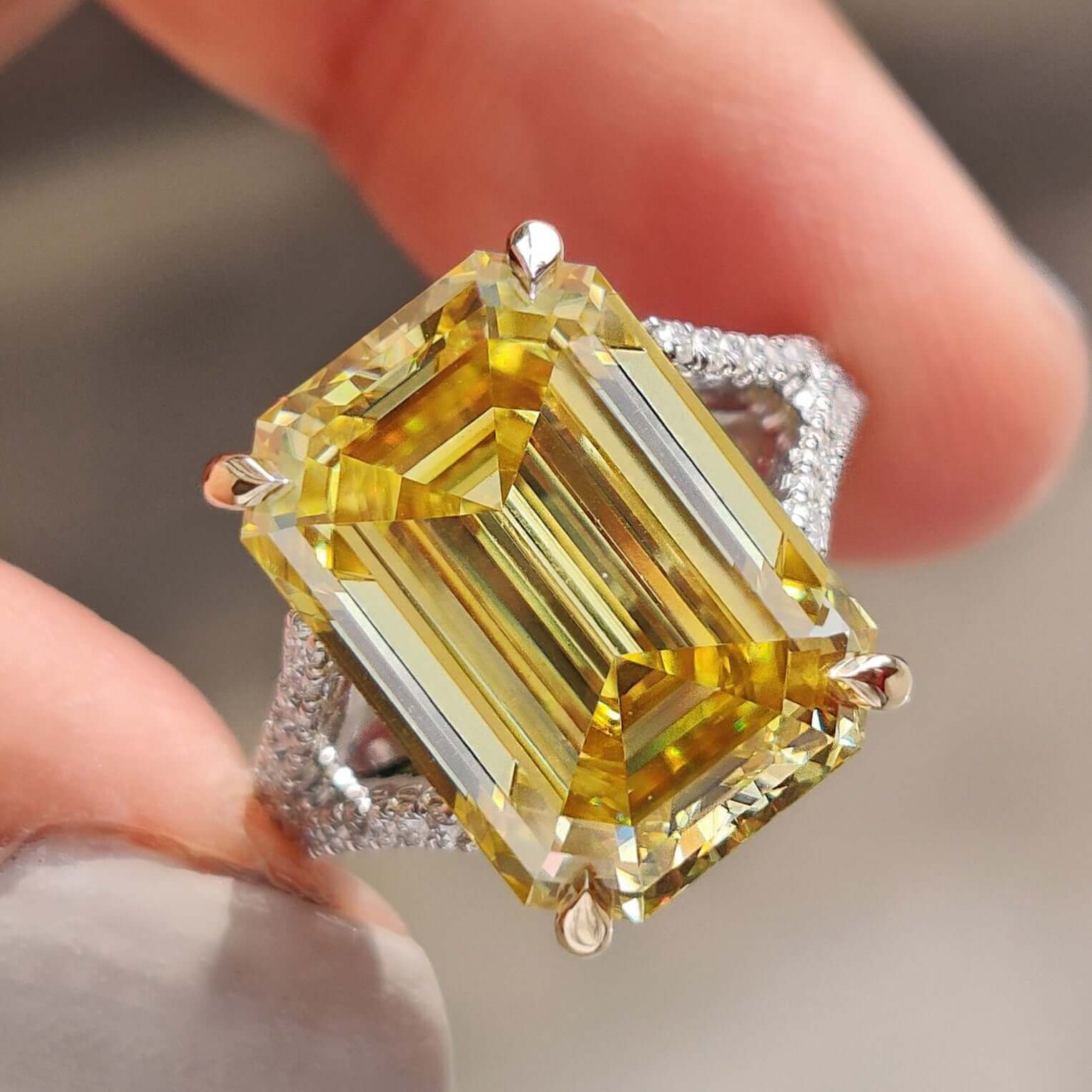
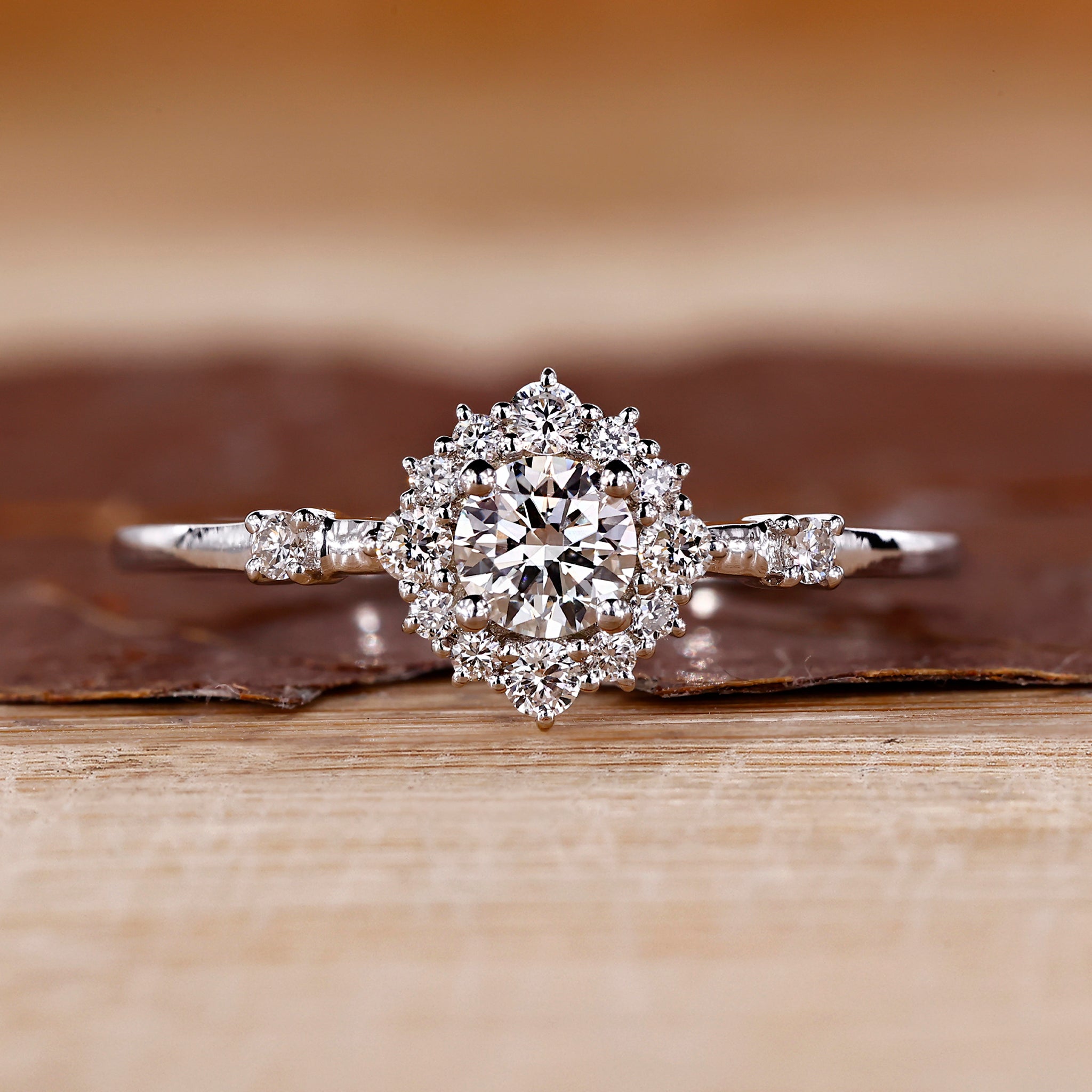
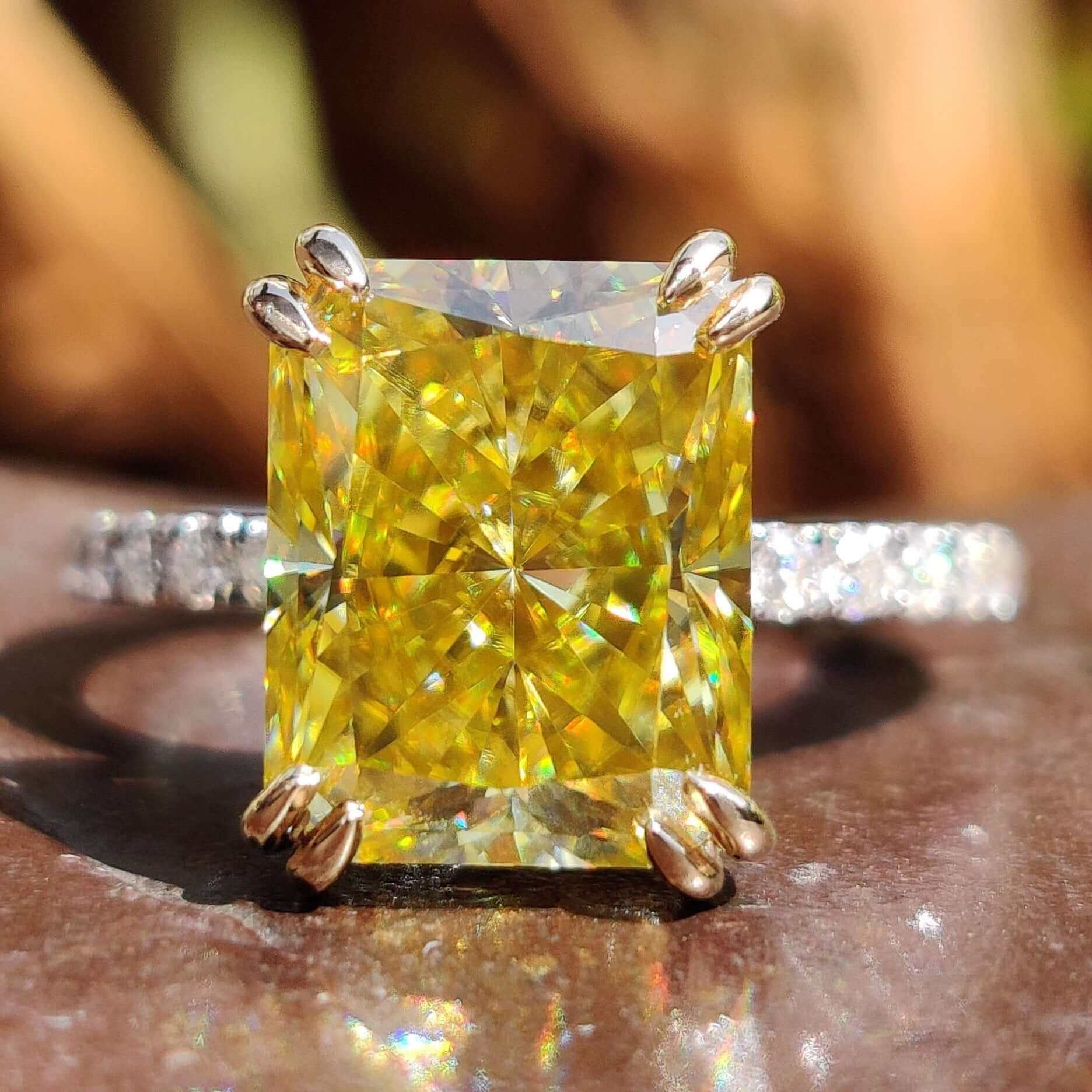
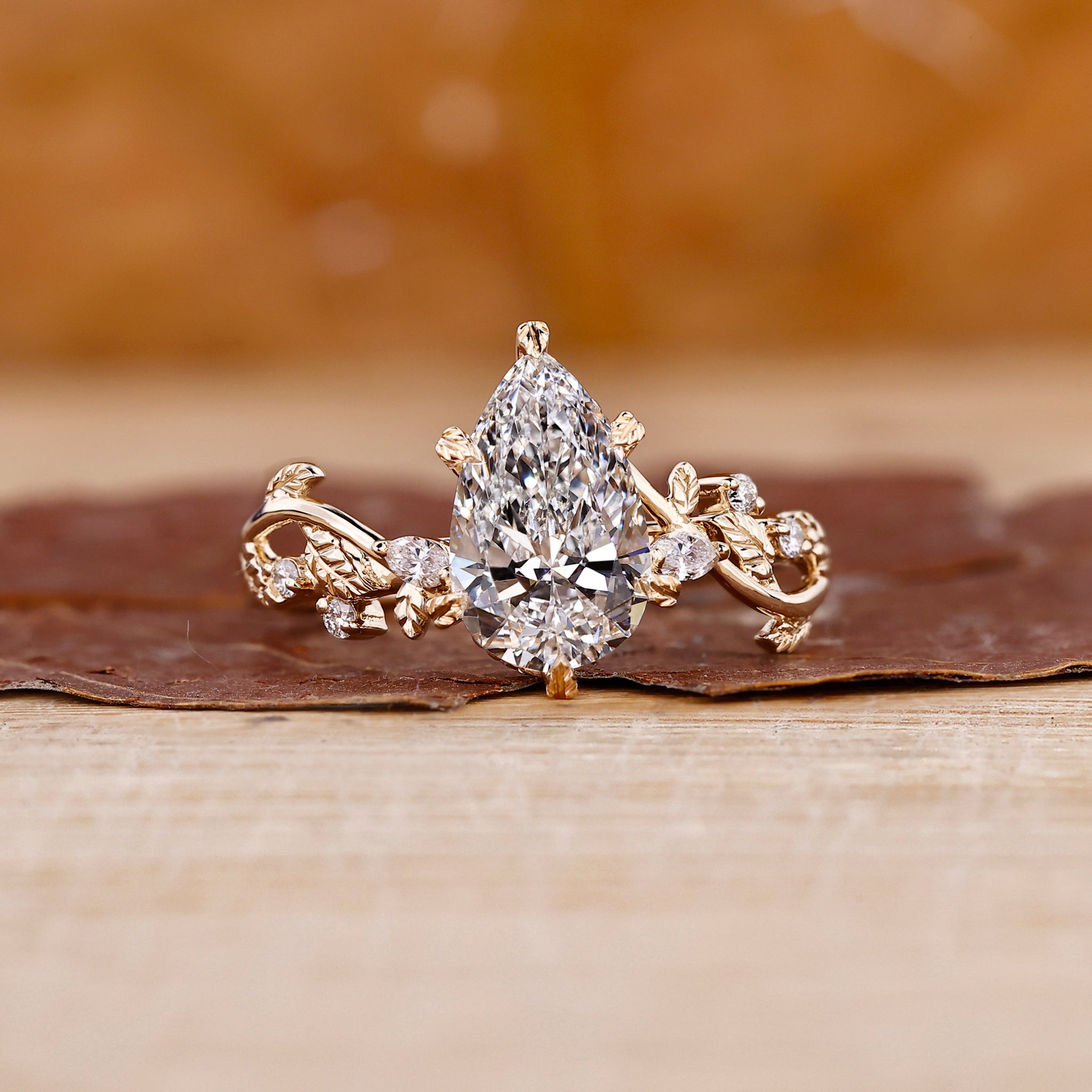
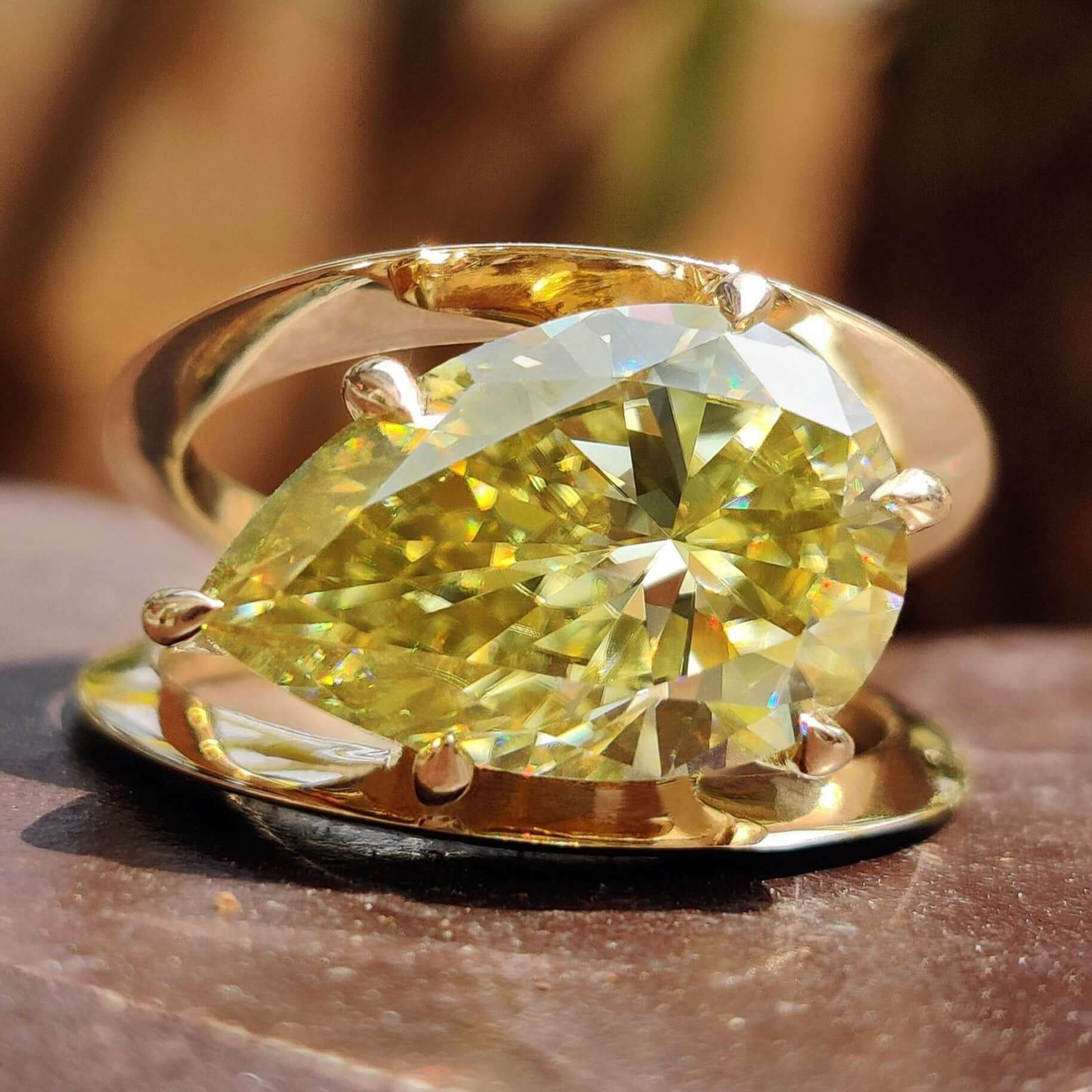
Moissanite can be a strong choice for an engagement ring when affordability and size are important. Its high hardness makes it suitable for regular wear, while its distinctive fire gives the centre stone a noticeable look. It can be used in solitaire, halo, three stone, vintage, and modern ring designs.
Lab grown diamonds may be better suited to buyers who specifically want a genuine diamond. They offer the familiar characteristics of diamond and are available in many cuts, colours, clarity grades, and carat weights. They can also be paired with diamond side stones and a wide range of ring settings.
Moissanite: Pros and Cons
Pros
- Generally more affordable than lab grown diamonds
- Strong brilliance and noticeable fire
- Around 9.25 on the Mohs hardness scale
- Available in many popular shapes
- Can offer a larger-looking centre stone
- Suitable for everyday engagement rings
Cons
- It is not a diamond
- Its coloured flashes may not suit every buyer
- Its optical properties differ from those of diamond
- Larger stones can show more noticeable fire
Lab Grown Diamonds: Pros and Cons
Pros
- They are real diamonds
- Same basic carbon composition as natural diamonds
- Rank 10 on the Mohs hardness scale
- Available in many shapes, sizes, colours, and clarity grades
- Often available with grading reports
- Usually cost less than comparable mined diamonds
Cons
- Usually more expensive than moissanite
- Larger stones can require a higher budget
- Price varies according to cut, colour, clarity, and carat weight
- Resale value may not match the original purchase price
How to Choose Between Moissanite and Lab Grown Diamonds
Your budget should be one of the first things you consider when choosing between the two. If you want to spend less on the centre stone while choosing a larger-looking size, moissanite can provide more flexibility. A lower stone cost can also leave room for a more detailed setting or additional jewellery.
If owning a genuine diamond matters more to you, a lab grown diamond may be the right option. You should also think about the type of sparkle you prefer, the size you want, and the style of ring you plan to wear. Comparing these factors together can make the final decision easier.
Key Factors to Consider
- Your overall jewellery budget
- The sparkle and light performance you prefer
- Your desired centre stone size
- The ring setting and design
- The hardness required for everyday wear
- Colour and clarity preferences
- Whether you specifically want a genuine diamond
- The long term care required for the ring
Moissanite vs Lab Grown Diamonds for Different Ring Styles
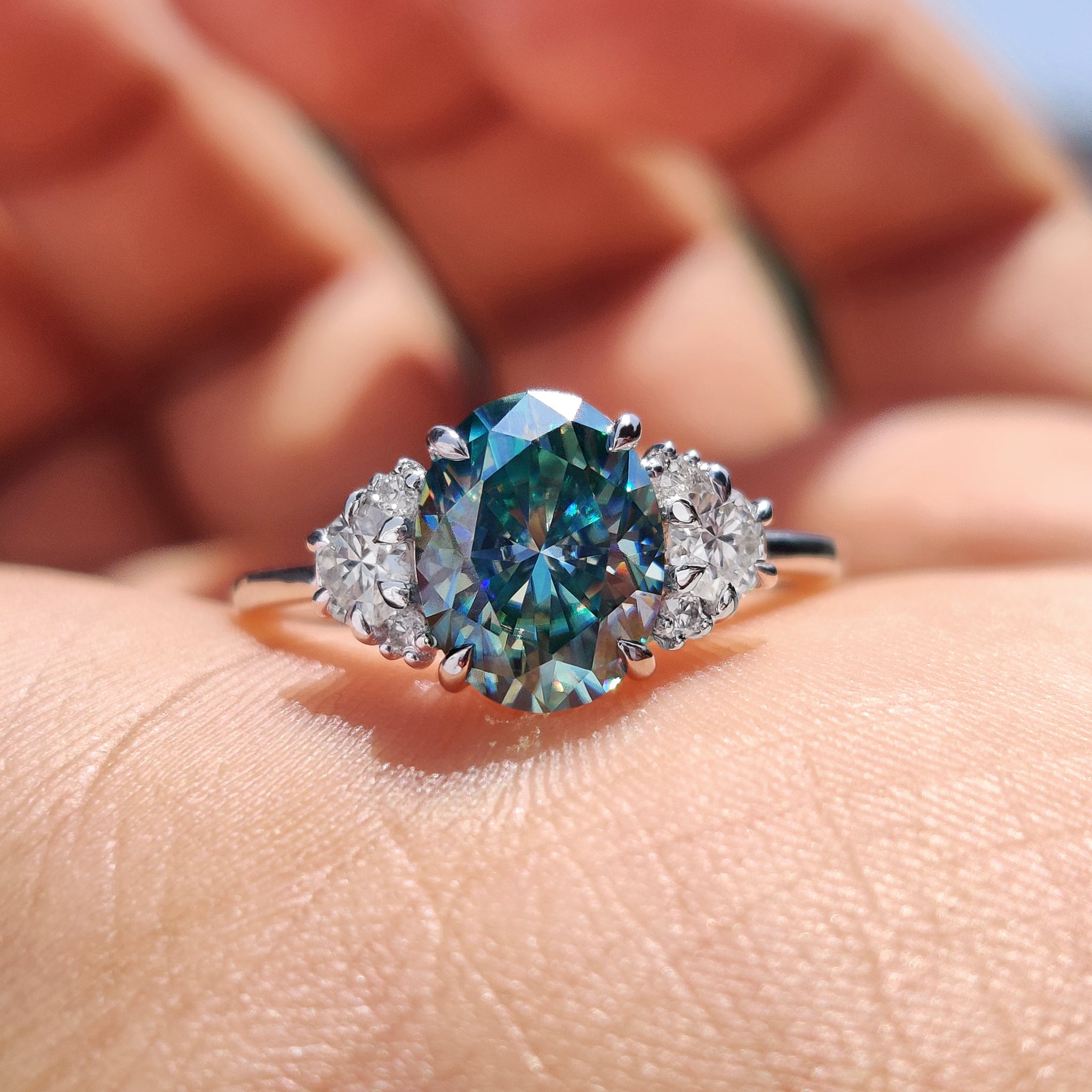
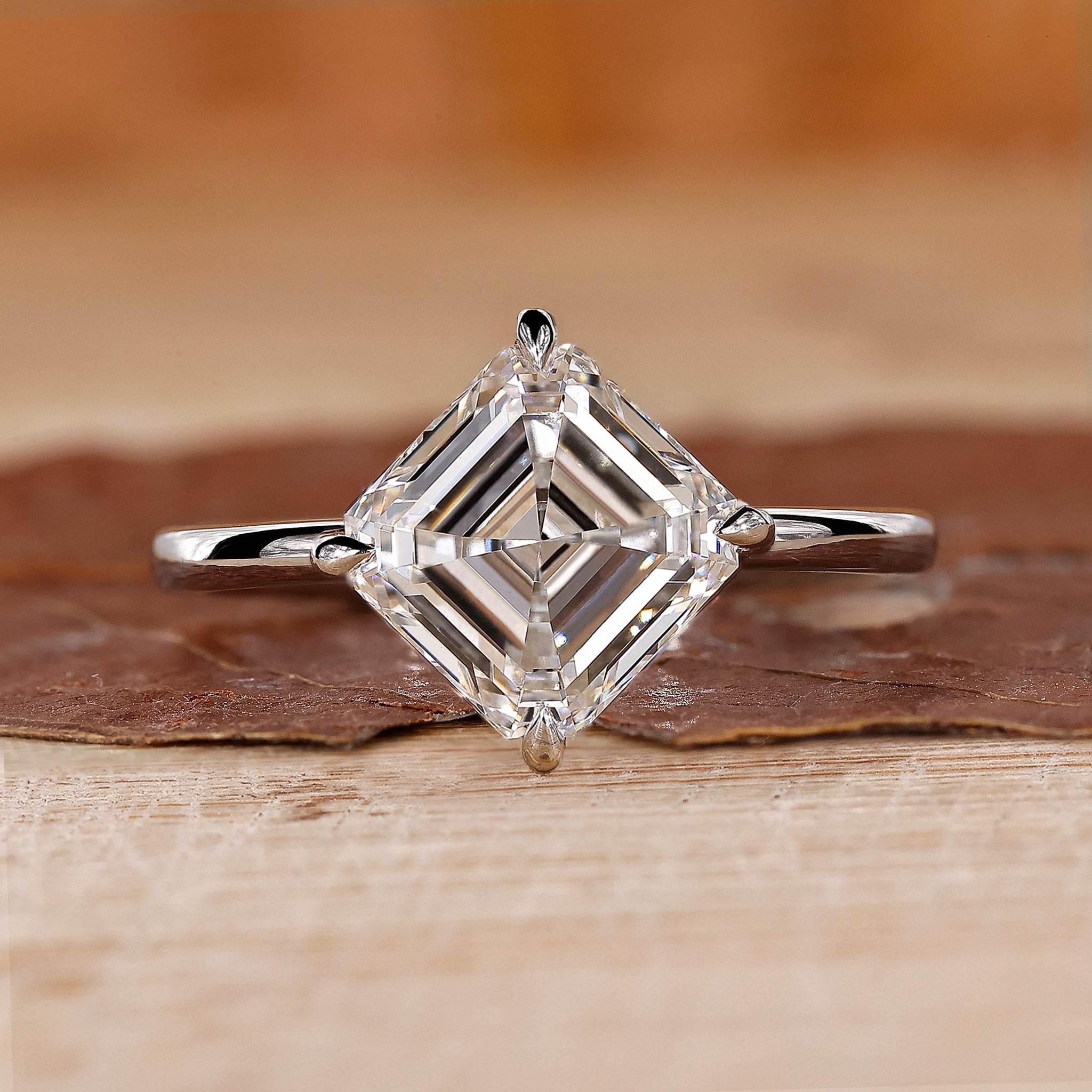
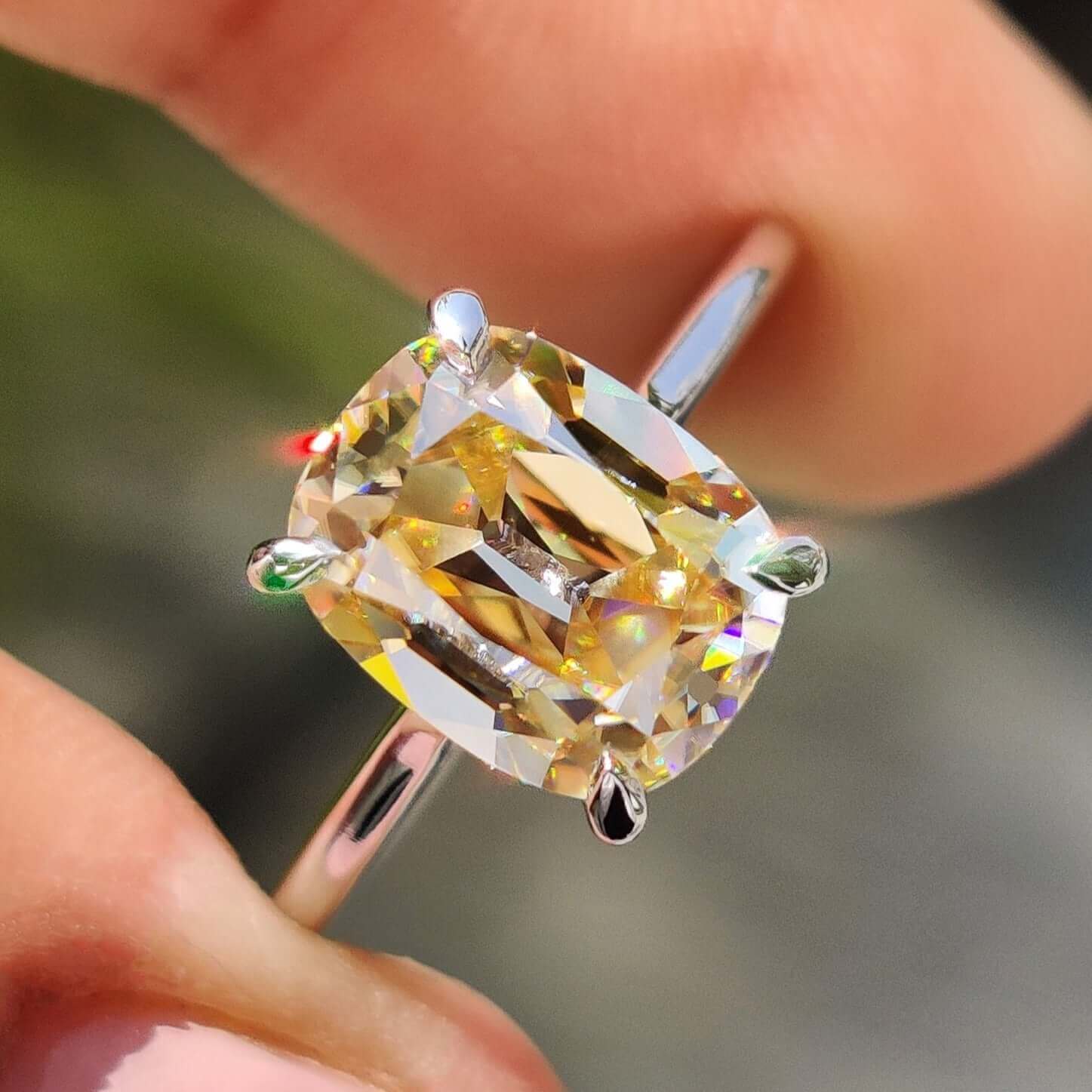
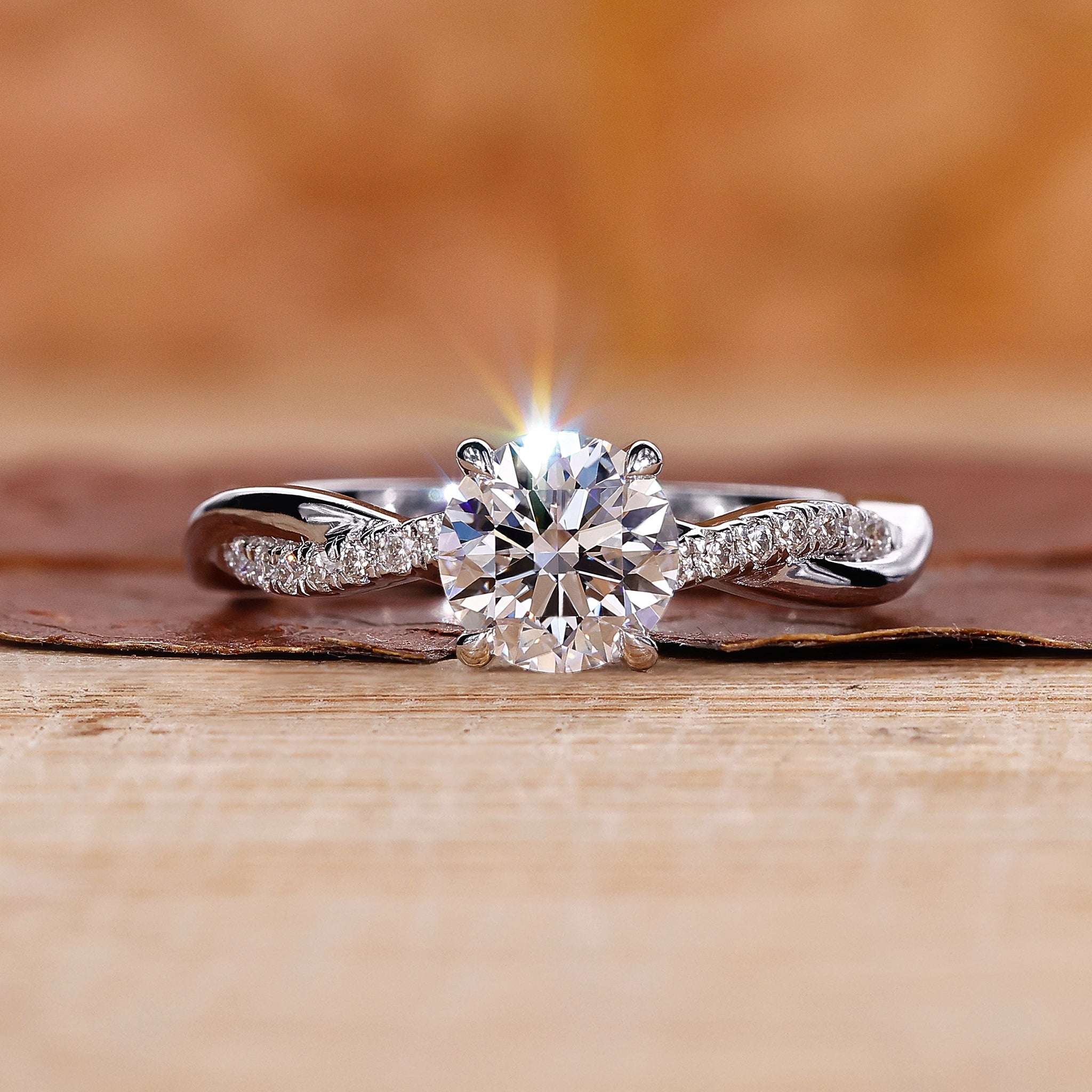
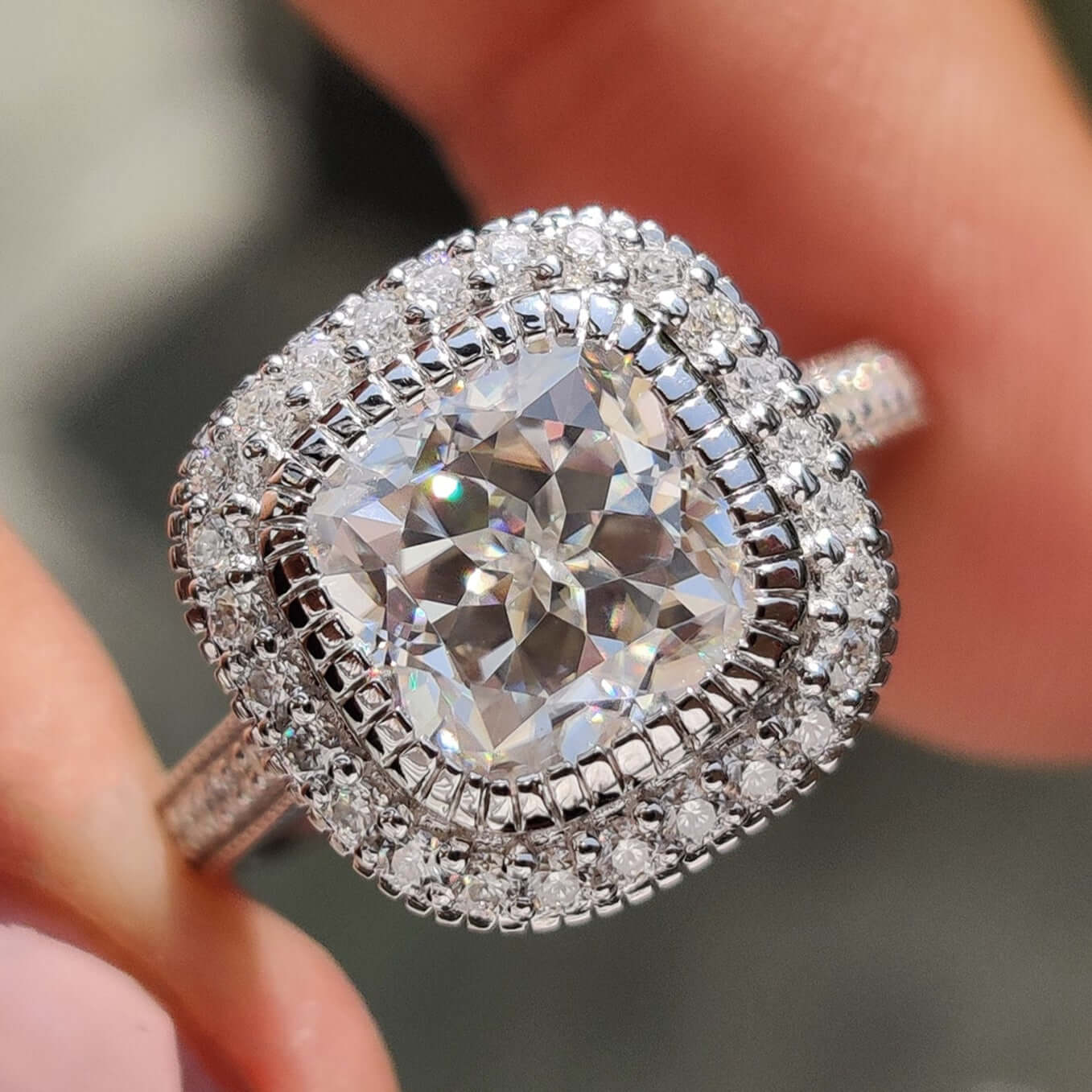

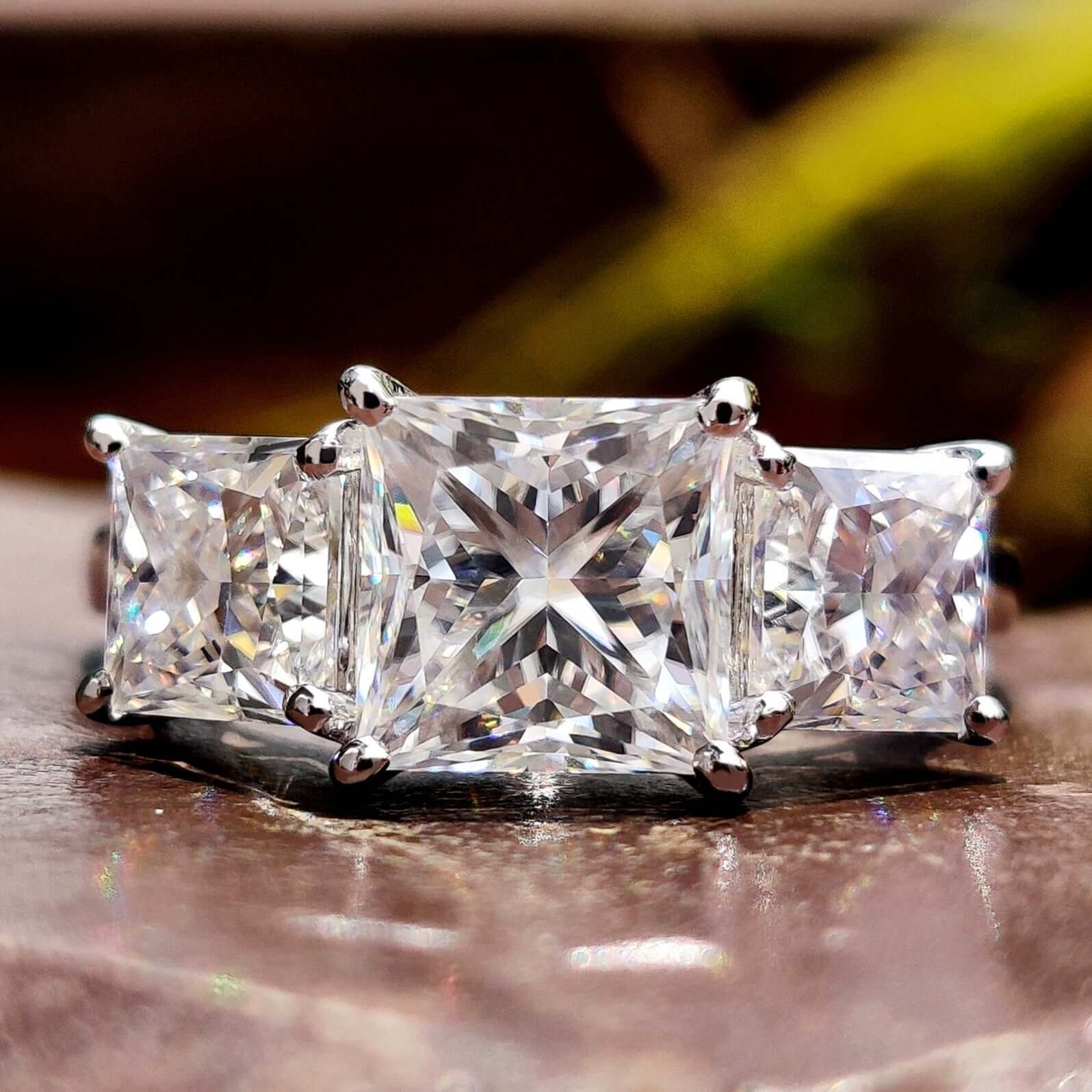
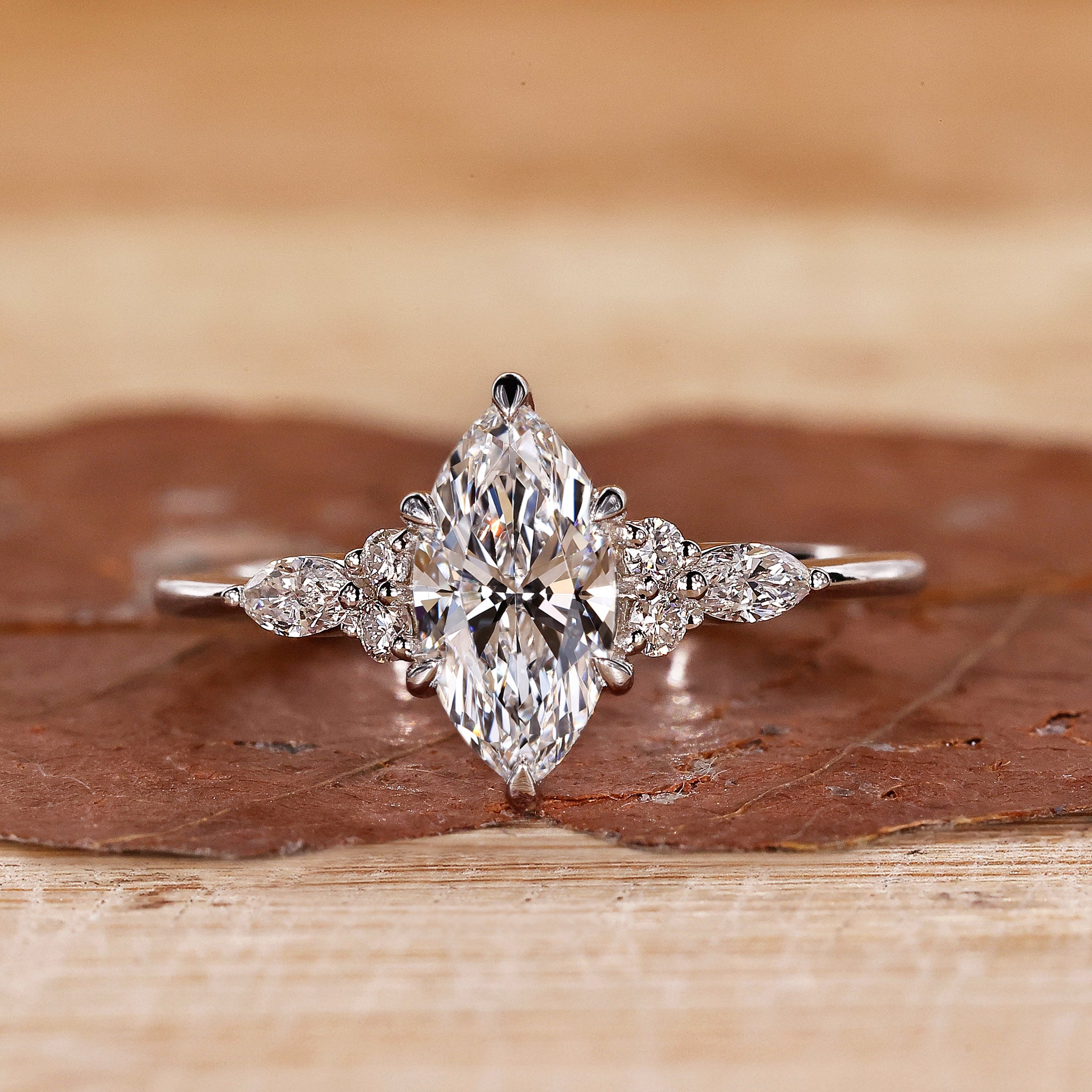
Both stones can be used in a wide range of engagement ring styles. Moissanite works particularly well in solitaire settings because the centre stone remains the main focus. It can also be paired with halo details, pavé bands, three stone designs, curved bands, and vintage settings.
Lab grown diamonds offer similar design flexibility. A round stone can suit a classic solitaire, while an oval or pear shape can create a different look. Emerald, radiant, cushion, and marquise cuts can also work with different settings and side stones, allowing you to create a ring that matches your preferred style.
Moissanite vs Lab Grown Diamonds for Long Term Wear
Both stones can be suitable for long term jewellery wear when cared for properly. Lab grown diamonds have a hardness of 10, while moissanite ranks around 9.25. Their high hardness makes both suitable choices for engagement rings that are worn regularly.
The ring setting also plays an important role in protection. A secure prong, bezel, or other suitable setting can help keep the centre stone in place. Removing your ring during heavy work, sports, or activities involving harsh chemicals can also reduce unnecessary wear.
Which Offers Better Value?
Moissanite can offer strong value for buyers who place a high priority on size and price. Because it generally costs less, you can choose a larger-looking stone or put more of your budget towards the setting. It is also available in many cuts, giving you plenty of design options.
Lab grown diamonds can offer value to buyers who want a real diamond at a lower price than many mined diamonds. They provide access to different carat weights, colours, clarity grades, and cuts. The best value depends on which qualities matter most to you rather than simply choosing the cheaper option.
Which Stone Looks More Like a Diamond?
A lab grown diamond has the same basic composition and crystal structure as a natural diamond, so it has the familiar appearance of diamond. Its cut has a major effect on its brightness and overall look. A well-cut stone can provide strong white brilliance and good light return.
Moissanite can look similar to a diamond, but its optical properties are different. Its stronger fire can create more noticeable coloured flashes, particularly in larger stones. If you want a stone that closely matches the appearance of a natural diamond, a lab grown diamond may be the more suitable choice.
How Cut Affects Both Stones
The cut is important because it controls how light enters and leaves the stone. A well-cut moissanite can show strong brilliance and fire, while a well-cut lab grown diamond can provide bright white light return. Poor proportions can reduce the visual appeal of either stone.
The shape you choose also changes the overall appearance. Round cuts are popular for their brilliance, while emerald and Asscher cuts offer a more open reflection pattern. Oval, pear, marquise, cushion, and radiant shapes can create different proportions and styles on the finger.
Moissanite vs Lab Grown Diamonds for Budget Buyers
Moissanite can be particularly useful when you have a fixed budget but want a larger centre stone. Its lower price can allow you to consider larger measurements without increasing the stone budget as much. You may also have more money available for the ring's metal and setting.
Lab grown diamonds can still work well for budget-conscious buyers. Choosing a practical clarity grade, a slightly smaller carat weight, or a simple setting can help control the overall price. Comparing complete ring prices is useful because the centre stone is only one part of the final cost.
Moissanite vs Lab Grown Diamonds: What Should You Buy?
Moissanite may be the right choice if your main priorities are affordability, size, and strong fire. It offers high hardness and works well in everyday engagement rings. Its distinctive flashes of colour can also give the stone a different look from a traditional diamond.
A lab grown diamond may be better if you want a genuine diamond and prefer its traditional appearance. It offers a broad range of sizes, shapes, colours, and clarity grades, although it generally costs more than moissanite. Your budget and personal preferences should guide the final decision.
Conclusion
Moissanite and lab grown diamonds are both useful choices for engagement rings, but they offer different benefits. Moissanite provides a lower price, high hardness, large visual size, and strong fire. It can suit buyers who want to make their jewellery budget go further.
Lab grown diamonds provide the composition and crystal structure of diamonds, along with the familiar appearance of a diamond. They usually cost more than moissanite but can cost less than comparable mined diamonds. By comparing price, sparkle, size, hardness, and personal preference, you can choose the stone that best suits your engagement ring.
Create a Custom Jewellery Design Made Just for You
Choose your stone, setting, metal, and details to create a piece that matches your style. Diamondrensu UK brings your jewellery idea to life.
Start Your Custom DesignFrequently Asked Questions
Leave a comment
Please note, comments must be approved before they are published.