What to Know Before Buying an Eternity Band: Fit, Stones, and Setting
An eternity band is a ring set with diamonds or other gemstones around all or part of its circumference. It is often chosen for an anniversary, wedding, personal milestone or to wear alongside an engagement ring. The right design depends on more than appearance: fit, setting security, stone shape and compatibility with other jewellery all matter.
This eternity band buying guide covers the key decisions to make before buying. Compare the options against your budget, routine and preferred style.
What Is an Eternity Band?
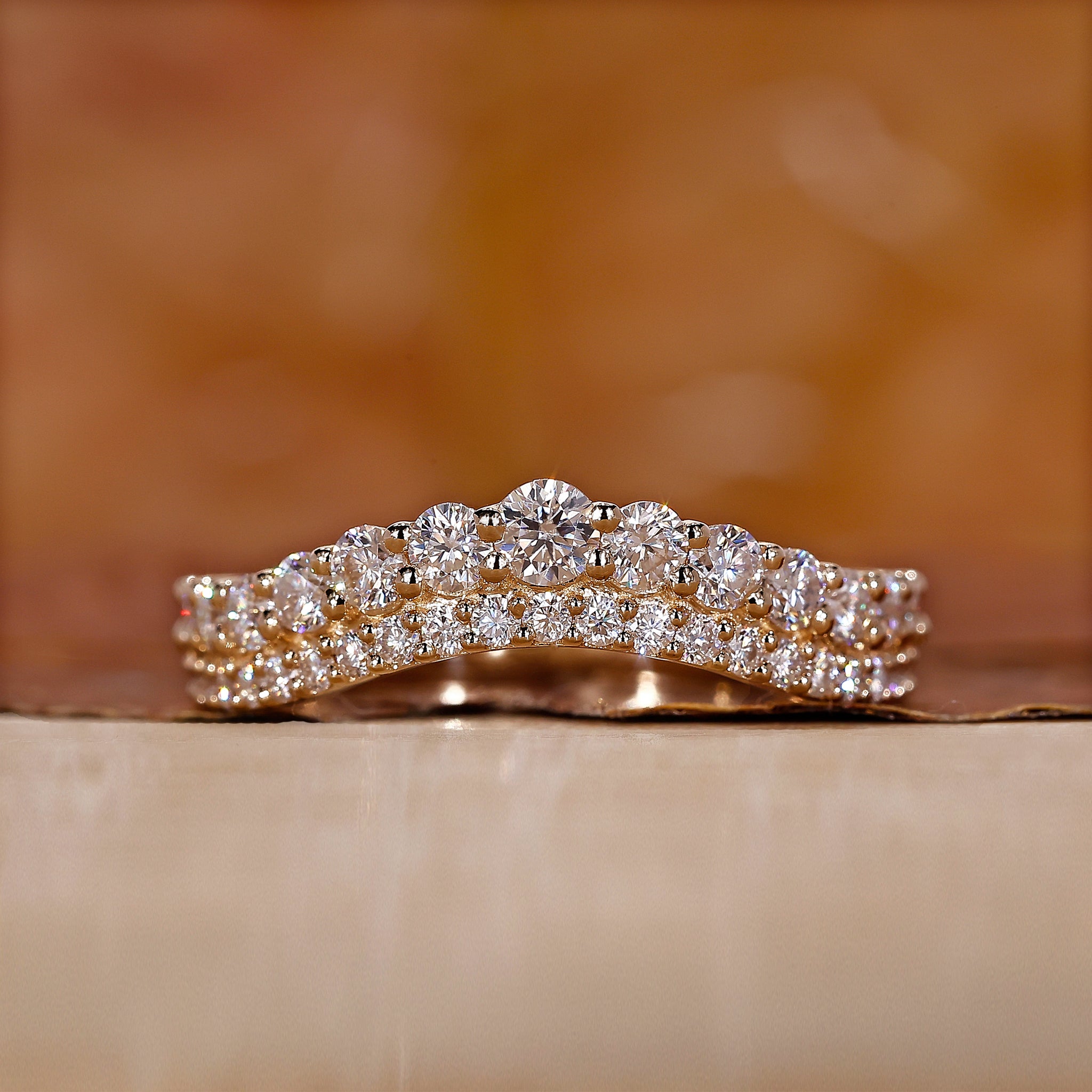
An eternity band is a ring set with diamonds or gemstones arranged around its circumference or across a section of it. The continuous row of stones gives the design its name and makes it a popular choice for anniversaries, wedding jewellery and meaningful gifts. Depending on the design, an eternity band can have a narrow profile with small stones or a wider appearance with larger diamonds.
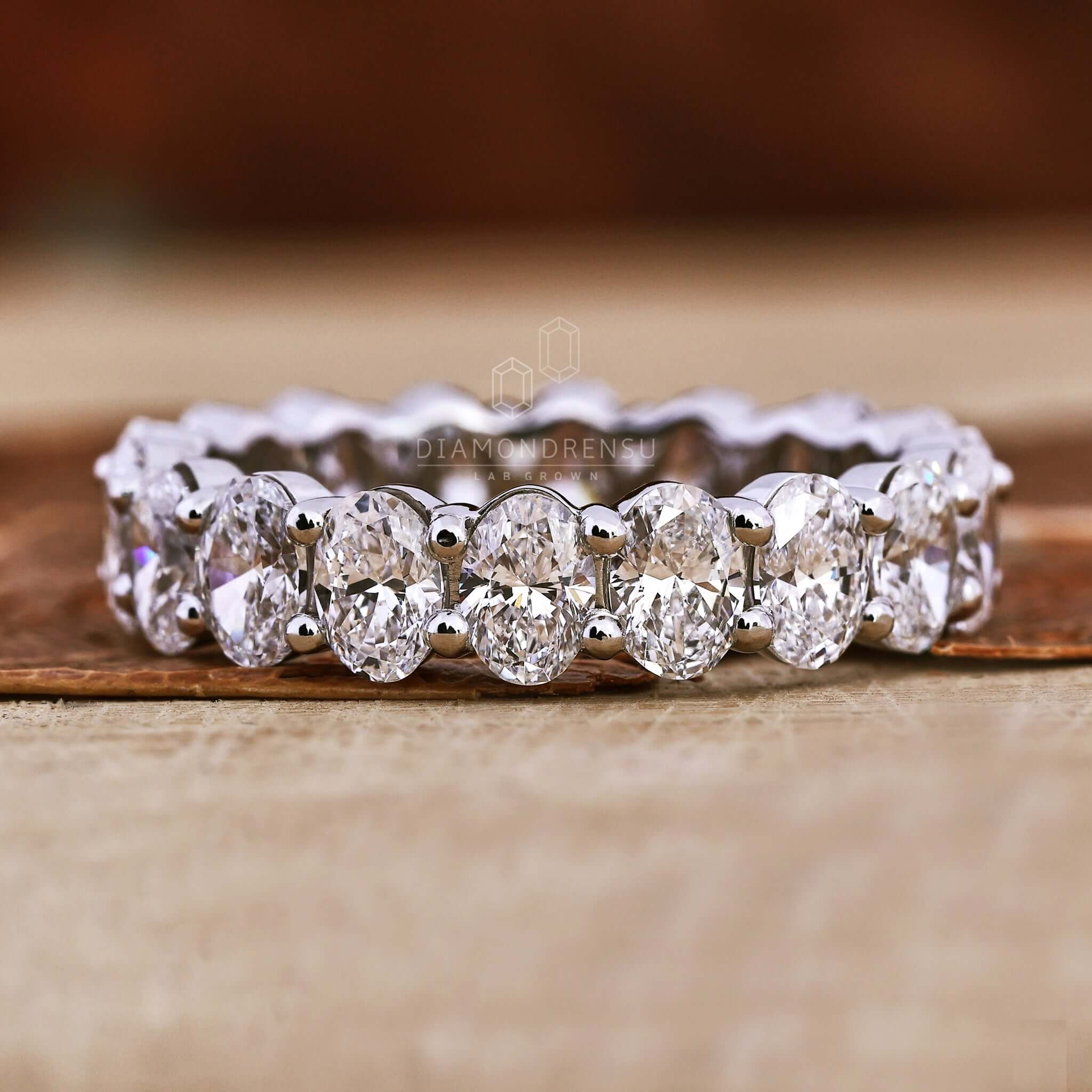
Although diamond eternity bands are widely recognised, other gemstones can also be used. The choice of stone shape, setting and metal creates different looks, from simple rows of round diamonds to designs with emerald-cut or oval stones. Some eternity bands are worn alone, while others are paired with engagement rings or stacked with additional rings.
Full Eternity vs Half Eternity Bands
| Full Eternity Band | Feature | Half Eternity Band |
|---|---|---|
| Diamonds or gemstones surround the entire band. | Stone Placement | Diamonds or gemstones cover the upper portion of the band. |
| Offers a continuous row of stones around the ring. | Overall Appearance | Shows stones across the top, with plain metal underneath. |
| Stones around the entire band may feel different against the fingers. | Comfort | The plain metal section may feel more comfortable against neighbouring fingers. |
| Suitable for regular wear with appropriate care and maintenance. | Everyday Wear | A practical option for everyday wear, depending on the setting and design. |
| Usually difficult to resize because stones surround the entire band. | Resizing | May be easier to resize if the plain metal section allows adjustments. |
| Protection depends on the setting and how securely the stones are held. | Stone Protection | Protection depends on the setting, stone placement and construction. |
| May cost more because stones extend around the entire band. | Price | May cost less because fewer stones are generally required. |
| Those who prefer stones visible around the entire circumference. | Best For | Those who prefer stones across the top with a simpler underside. |
Find the Right Fit and Width
Correct sizing is especially important because many eternity bands are difficult to resize after they are made. Have your finger measured by a jeweller when your hands are at a normal temperature; fingers can swell in heat and shrink in cold weather. A ring should feel secure without pinching or being difficult to remove.
Width affects comfort: a narrow band may sit neatly beside an engagement ring, while a wider style can feel more substantial. Check the sizing guide, resizing or exchange options, and return terms before ordering.
Choose the Stones and Shape
For diamond eternity bands, compare cut, colour, clarity and carat weight together. In a row of smaller diamonds, consistency in size and colour can be particularly noticeable. Ask for the total carat weight and check whether any grading report applies to individual stones or the ring as a whole.
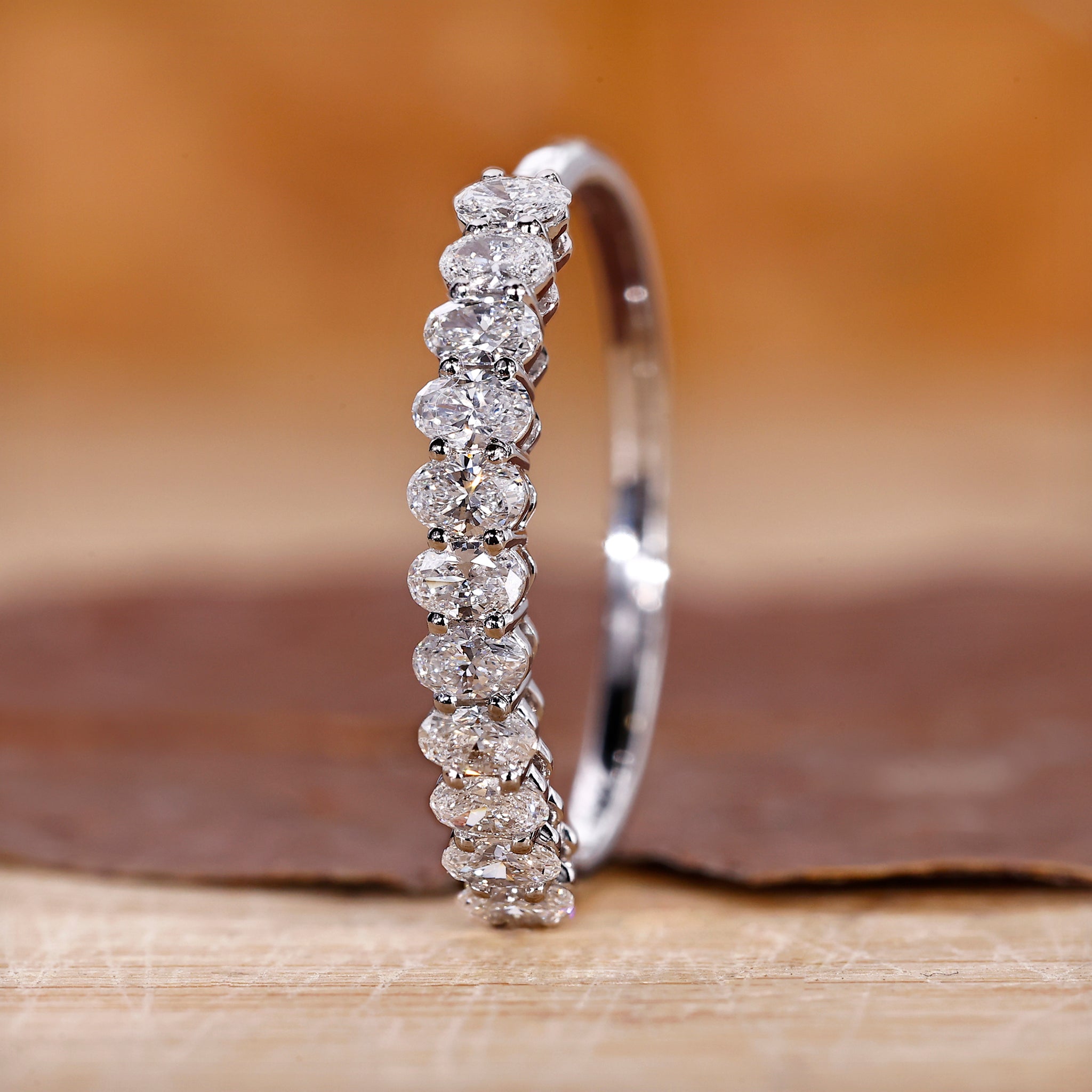
Round diamonds create a regular line and are a popular choice. Princess-cut stones give a more geometric appearance, while emerald-cut diamonds have long, step-like facets. Oval and pear shapes offer a different outline, but spacing and stone orientation need careful planning around the band.
When comparing options, check stone size, setting height and consistency between stones. Ask whether any coloured gemstones are suitable for regular wear and how they should be cared for.

Natural or Lab-Grown Diamonds?
Natural and lab-grown diamonds have the same basic chemical composition and crystal structure, but they form in different ways. Natural diamonds develop underground over geological timescales, while lab-grown diamonds are produced using technology.
Compare prices and specifications rather than assuming one category always offers better value. Confirm the diamond type, total carat weight, metal and any grading information.
Compare Setting Styles
The setting affects the band’s appearance and how much protection the stones receive. Consider your routine and ask the jeweller how the setting should be inspected and maintained.
- Prong setting: Small claws hold each stone and leave more of it visible. Prongs can wear or catch on fabric, so they need checks.
- Channel setting: Stones sit between strips of metal, creating a defined row and shielding their sides. Resizing may be difficult.
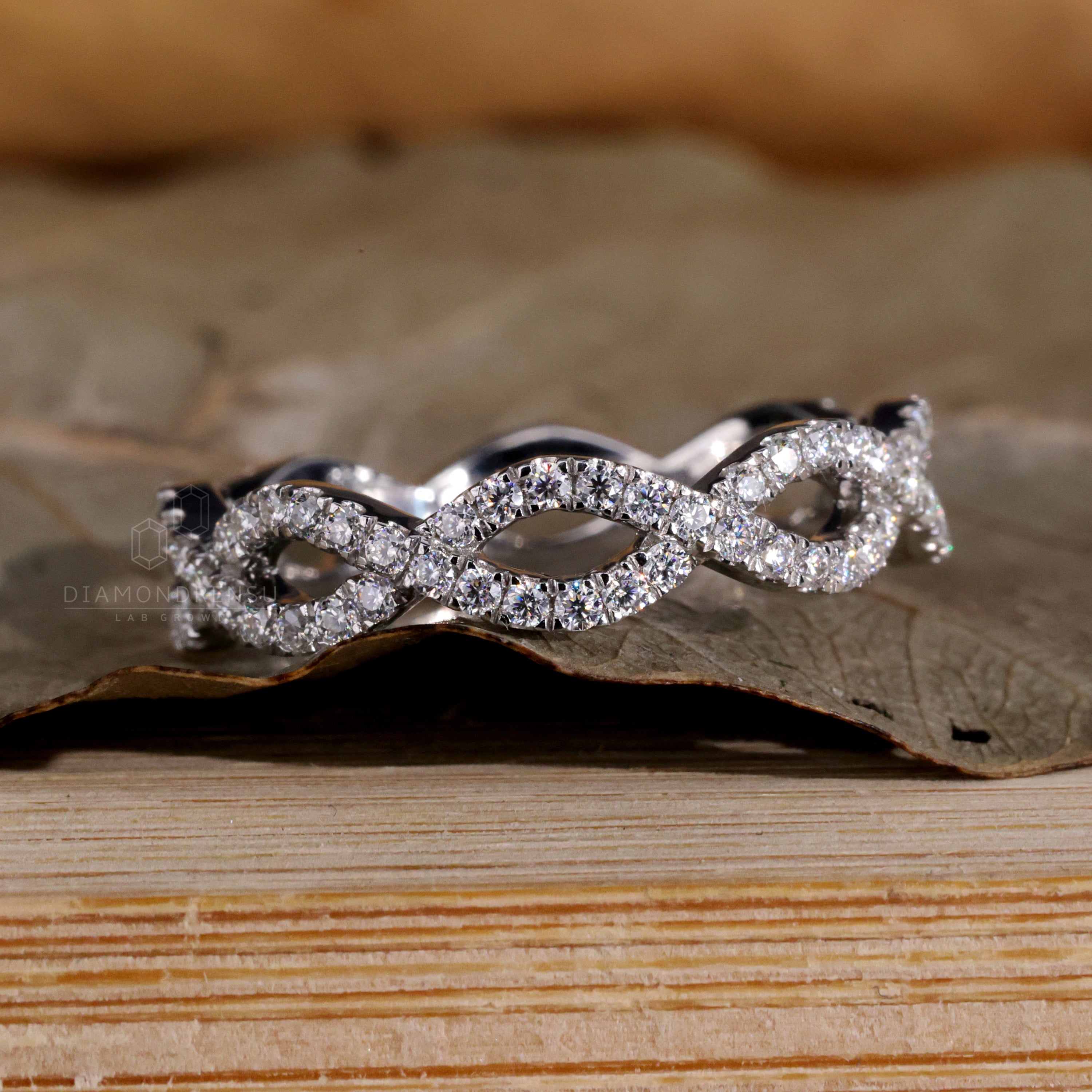
- Pavé setting: Small stones sit close together, held by tiny beads or prongs. The detailed setting needs regular inspection.
-
Bezel setting: Metal surrounds each stone or its edge. This can offer protection, although less of the stone may be visible.
No setting is maintenance-free. Ask what happens if a stone becomes loose and whether inspection or repair is covered by the seller’s policy.
Select a Suitable Metal
Yellow gold has a warm colour, white gold has a cooler finish and rose gold has a pink tone. White gold may need periodic rhodium plating to maintain its bright surface, depending on the alloy and wear. Platinum has a naturally white appearance and is often chosen for its durability, although it may cost more.
If wearing it with an engagement ring, compare the metals and profiles. Matching metals coordinate the set, while mixed colours can work too; check that the rings sit comfortably.
Pair It with an Engagement Ring
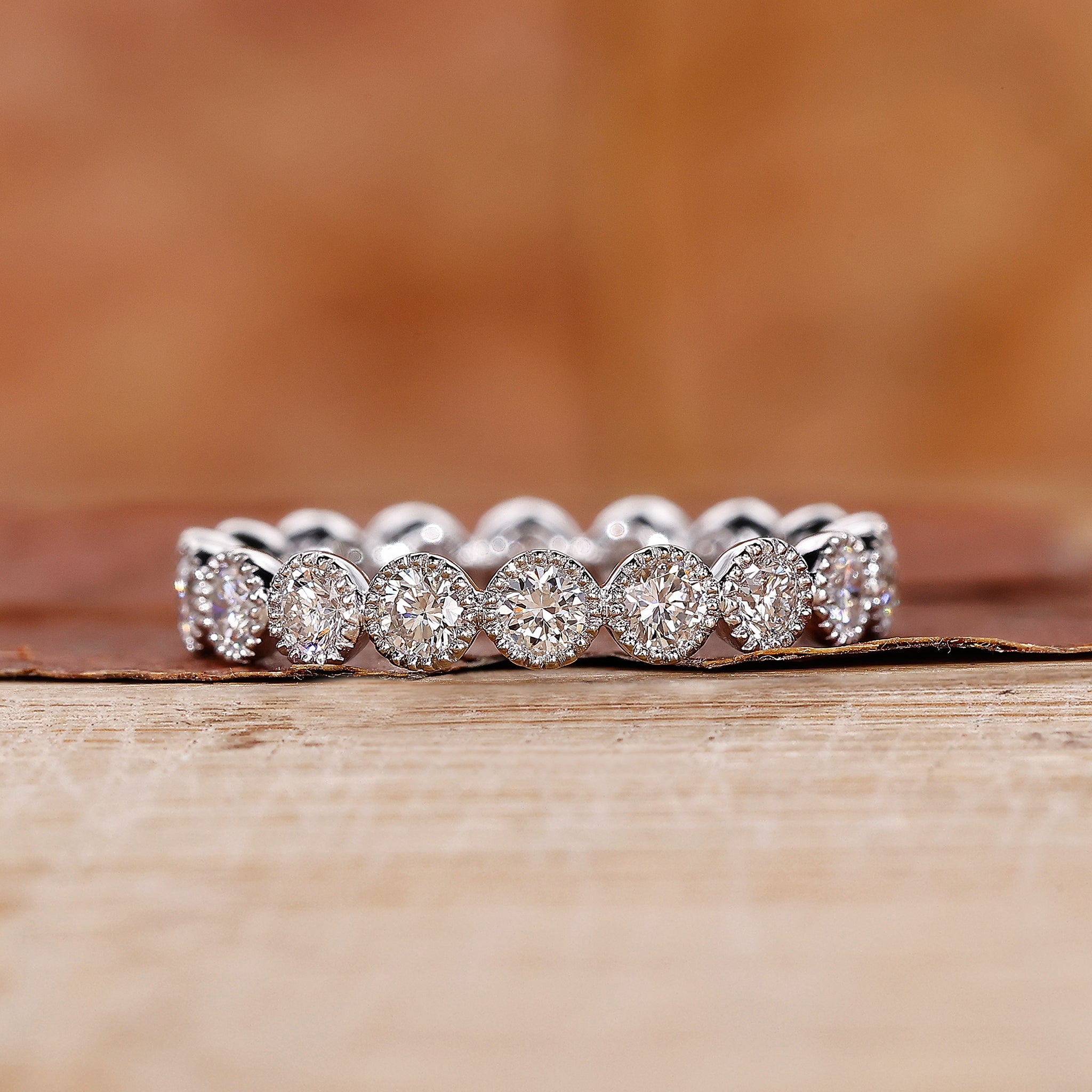
A straight eternity band may sit flush against an engagement ring with a straight lower edge. A large centre stone or low setting can leave a gap, in which case a curved or contoured band may follow the ring’s outline more closely.
If possible, try both rings on together. Check whether they move, press against each other or feel bulky. When buying online, compare the profiles and measurements, and ask the jeweller whether the band is designed to sit flush with your engagement ring.
Care for Your Eternity Band
Remove the ring for heavy lifting, gardening, DIY tasks and activities where it could be knocked or exposed to harsh chemicals. Diamonds are hard, but they can chip if struck at the wrong angle, and metal settings can still become damaged.
Follow the jeweller’s cleaning instructions; a soft brush, lukewarm water and mild washing-up liquid may suit some diamond rings. Check first for coloured stones or delicate settings. Arrange inspections for loose stones and worn claws, and store the band separately.
How Much Does an Eternity Band Cost?
Price depends on the metal, stone type, total carat weight, stone quality, setting and workmanship. Full eternity bands often need more stones than comparable half eternity designs. Larger diamonds and higher grades can also increase the cost, as can a wider or more complex ring.
Compare the total carat weight, metal purity, diamond type, grading details and aftercare. A lower price may reflect differences in stone quality, size, metal or service.
Conclusion
The right eternity band balances style with fit, setting security and care. Decide whether you prefer a full or half eternity design, compare stone shapes and settings, and choose a metal that works with your other rings. Before ordering, confirm sizing, resizing options, return terms and maintenance support. These checks will help you choose a band that suits your jewellery collection and everyday routine.
Find Your Perfect Eternity Band
Explore eternity band designs at Diamondrensu and customise your ring with your preferred diamond shapes, settings and precious metals.
Customise Your RingFrequently Asked Questions
Leave a comment
Please note, comments must be approved before they are published.