Half Pavé or Full Pavé? How to Choose the Right Diamond Ring Setting
Choosing a diamond ring involves more than selecting the centre stone. The setting also affects the ring’s appearance, price, maintenance and suitability for everyday wear. Half pavé and full pavé are two popular options, with each offering a different amount of diamond coverage along the shank.
Half pavé places smaller diamonds along part of the shank, while full pavé continues the diamond setting further around the ring. Both styles can work with different engagement ring designs, so your choice can depend on your budget, lifestyle, preferred appearance and how you plan to wear the ring.
What Is a Half Pavé Diamond Ring?

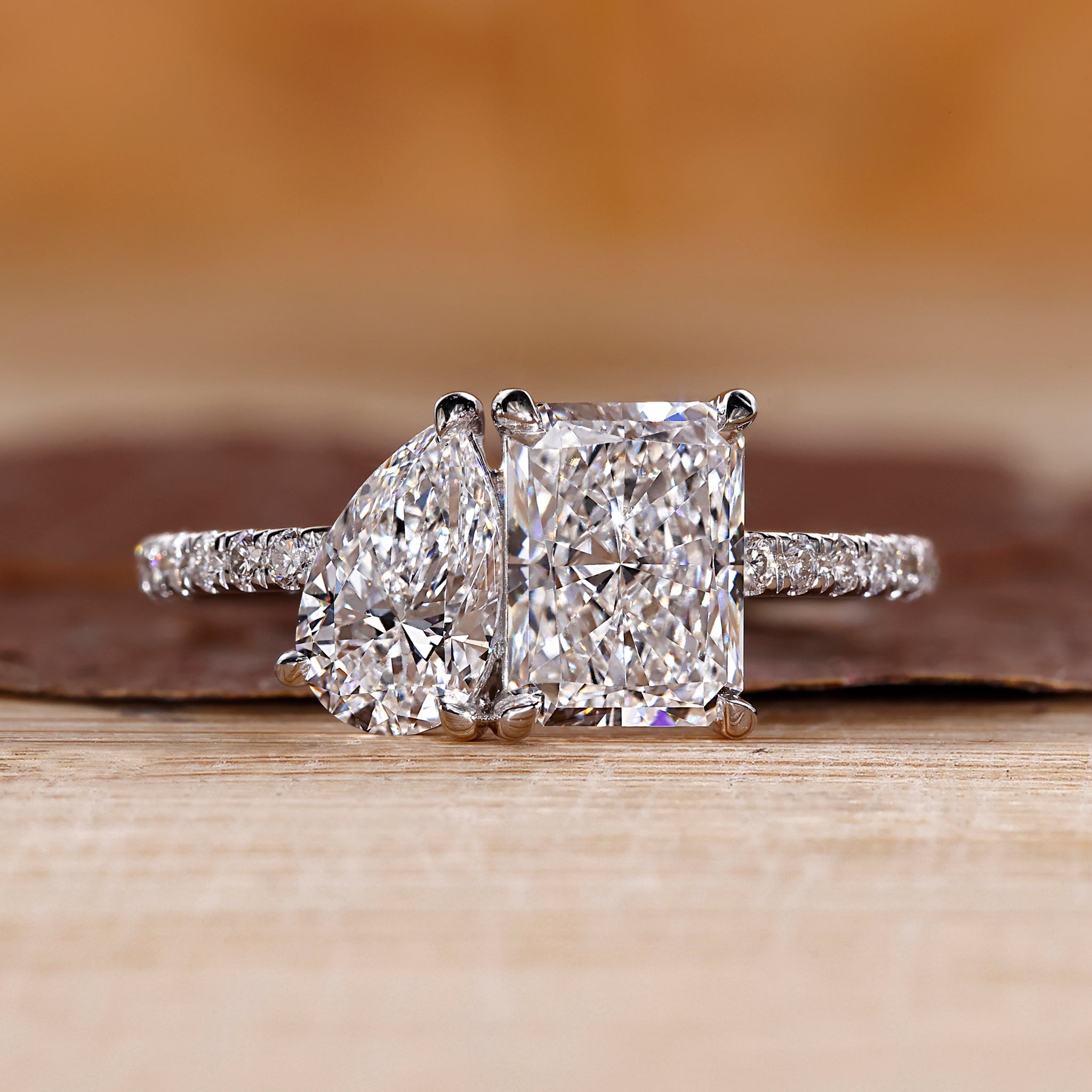
A half pavé diamond ring has small diamonds set along the upper section of the shank, usually stopping before the underside. This leaves some of the metal visible and creates a balance between diamond detail and the ring’s metalwork. It is a popular option for those who want additional diamonds without covering the entire shank.
The plain section underneath can also make the ring easier to handle and may provide more flexibility if resizing is required. Half pavé works particularly well with solitaire and other engagement ring designs where you want the centre stone to remain the main focus.
What Is a Full Pavé Diamond Ring?

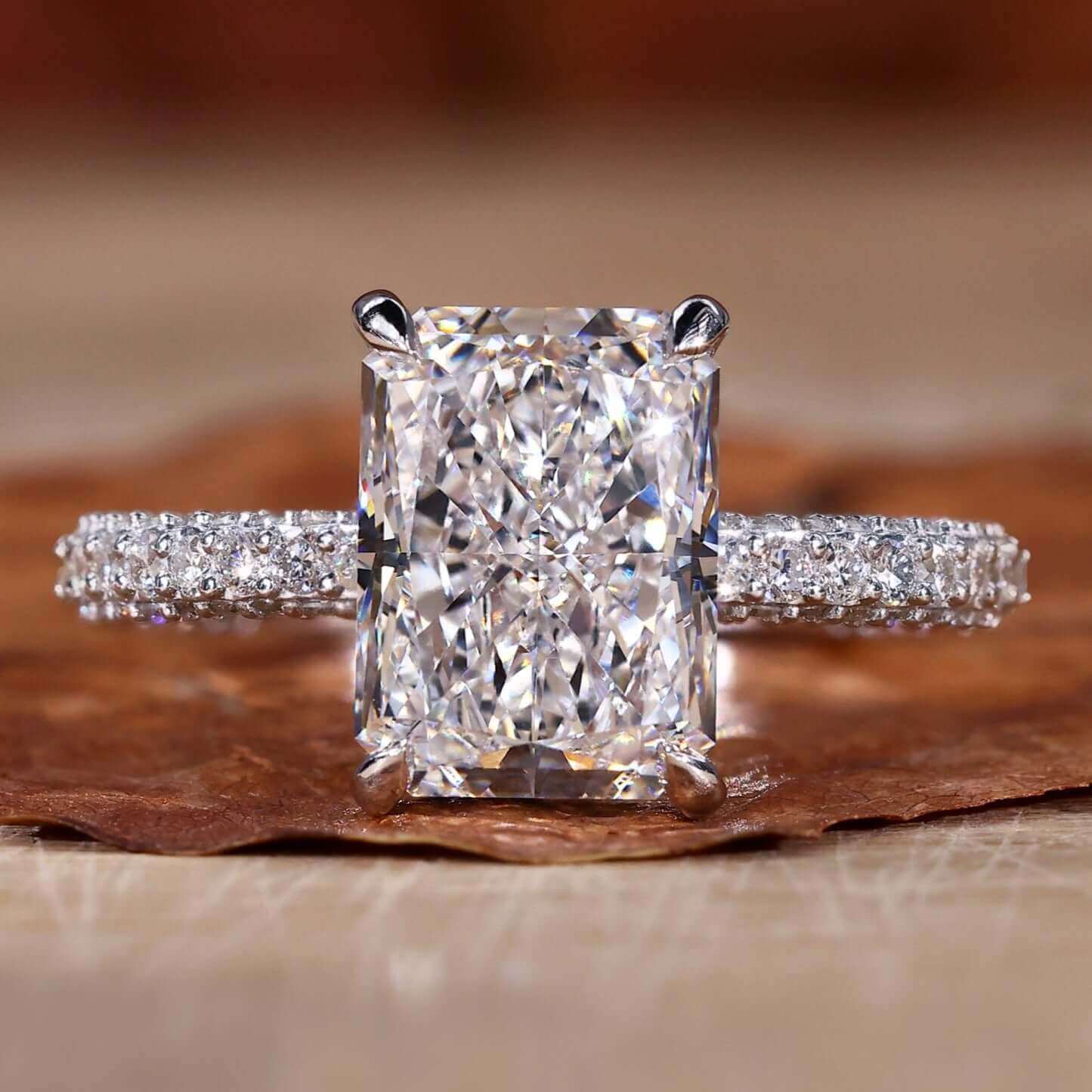
A full pavé diamond ring has small diamonds set around most or all of the shank. Instead of stopping around the lower part of the ring, the diamond setting continues further around the band. This creates a more continuous appearance when the ring is viewed from different angles.
Full pavé can complement solitaire, halo and three stone engagement rings. Since the design requires more small diamonds and additional setting work, it can also have a higher price than a similar half pavé ring.
Half Pavé vs Full Pavé: Key Differences
The main difference between these two settings is diamond coverage, but there are several other factors to consider before choosing one.
| Factor | Half Pavé | Full Pavé |
|---|---|---|
| Diamond Coverage | Part of the shank | Most or all of the shank |
| Metal Visibility | More visible | Less visible |
| Appearance | Mix of diamonds and metal | More continuous diamond detail |
| Number of Small Diamonds | Usually fewer | Usually more |
| Price | Often lower | Often higher |
| Maintenance | Generally simpler | Requires more attention |
| Resizing | May offer greater flexibility | Can be more complex |
| Everyday Wear | Practical for many lifestyles | Suitable with proper care |
Your decision should not be based only on the amount of diamond coverage. Think about how often you will wear the ring, your daily routine, your budget and whether you plan to wear it with a wedding band.
Half Pavé vs Full Pavé: Which Looks Better?
Half pavé creates a visible transition between the diamond-set section and the plain metal. This can keep attention on the centre stone while allowing the metal of the shank to remain part of the design. It can be a good choice if you prefer some contrast rather than diamonds covering the entire ring.
Full pavé gives the shank a more continuous diamond-set appearance. The additional small diamonds can add more detail around the centre stone and can suit rings where the shank is an important part of the overall design. Your centre stone shape, metal colour and setting style should also be considered when choosing between the two.
Which Pavé Setting Is Better for Everyday Wear?
Both half pavé and full pavé can be suitable for everyday wear when the ring is well made and properly cared for. Your lifestyle should be an important consideration. If you regularly work with your hands or take part in activities where the ring could receive knocks, half pavé may be a practical option because less of the shank is set with small diamonds.
Full pavé has more stones and setting points, so it can require more attention. Regular cleaning and professional checks can help identify loose stones or worn settings. It is also sensible to remove a pavé ring during heavy manual work, exercise or activities where it may catch against another surface.
Half Pavé vs Full Pavé Cost
The price of a pavé diamond ring depends on several factors, including the centre stone’s carat weight, colour, clarity and cut. The type of precious metal, ring construction and craftsmanship also affect the final price.
Half pavé usually requires fewer small diamonds, which can make it a suitable choice if you want to put more of your budget towards the centre stone. Full pavé generally requires more diamonds and additional setting work, which can increase the cost. Comparing the complete ring rather than only the pavé style will give you a better understanding of the overall price.
How to Choose Based on Your Lifestyle
Your daily routine can help you decide which setting is more suitable. Think about how often you wear jewellery, the type of work you do and how much time you are prepared to spend cleaning and checking the ring.
Choose half pavé if you:
- Prefer a combination of diamonds and visible metal.
- Want diamond detail mainly across the upper section of the shank.
- Prefer a simpler underside.
- Want to focus more of your budget on the centre stone.
- Have an active routine involving frequent use of your hands.
Choose full pavé if you:
- Prefer diamonds to continue further around the shank.
- Want a consistent diamond-set appearance.
- Like detailed engagement ring designs.
- Are comfortable with regular cleaning and inspections.
- Want the shank to have diamond detail from different angles.
Considering how the engagement ring will be worn alongside a wedding band is also important before making your final choice.
Which Setting Works Best With Different Engagement Ring Styles?
- Pavé settings can work with many engagement ring styles. However, the amount of diamond coverage can change the balance of the finished design.
- Solitaire rings: Half pavé can add diamond detail to a simple solitaire without taking too much attention away from the centre stone. Full pavé provides more diamond coverage along the shank.
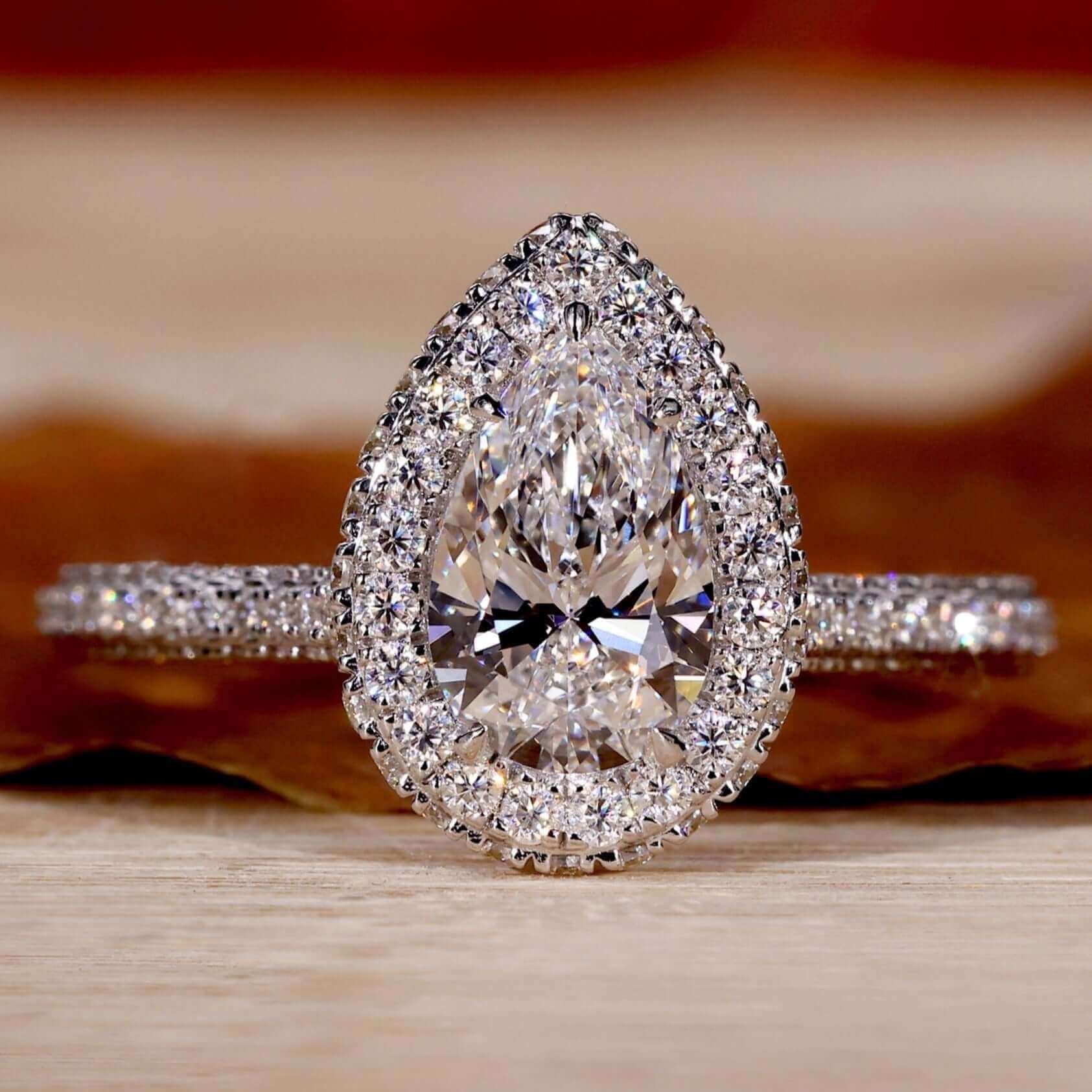
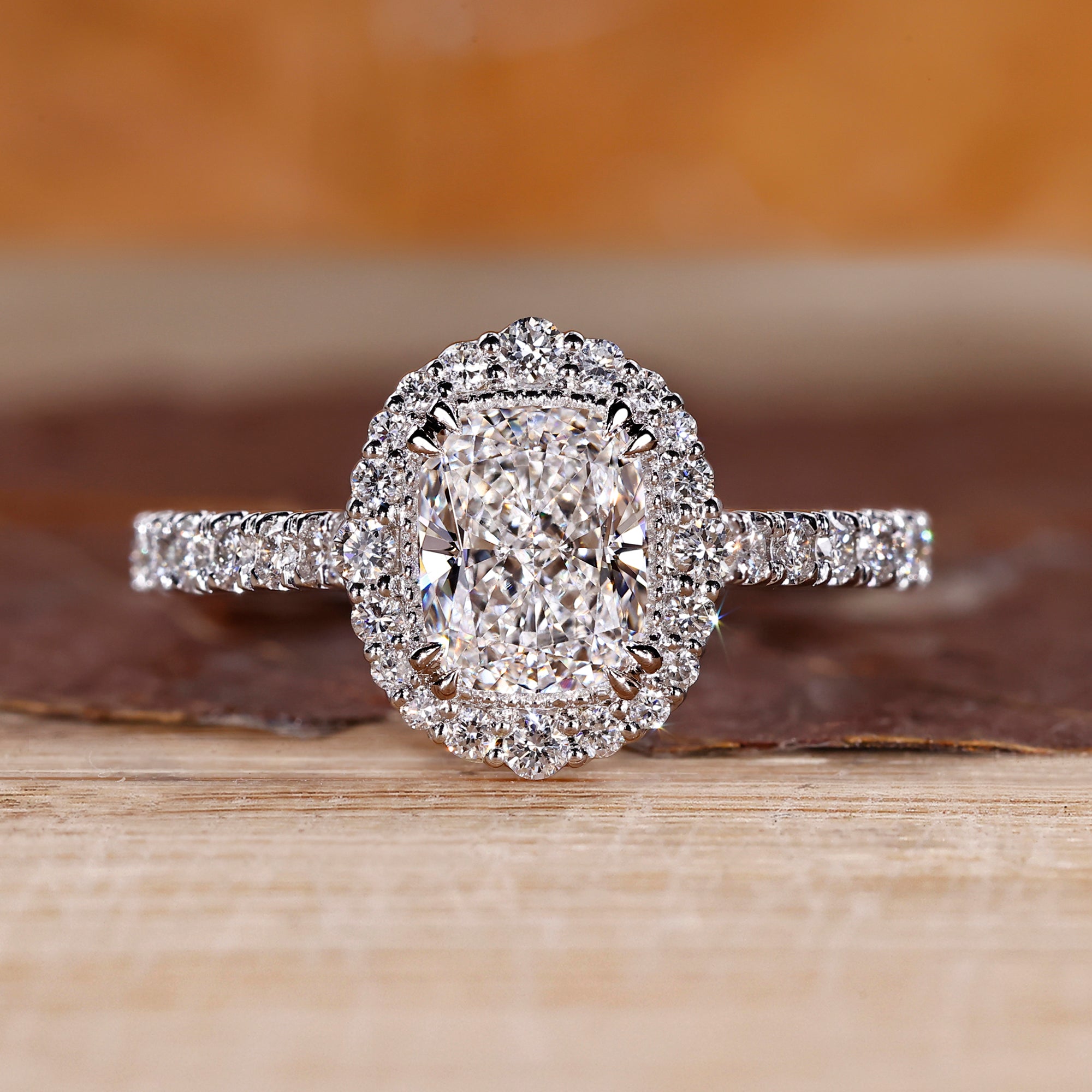
- Halo rings: Both settings can complement a halo centre. Half pavé can keep the shank slightly simpler, while full pavé can continue the diamond detail further around the ring.
- Three stone rings: Half pavé can provide a clear transition between the side stones and the shank. Full pavé can add further diamond detail to the lower part of the design.
- Hidden halo rings: A half pavé shank can balance the additional diamonds beneath the centre stone. Full pavé can be suitable if you prefer more diamond coverage around the ring.
- Vintage-inspired rings: Pavé can complement decorative metalwork and vintage-inspired details. Half or full pavé can be selected depending on how much additional diamond detail you want.
-
Cathedral settings: Pavé can follow the raised shoulders of a cathedral engagement ring. The choice between half and full pavé depends on the amount of diamond coverage you prefer.
Half Pavé or Full Pavé for Wedding Band Pairing?
If you plan to wear your engagement ring with a wedding band, consider how both rings will sit together. A half pavé engagement ring leaves part of the shank in plain metal, which can work well with different wedding band designs and profiles.
A full pavé ring can also be paired with a wedding band, but the height and shape of both rings need consideration. A straight wedding band may sit differently from a curved or contoured design. Checking the fit of both rings together can help you choose a combination that sits comfortably and looks balanced.




How to Care for Half Pavé and Full Pavé Rings
Pavé rings require regular care because the smaller diamonds are held in place by small setting points. Dirt and residue can collect around these areas, so gentle cleaning can help keep the diamonds and settings clear.
Check your ring regularly for movement or changes in the small diamonds. If you notice a loose stone, damaged setting or change in the ring, have it checked by a professional jeweller. It is also advisable to remove the ring during heavy manual work, exercise and activities where it could be knocked or caught.
Full pavé may require more attention because it has a larger number of small diamonds around the shank. Half pavé can be simpler to maintain, but it still benefits from regular cleaning and professional inspection.
Half Pavé or Full Pavé: Which One Should You Choose?
Half pavé can be the right choice if you want diamond detail across the upper part of the shank while keeping some metal visible. It can also be useful when you want to allocate more of your budget towards the centre stone and prefer a simpler underside.
Full pavé is suitable if you want diamonds to continue further around the shank and prefer a more continuous diamond-set appearance. It can complement detailed engagement ring designs and work well for buyers who are happy to give the ring regular care.
Before making your choice, consider the centre stone, setting style, metal, diamond coverage, budget, lifestyle and wedding band pairing. Both half pavé and full pavé can create a well-balanced diamond ring when the setting suits the rest of the design.
Frequently Asked Questions

Leave a comment
Please note, comments must be approved before they are published.