Nature-Inspired Marquise Rings for the Romantic Bride: 15 Unique Styles
Nature-inspired marquise rings bring together an elongated centre shape with details drawn from leaves, flowers, vines, and branches. This combination gives the ring a personal look while keeping the marquise shape at the centre of attention. For a romantic bride, these designs can add meaning and character to an engagement ring.
The marquise shape also gives you plenty of room to explore different settings and band details. From delicate leaf motifs to floral clusters and twisted bands, each design can create a different mood. Whether you prefer a subtle botanical detail or a more detailed ring, there are many ways to make a nature-inspired marquise ring your own.
Why Choose a Nature-Inspired Marquise Ring?
Nature-inspired jewellery can suit brides who want their engagement ring to feel connected to the natural world. Leaf, flower, vine, and branch details can add interest to the setting without relying on a traditional plain band. These details can also carry personal meaning, such as a favourite flower, garden memory, or connection to the outdoors.
The marquise shape works particularly well with organic designs because its pointed ends naturally complement leaf and petal forms. Its long outline can also make the centre stone look larger on the finger. By choosing the right band and setting, you can create a ring that feels romantic while still matching your everyday jewellery style.
15 Nature-Inspired Marquise Ring Styles
1. Leaf Motif Marquise Ring
A leaf motif marquise ring uses small leaf-shaped details around the centre stone or along the band. The leaves can sit beside the setting, frame the shoulders, or appear as part of the prong design. This style works well when you want a clear nature-inspired look without making the ring too detailed.
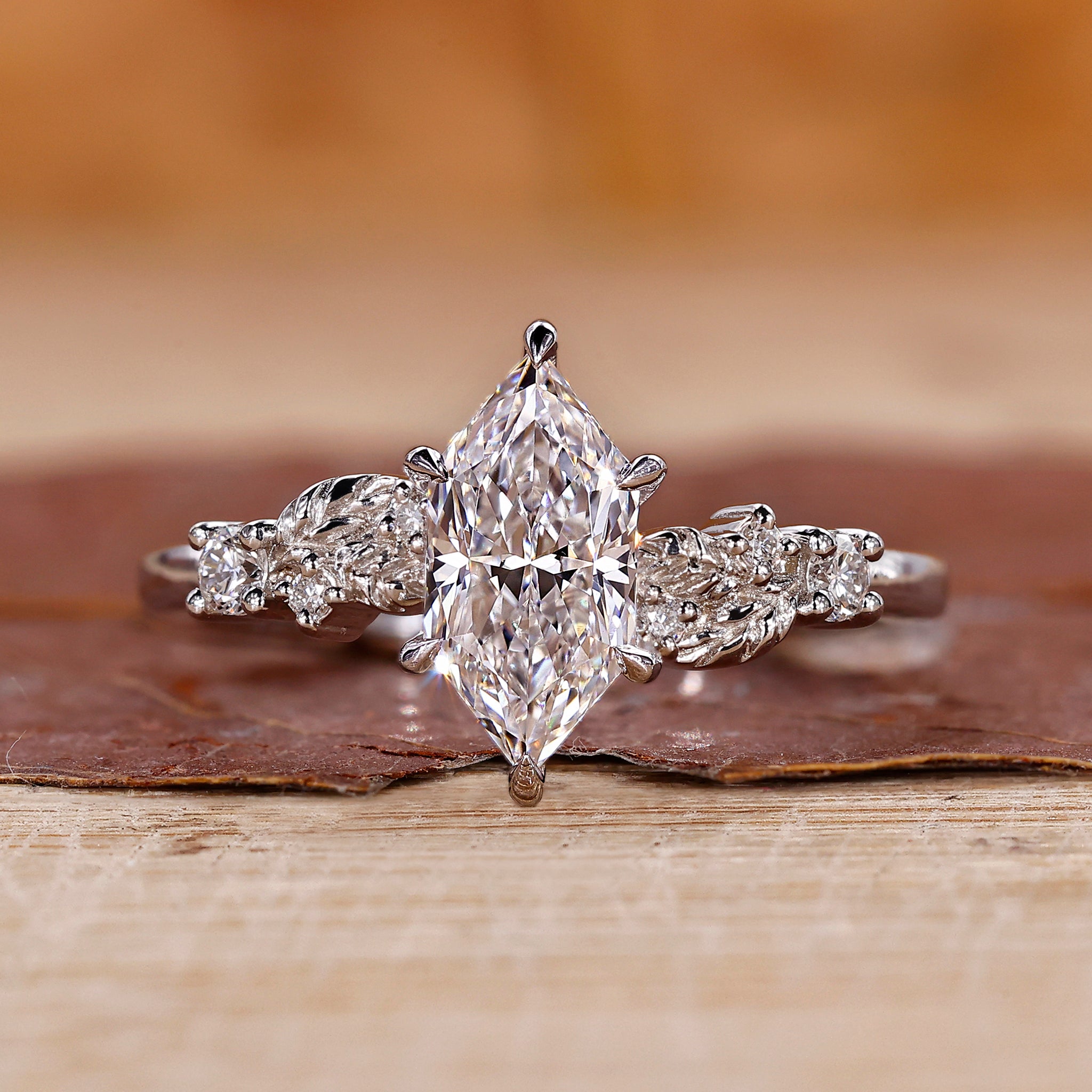
Image Source - DiamondRensu
For a softer design, choose smaller leaves with fine metalwork around the marquise centre. You can also add small round diamonds between the leaves for extra definition. A leaf motif can work with yellow gold, white gold, rose gold, or platinum, depending on the overall look you want.
2. Vine-Inspired Marquise Ring
Vine-inspired rings use curved metal lines that move around the centre stone or travel along the shank. The flowing shape gives the band an organic appearance and works naturally with the pointed outline of a marquise stone. This style can range from very simple to highly detailed.
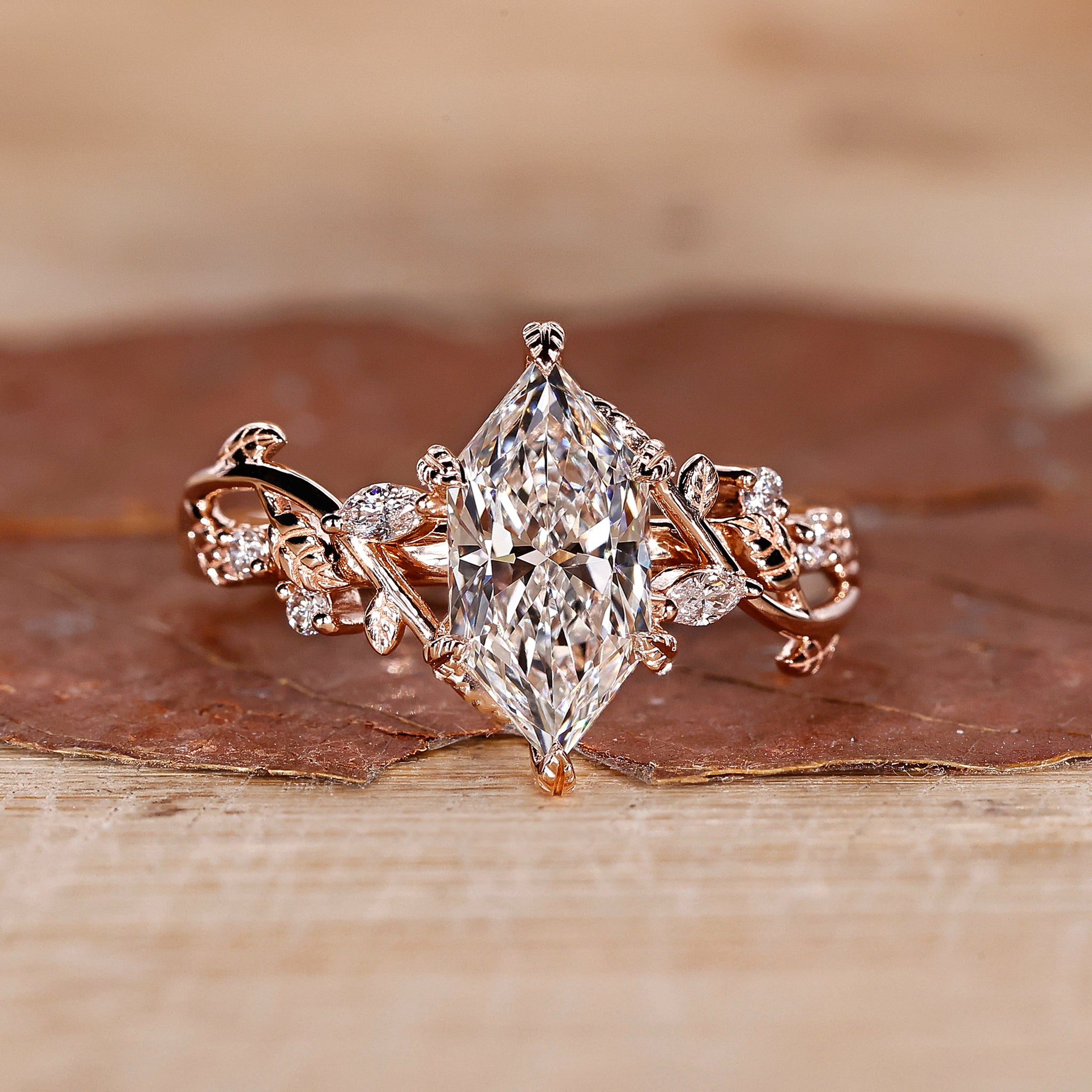
Image Source - DiamondRensu
A delicate vine design can suit a bride who prefers a lighter appearance, while a wider vine band can create a stronger focal point. Small diamonds placed along the curves can add detail without taking attention away from the centre. This makes the design suitable for both classic and nature-focused bridal styles.
3. Floral Halo Marquise Ring
A floral halo surrounds the marquise centre stone with smaller stones arranged to suggest flower petals. Instead of a standard round halo, the surrounding stones can create a softer botanical outline. This approach gives the centre a fuller appearance while keeping the floral theme visible from the top.
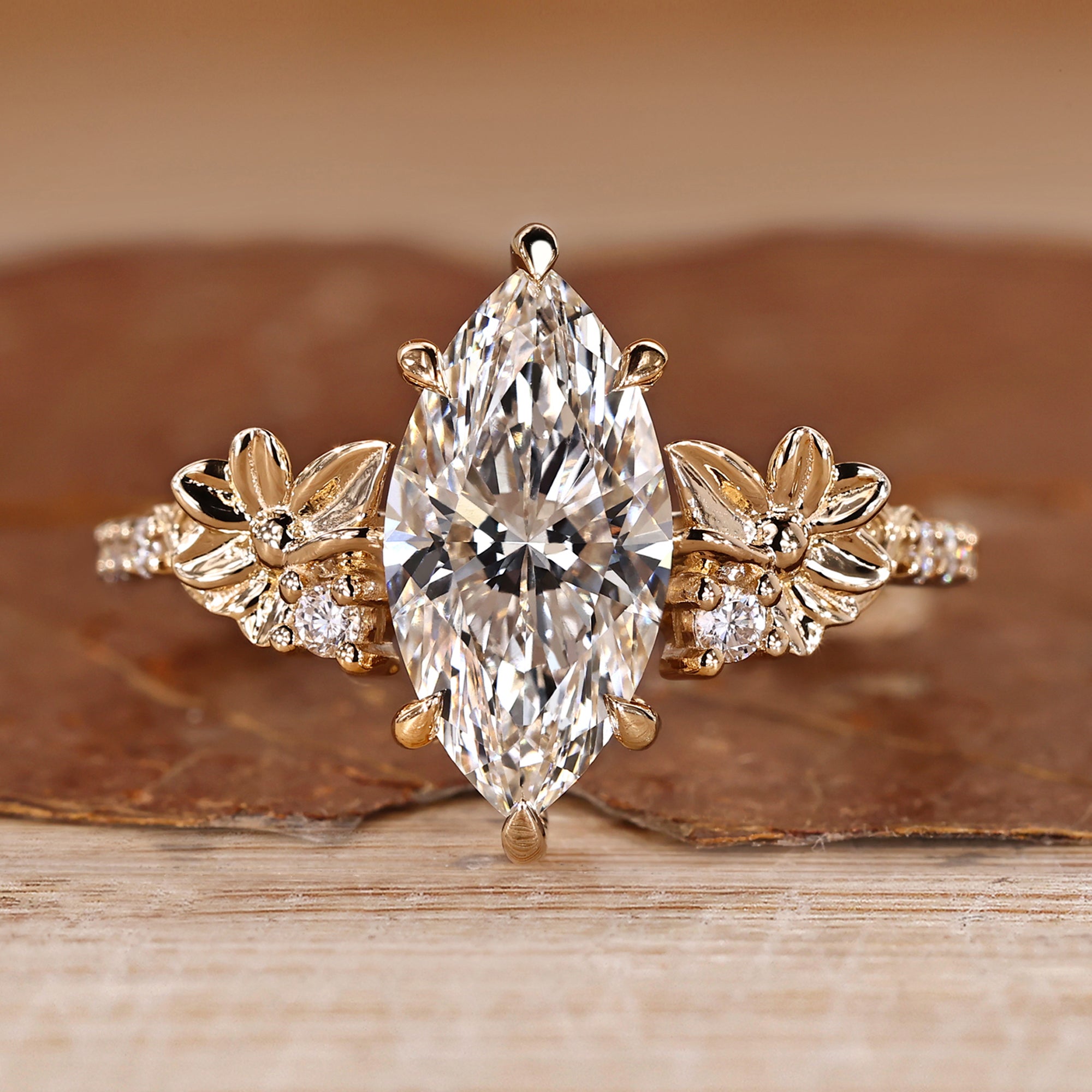
Image Source - DiamondRensu
You can choose round, pear, or marquise side stones to create different petal shapes. A small floral halo can keep the design delicate, while a larger arrangement can give the ring a more detailed appearance. The right proportions are important so the halo complements rather than overwhelms the centre stone.
4. Marquise Ring with Leafy Band
A leafy band places botanical details directly along the shank of the ring. The leaves can be spaced evenly or arranged in different sizes to create a more natural pattern. This gives the band its own character while allowing the marquise centre to remain the main focus.
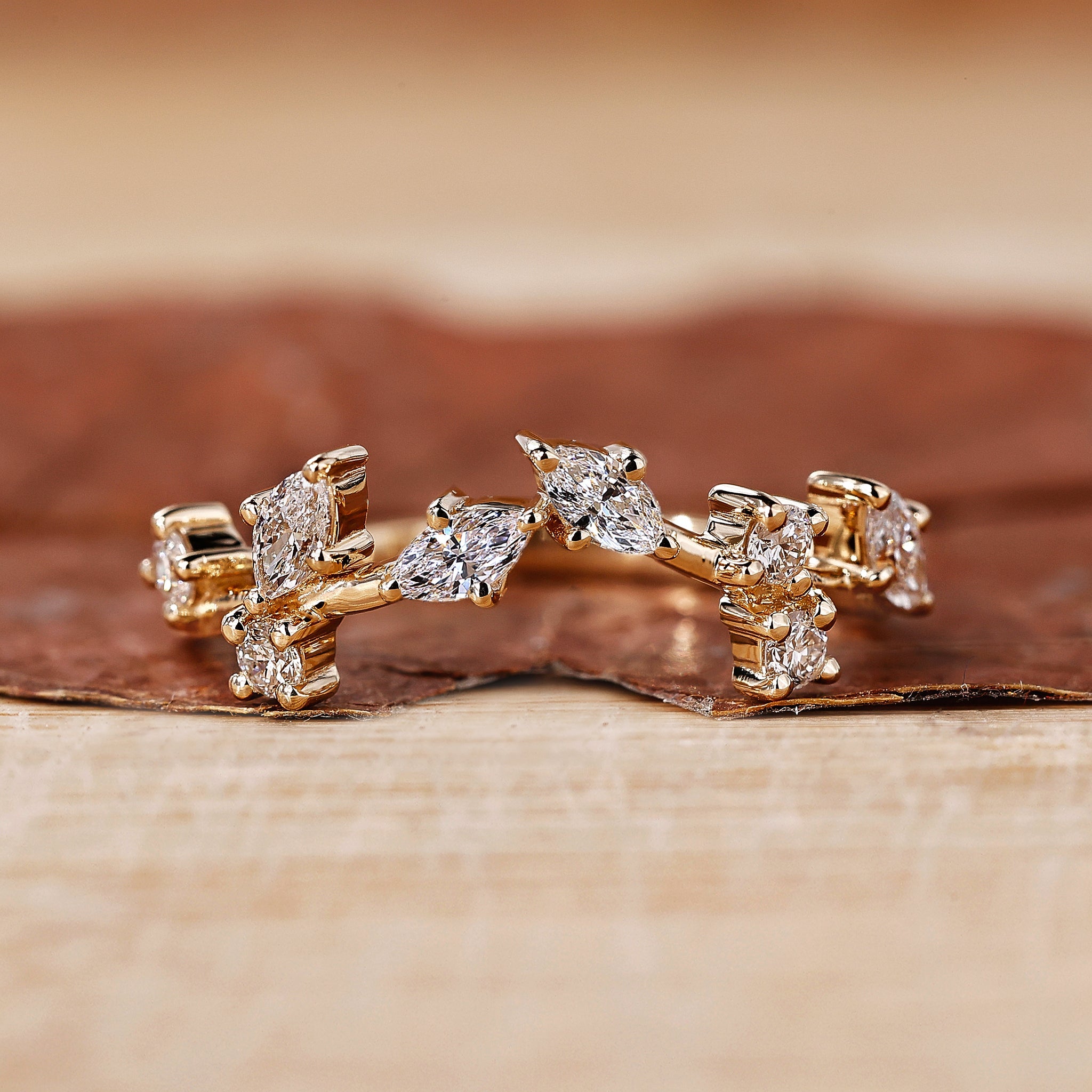
This style can work particularly well with a simple centre setting because the band provides most of the decorative detail. You can also combine the leafy band with small pavé diamonds for added sparkle. A curved leafy design can make the ring easier to pair with a shaped or curved wedding band.
5. Twisted Nature-Inspired Band
A twisted band can resemble vines or stems growing around the marquise centre. Two strands of metal may cross beneath the stone, creating an open and flowing appearance. This style adds movement to the ring without needing a large halo or many side stones.
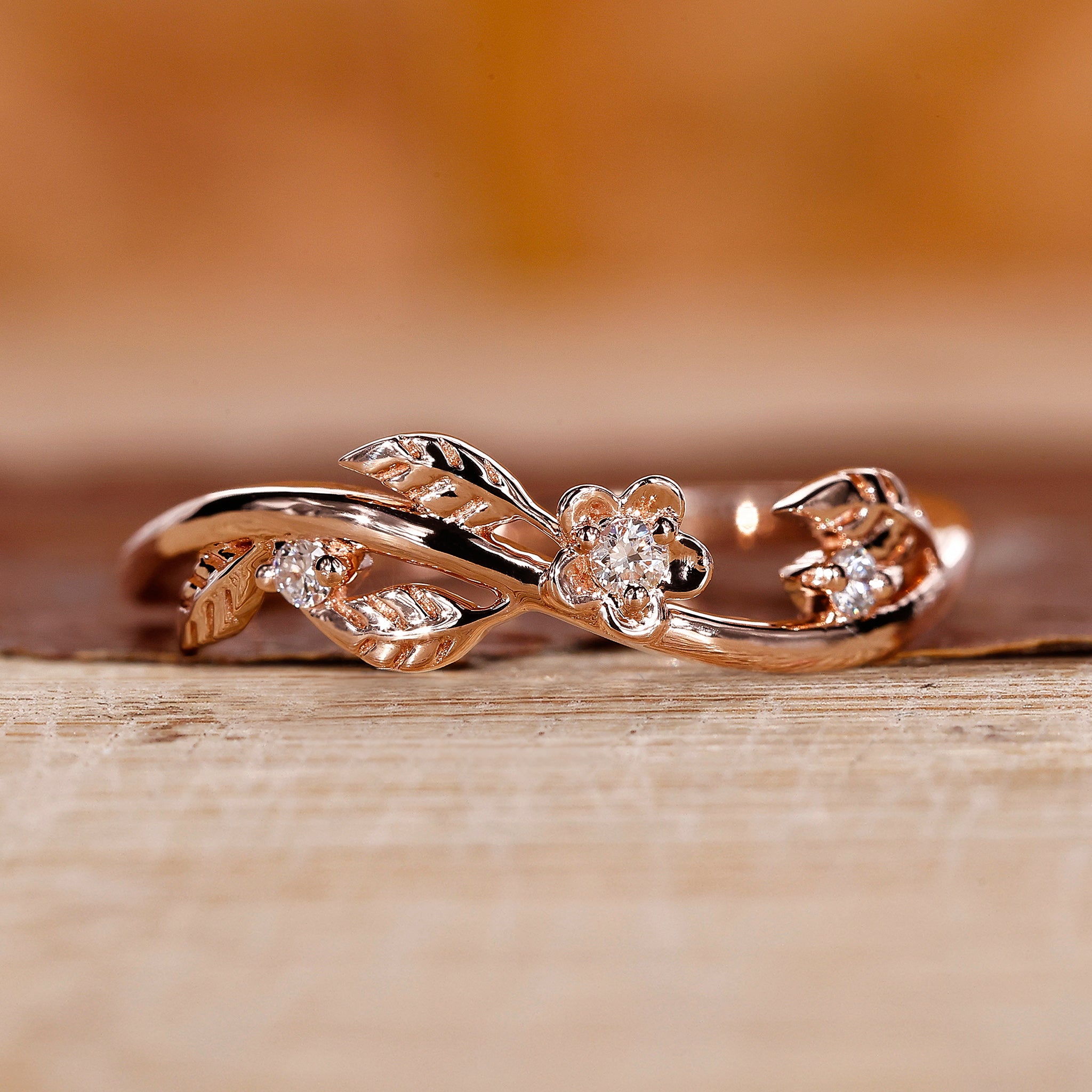
The open sections of a twisted band can also allow more light around the centre stone. You can keep the strands plain for a simple look or add small diamonds along one or both sides. This makes the design flexible for brides who want nature-inspired details with a more refined band.
6. Marquise Ring with Floral Side Stones
Floral side stones can be placed on either side of the marquise centre to create a balanced three-stone or multi-stone design. Small round or pear-shaped diamonds can be arranged to resemble flowers, giving the ring a clear botanical connection. The side details can also frame the long centre shape.
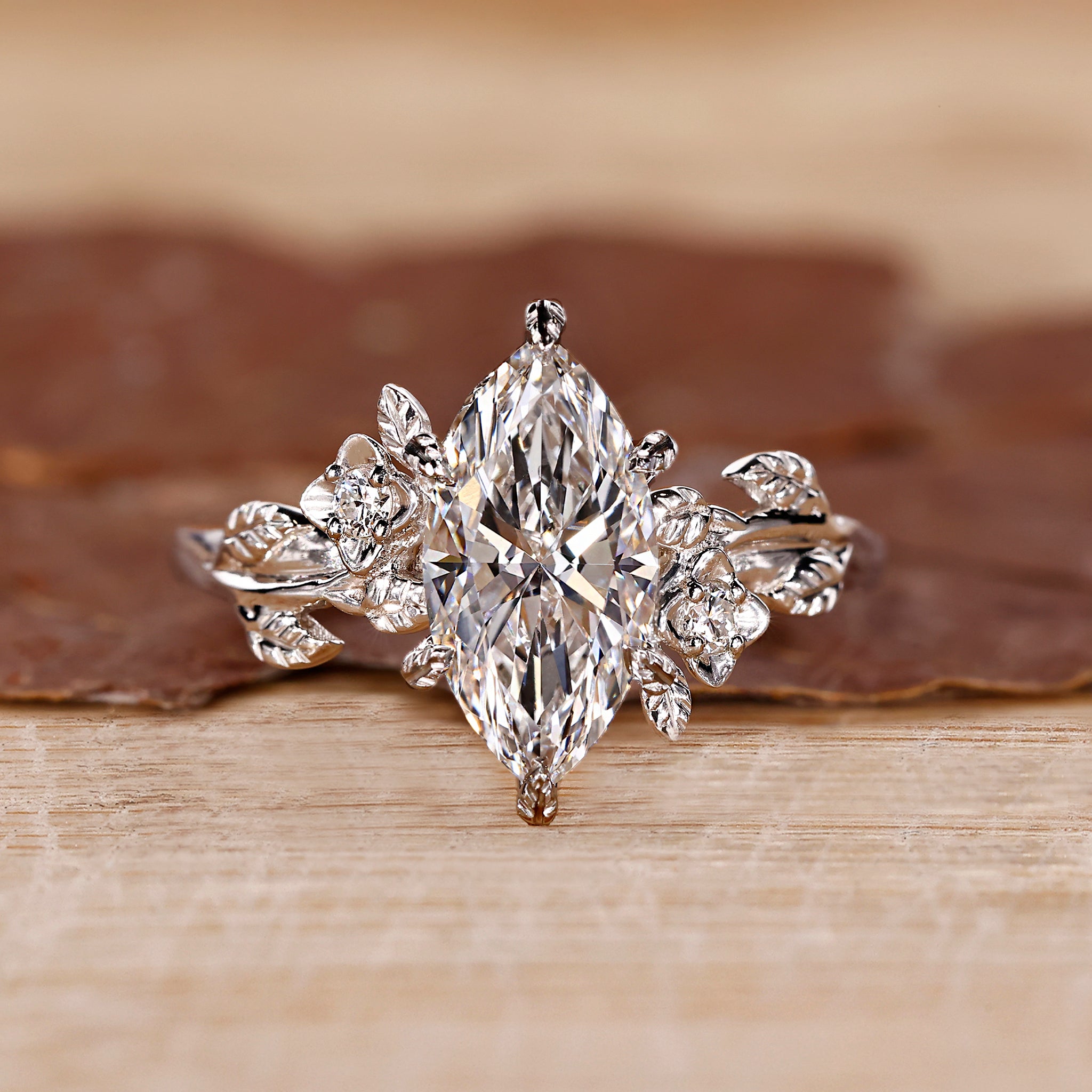
For a subtle approach, choose small floral details that sit close to the centre setting. Larger floral side arrangements create a more decorative appearance and can make the ring feel more distinctive. This style gives you room to combine different stone shapes while maintaining a unified design.
7. Branch-Inspired Marquise Ring
Branch-inspired designs use textured or curved metalwork to create the appearance of small branches supporting the centre stone. The branches can extend towards the shoulders or form part of the setting itself. This style suits brides who prefer woodland-inspired jewellery over traditional floral designs.
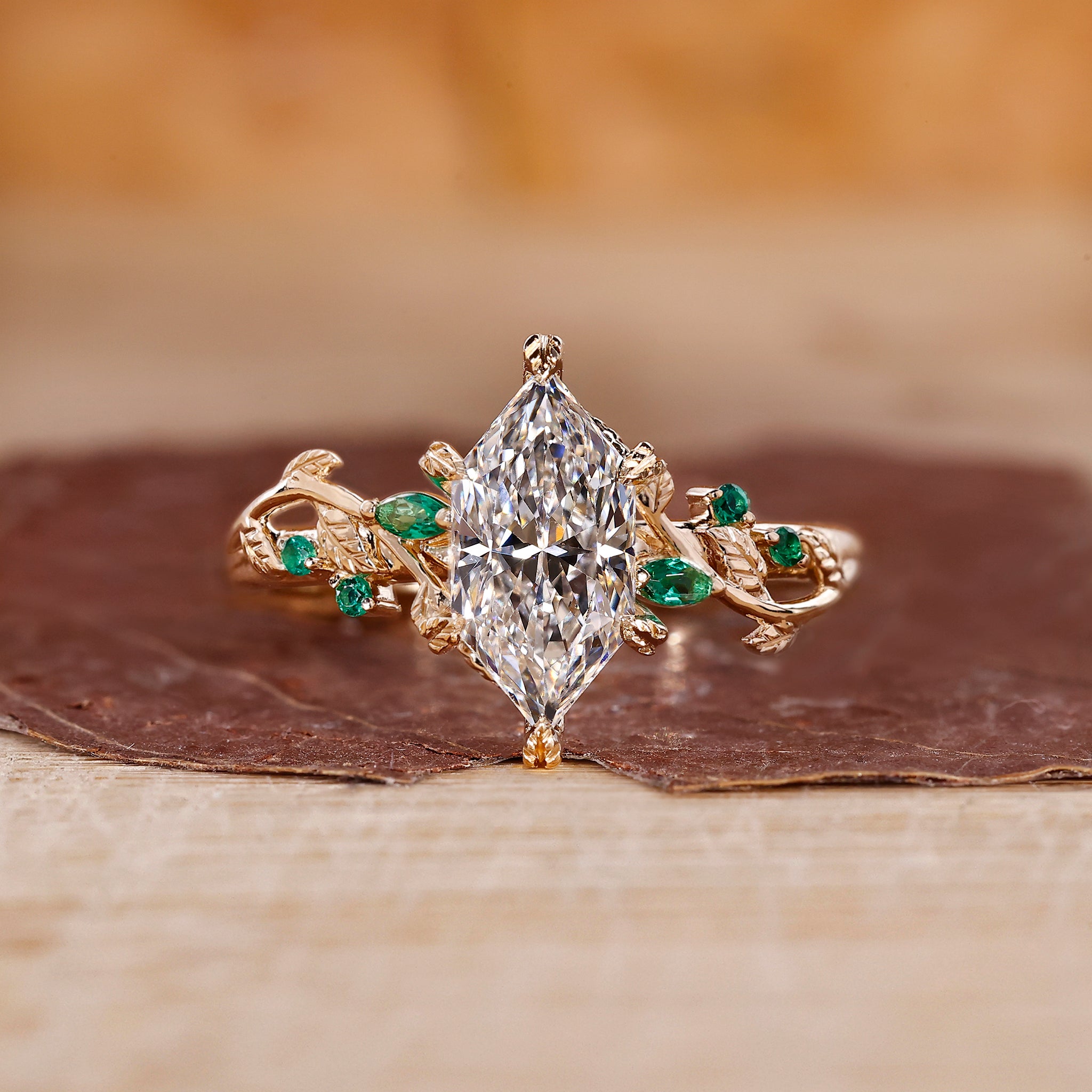
You can add tiny diamonds along the branch details or leave the metalwork plain for a more natural appearance. Slightly irregular lines can make the design feel closer to real branches. A branch-inspired ring can also work well in warmer metals such as yellow or rose gold.
8. Open Leaf Marquise Setting
An open leaf setting uses leaf-shaped metal details with visible spaces between them. This creates a lighter appearance and allows more of the finger or band to remain visible. It can be a good choice for brides who like botanical designs but do not want a heavily decorated ring.
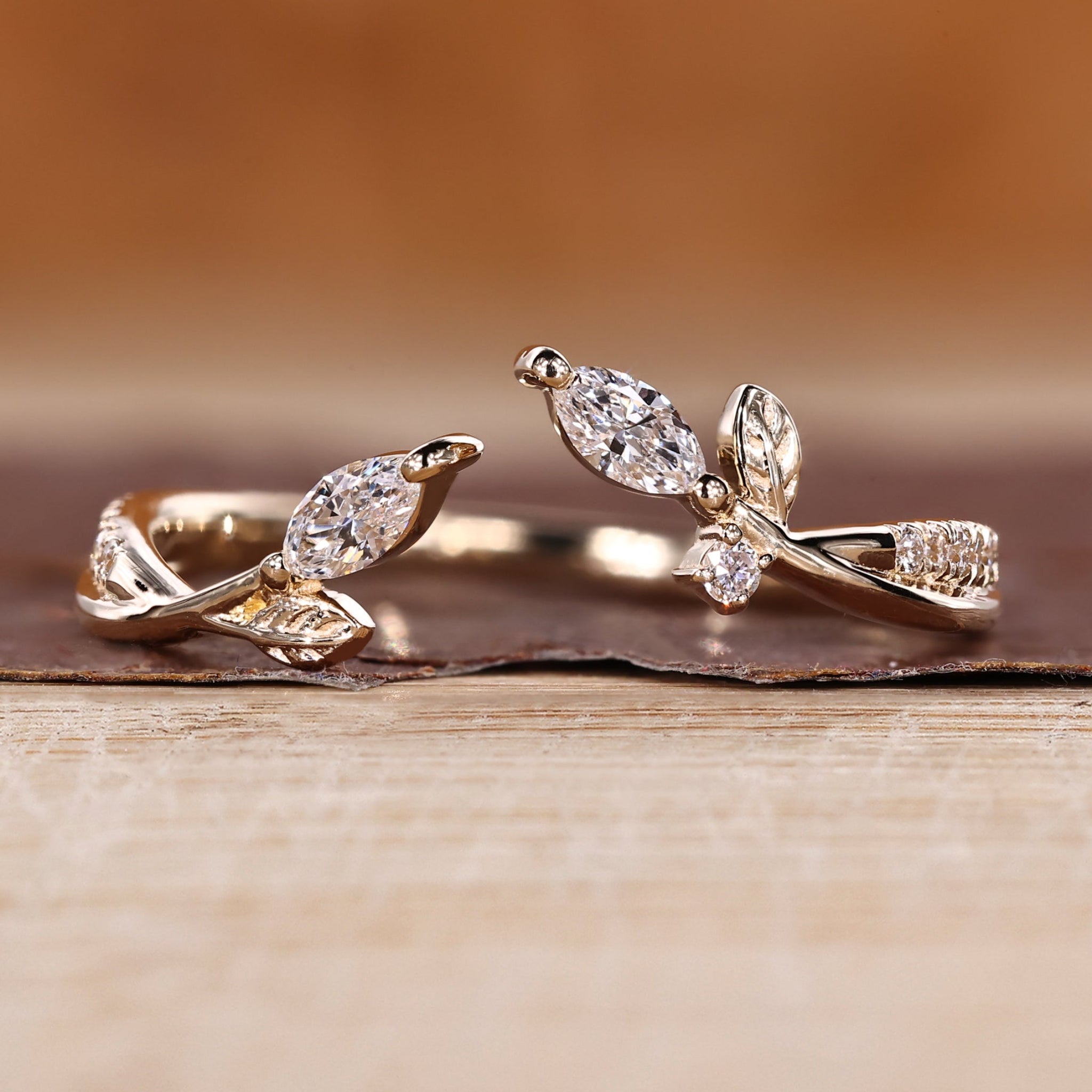
Image Source - DiamondRensu
The open structure can also highlight the marquise centre from different angles. Small stones can be placed inside or around the leaf details, depending on how much decoration you prefer. This design works well when you want a nature-inspired ring that remains easy to wear every day.
9. Nature-Inspired Cluster Marquise Ring
A nature-inspired cluster ring combines the marquise centre with several smaller stones arranged in an organic pattern. Round, pear, and marquise stones can be grouped to suggest petals, leaves, or a small flower. The cluster approach gives the ring a fuller look without requiring one large centre stone.
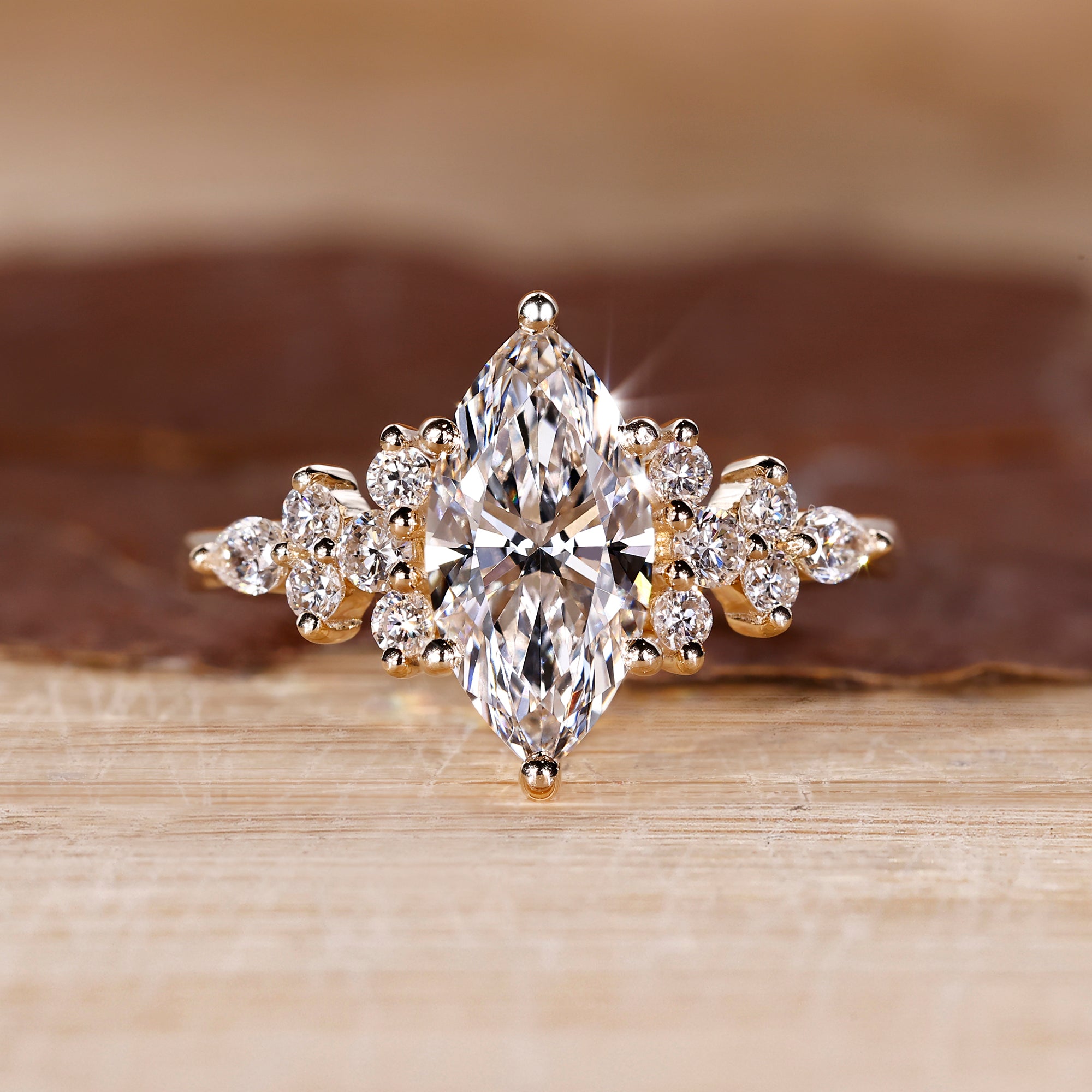
The smaller stones can follow the natural lines of the marquise shape or create a more open botanical outline. A cluster design also offers plenty of scope for customisation. You can choose the number, size, and arrangement of the surrounding stones to suit your preferred level of detail.
10. Hidden Floral Halo Marquise Ring
A hidden floral halo places botanical details beneath the main centre stone rather than around its outer edge. From above, the ring can appear relatively simple, while the side view reveals the flower-inspired detail. This makes the design suitable for brides who enjoy small details that are not immediately obvious.
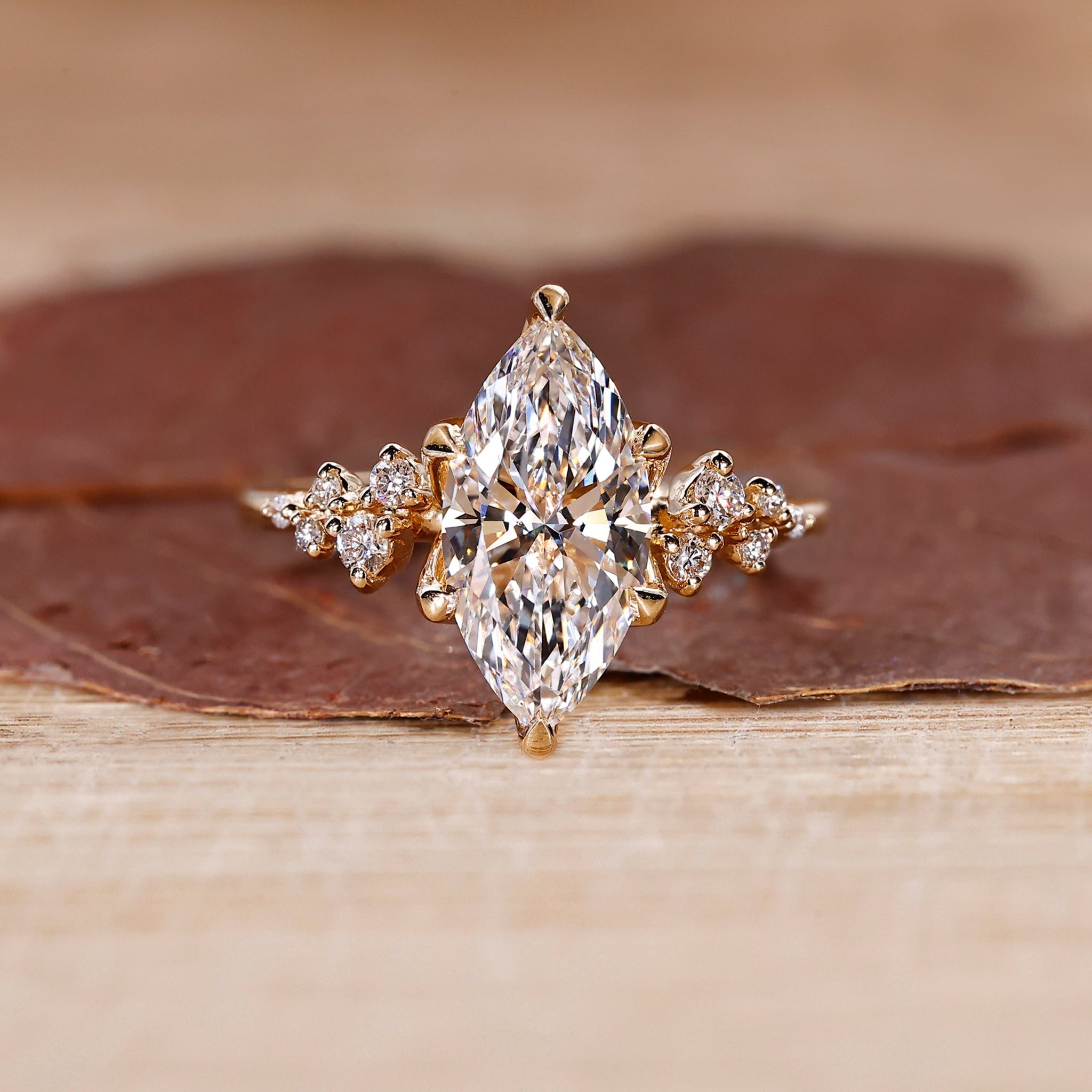
The hidden halo can include small round diamonds arranged beneath the marquise setting. You can also use metal petals or leaf shapes to create the floral structure. This style adds a personal touch while allowing the marquise stone to remain the main visual focus.
11. Marquise Ring with Petal Prongs
Petal prongs replace or reshape traditional prongs so they resemble small flower petals around the centre stone. This is a simple way to introduce a nature-inspired element without changing the overall structure of the ring. The detail can be especially effective with a clean marquise solitaire design.
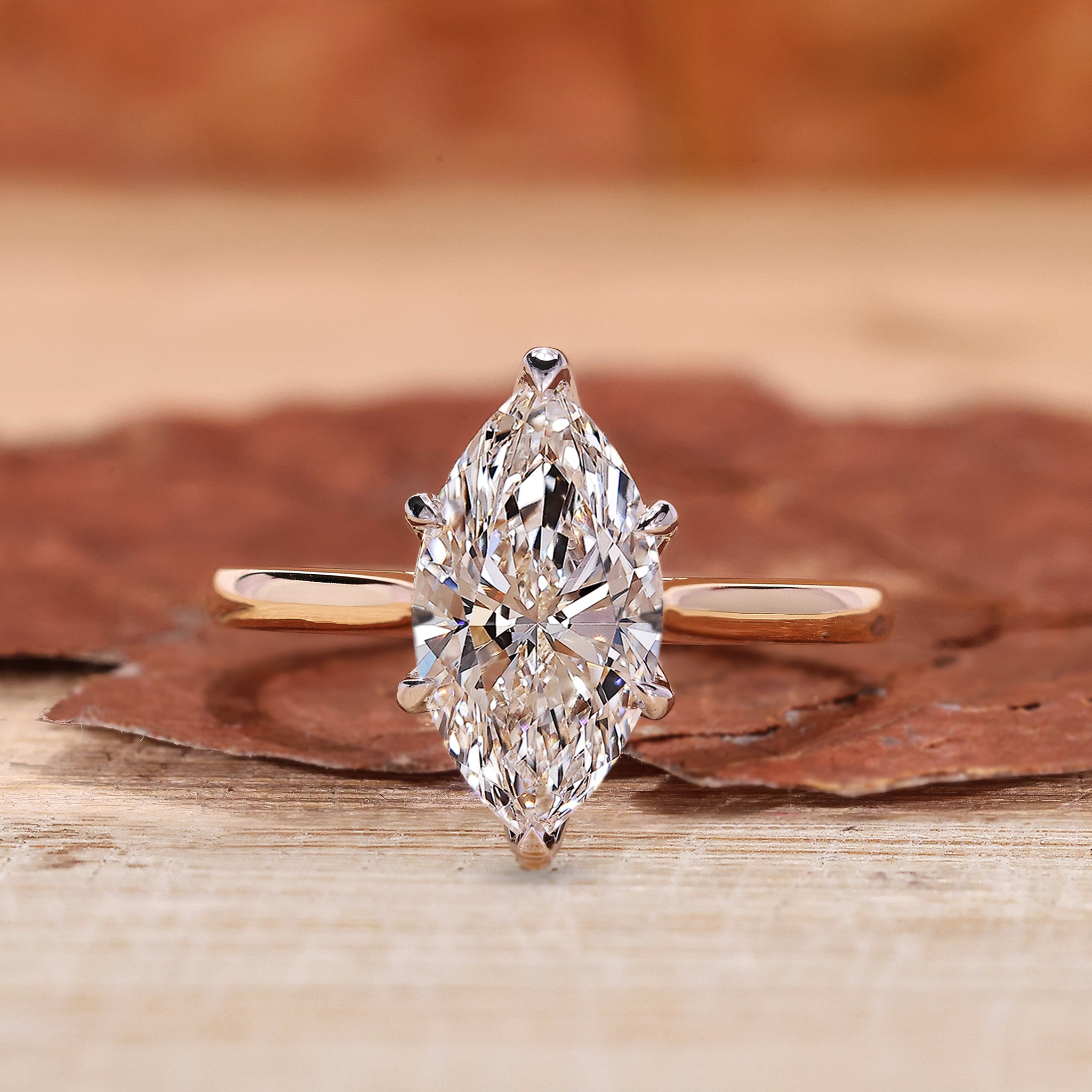
The prongs can be kept subtle so they do not distract from the centre stone. Alternatively, slightly larger petal details can create a more noticeable floral effect. This option is useful for brides who want a nature-inspired ring but prefer a relatively simple setting.
12. Pear and Marquise Botanical Ring
Combining pear-shaped side stones with a marquise centre can create a botanical outline because pear shapes naturally resemble leaves or petals. The side stones can sit closely beside the centre or form part of a larger floral arrangement. This gives the ring a soft shape while keeping the marquise as the focal point.
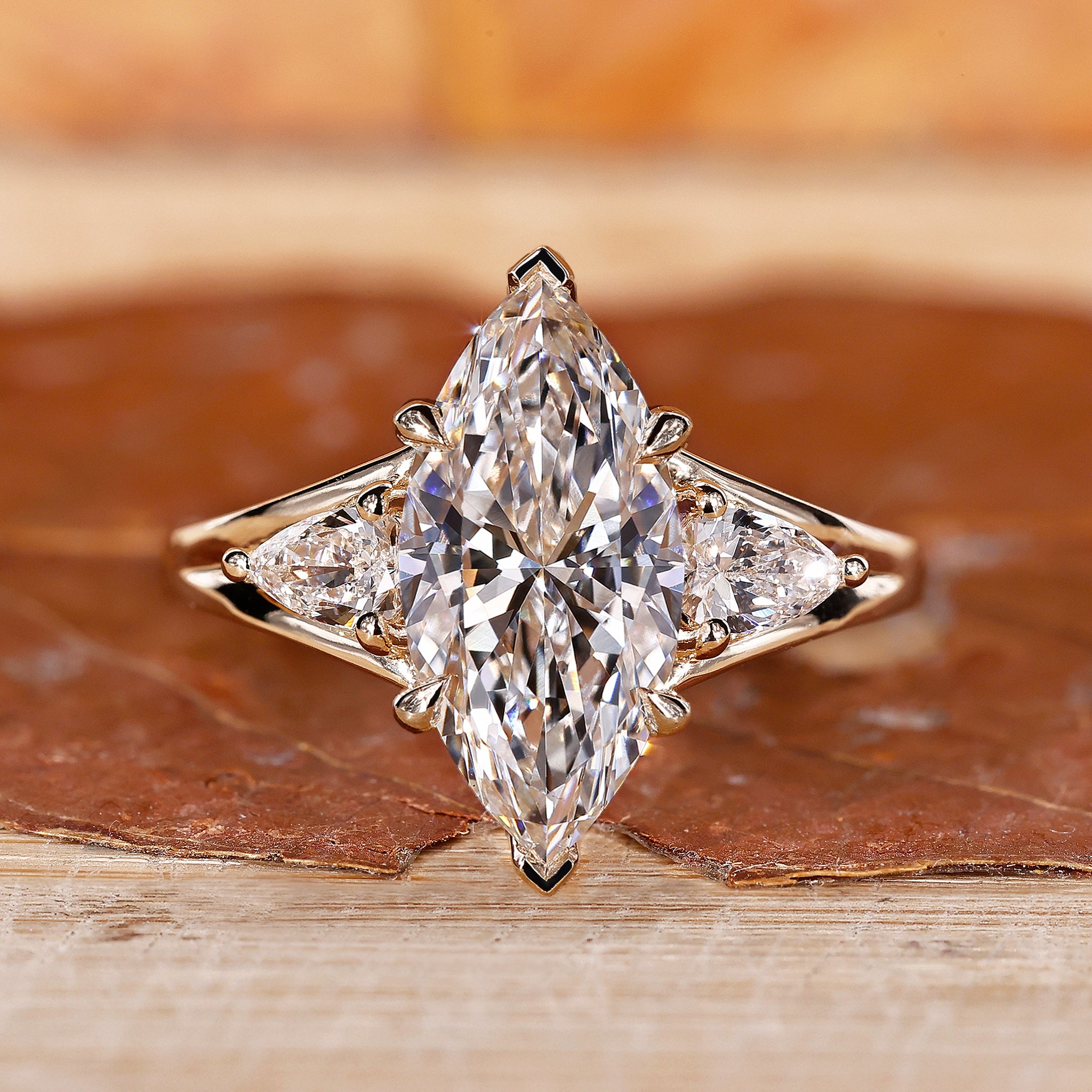
A three-stone arrangement can make the design feel balanced and structured. Smaller pear stones can also be placed around the setting to create a flower-inspired cluster. This combination is a good option for brides who want several stone shapes within one nature-inspired engagement ring.
13. Milgrain Nature-Inspired Marquise Ring
Milgrain adds tiny bead-like details along the edges of leaves, flowers, vines, or the ring's shoulders. When combined with a marquise centre, it can give the design a vintage-inspired character. The textured edges help define delicate botanical shapes without requiring a large amount of extra decoration.
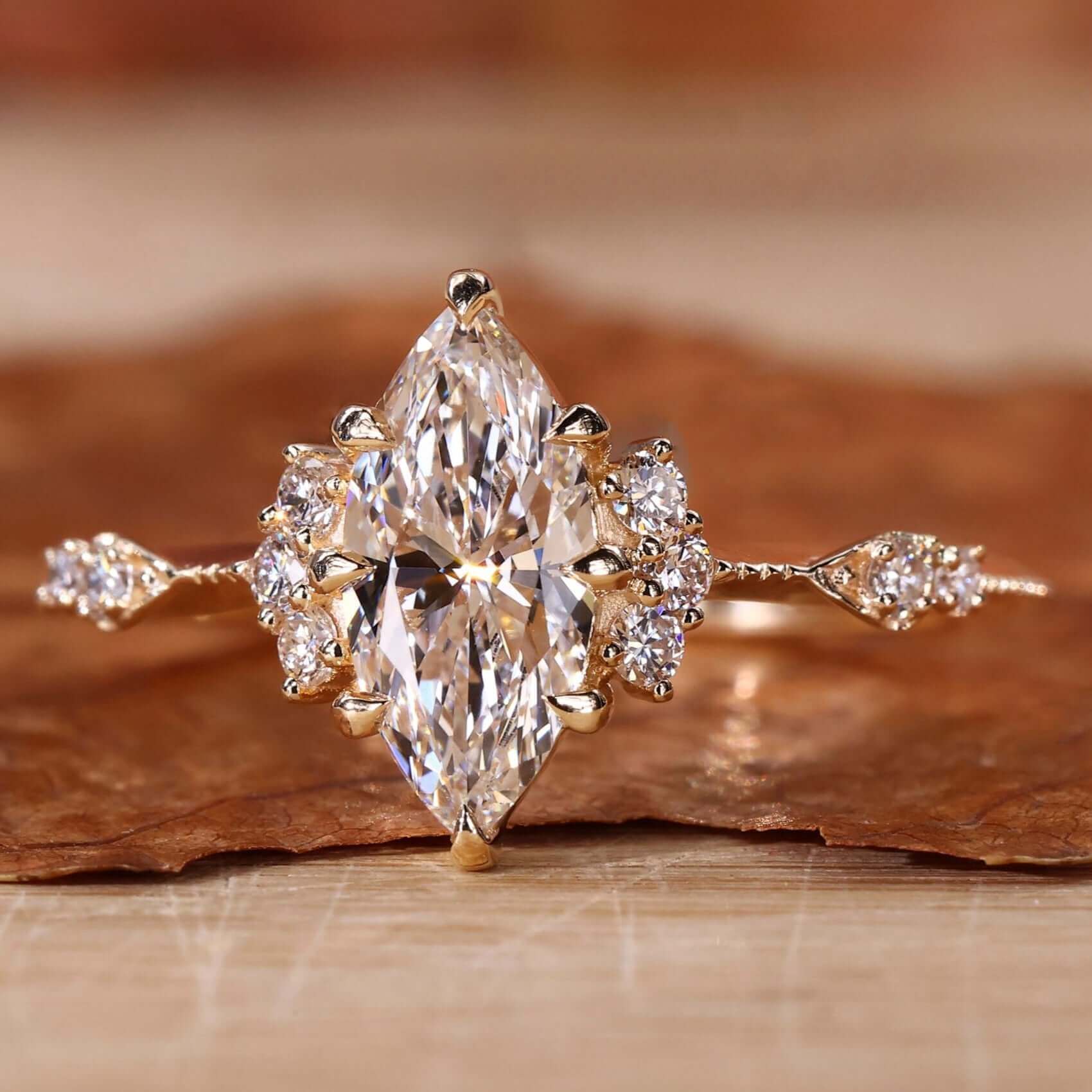
Milgrain works particularly well with detailed metalwork because it separates one design element from another. You can use it around the entire band or limit it to the floral and leaf details. Pairing milgrain with small diamonds can create a detailed ring while keeping the marquise centre prominent.
14. Art Deco Meets Nature-Inspired Marquise Ring
An Art Deco and nature-inspired combination brings geometric lines together with leaves, flowers, or organic curves. The contrast can create a distinctive ring for a bride who likes both vintage and botanical influences. Baguette or round side stones can introduce geometric detail around the marquise centre.
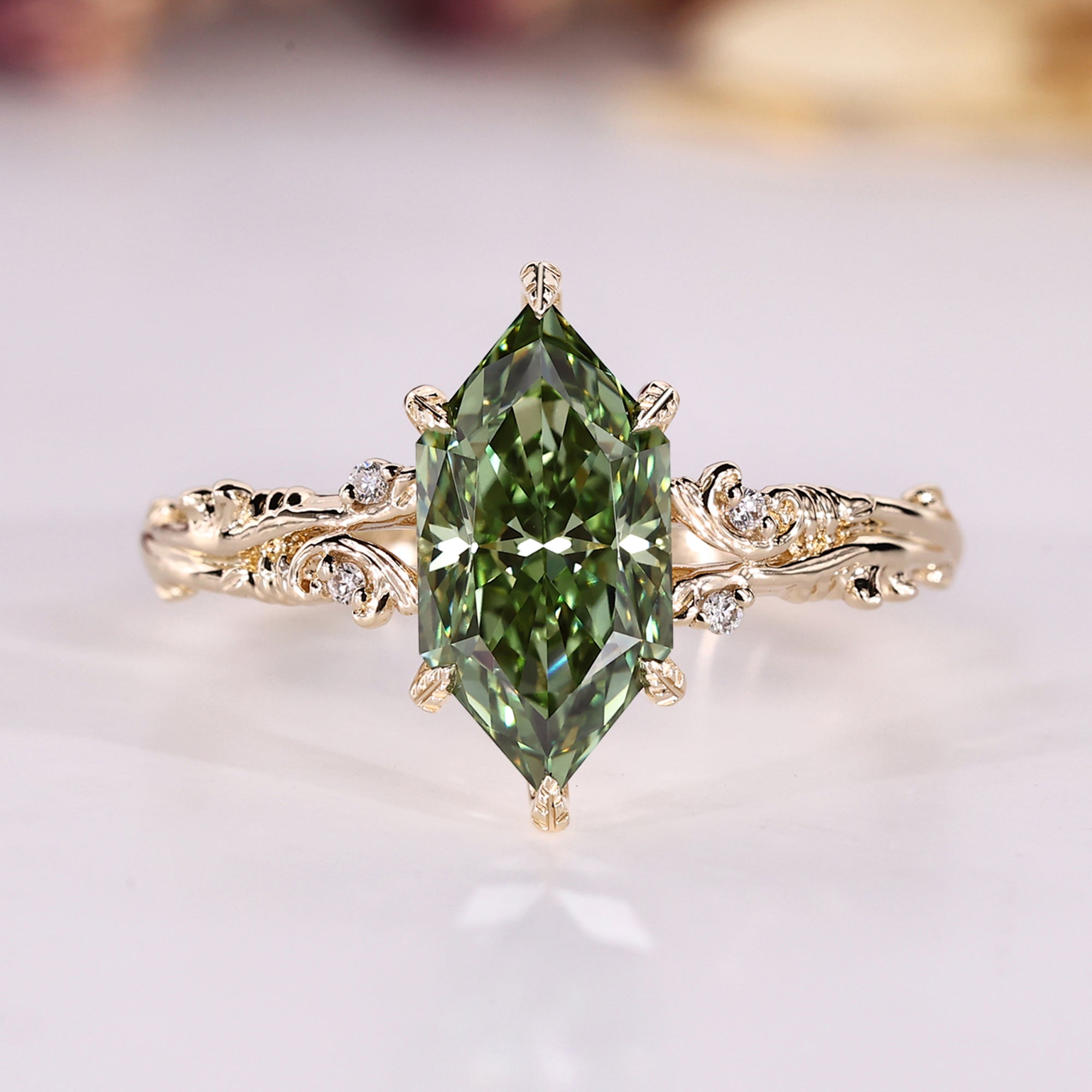
The key is to keep the two design influences balanced. Geometric shoulders can frame a floral centre, while small leaf details can soften a structured band. This combination gives you more freedom to create a ring that does not fit into only one jewellery style.
15. Custom Nature-Inspired Marquise Ring
A custom nature-inspired marquise ring allows you to choose the exact botanical details, stone arrangement, setting, and band shape. You can base the design on a favourite flower, a meaningful plant, or a particular natural pattern. This makes customisation a practical option when standard designs do not match your preferred style.
You can also decide how much nature-inspired detail you want throughout the ring. Some brides may choose a simple marquise solitaire with one small leaf detail, while others may prefer a full floral band. Custom work gives you the opportunity to combine several ideas from this list into one personal design.
How to Choose the Right Nature-Inspired Marquise Ring
- Choose the level of detail: Decide whether you prefer subtle leaves and petal prongs or a more detailed floral halo and cluster design.
- Match your personal style: Consider whether your jewellery style is simple, vintage, rustic, or more detailed.
- Consider the setting: Choose a setting that suits the marquise centre, such as a six-claw prong or cathedral setting.
- Check the band shape: Look at the shank width and design to make sure it works well with the marquise centre.
- Choose the side stones: Pear, round, or marquise side stones can add a botanical touch to the design.
-
Select the metal colour: Consider yellow gold, white gold, rose gold, or platinum based on your preferred look.
Best Settings for Nature-Inspired Marquise Rings
- Prong Setting: Holds the marquise centre securely while keeping much of the stone visible.
- Six-Claw Prong Setting: Provides support around the marquise stone, including its pointed ends.
- Petal Prong Setting: Uses flower-inspired prongs to add a botanical detail around the centre stone.
- Cathedral Setting: Raises the centre stone and creates space beneath it for additional design details.
- Halo Setting: Surrounds the marquise centre with smaller stones that can be arranged like flowers or petals.
-
Cluster Setting: Groups several smaller stones together to create organic shapes such as flowers or leaves.
Pairing Your Marquise Ring with a Wedding Band
A nature-inspired marquise engagement ring can be paired with a wedding band that follows its curves and details. Curved or contoured bands can sit neatly around the pointed ends of the marquise shape. A simple band can also provide contrast when the engagement ring already contains leaves, flowers, or other detailed elements.
For a coordinated bridal set, you can choose a wedding band with matching leaf or vine motifs. A plain metal band may be better if you want the engagement ring to remain the main focus. When choosing the pair, check how the two rings sit together and whether their widths and metal colours complement one another.
Final Thoughts
Nature-inspired marquise rings offer many ways to combine an unusual centre shape with botanical details. Leaves, flowers, vines, branches, and petal-inspired settings can each create a different look while keeping the marquise stone at the centre. The best design depends on how much detail you want and which elements feel personal to you.
From a simple leaf motif to a fully custom floral ring, these 15 styles give romantic brides plenty of options to consider. You can also combine ideas from different designs to create a ring that suits your preferred setting, metal, and stone arrangement. A thoughtful choice of details can make your marquise engagement ring feel personal from the day you wear it.
Make Your Marquise Ring Truly Yours
Create a nature inspired marquise ring with Diamondrensu UK. Explore custom leaf, floral, vine and botanical designs made for your personal bridal style.
CREATE YOUR CUSTOM RINGFrequently Asked Questions

Leave a comment
Please note, comments must be approved before they are published.